
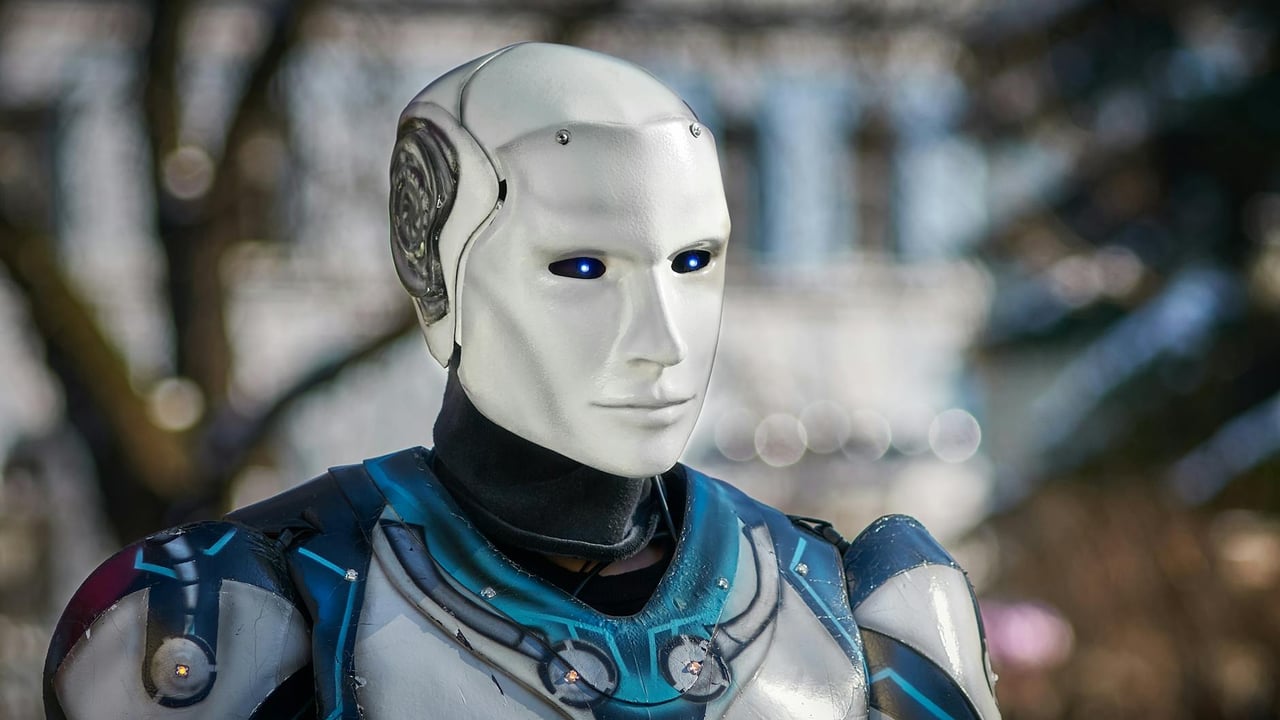

At the Chinese New Year Gala this week, a humanoid robot nicknamed "Xiao Gai" drew attention by executing a string of domestic tasks with fluid, humanlike motions: shelling walnuts, picking up shards of glass, retrieving items from a shelf, folding clothing and skewering sausages. The maker, Galaxy General Robots, has said these were not pre-programmed routines but the product of its AstraBrain system — an onstage demonstration, the company asserts, of real-time autonomous decision-making and embodied intelligence.
Presenting a robot that appears to improvise on live national television is a blunt instrument of persuasion. The Spring Festival Gala is China’s most-watched entertainment broadcast and has become a regular showcase for the state’s technological ambitions. For a robotics firm, the platform offers an audience measured in hundreds of millions and an immediate halo of credibility that can translate into investor interest, partnership opportunities and government attention.
Technically, the tasks highlighted onstage are non-trivial. Perception-driven manipulation in unstructured, cluttered settings demands fast sensor fusion, robust grasp planning and tight feedback loops from vision to motor control. If AstraBrain truly governed the robot’s choices in real time, it would mark a meaningful step beyond choreography — closer to what researchers call embodied intelligence, where large models steer a physical agent’s perception and fine motor actions.
Skepticism is nevertheless warranted. Live stages are highly controlled environments and theatrical demonstrations have long been part marketing, part technology. Subtle forms of human intervention, carefully arranged props or constrained conditions can make an ostensibly "autonomous" system look far more capable than it would be in a typical home or factory. Independent testing, transparent metrics and repeatable demos remain the gold standard for assessing genuine progress.
The broader significance is twofold. First, China’s robotics sector is showing maturity: companies are marrying software advances in AI with increasingly capable hardware and using high-profile events to accelerate commercialisation. Second, claims of autonomy raise regulatory and trust questions as robots move into everyday spaces. Policymakers and buyers will need to scrutinise safety, fail‑safe behaviour and the extent of human oversight.
For international observers, the episode is a reminder that much of the next generation of robotics will be decided outside Silicon Valley. Competing approaches — from Boston Dynamics’ dynamic locomotion to Tesla’s market‑driven humanoid ambitions — now confront a Chinese ecosystem that is rapidly industrialising robot production, integrating large AI models and leveraging domestic scale for iterative improvement.
Verification is the immediate watchpoint. The industry should be judged by how companies open their systems to scrutiny: release of task benchmarks, videos from unscripted, real-world scenarios and peer-reviewed demonstrations of autonomous planning and error recovery. Until such evidence becomes routine, primetime successes are better read as a bold claim than incontrovertible proof of fully autonomous household robots.