
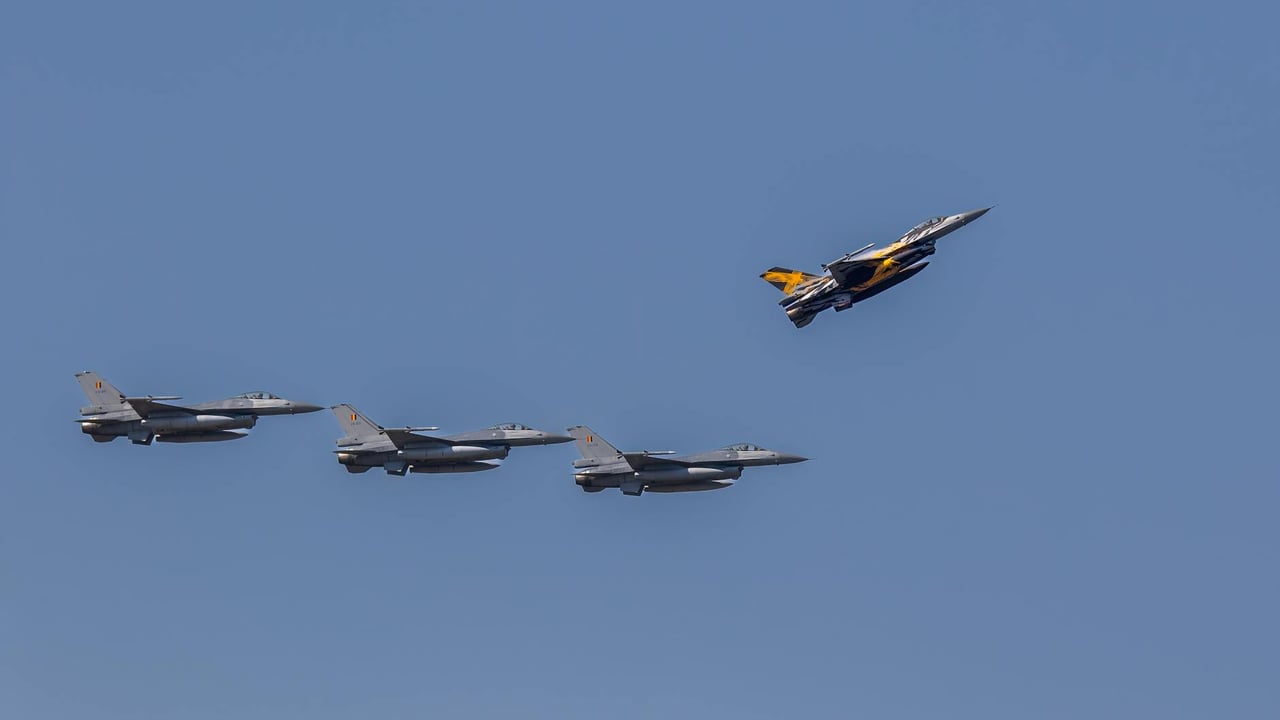

Two US Air Force F-16s were scrambled from March Air Reserve Base on February 15 after reports of unidentified objects over northern California and Nevada, but North American Aerospace Defense Command (NORAD) subsequently concluded the contacts were meteorological balloons and posed no threat. Media accounts say the jets launched twice that morning to identify and monitor the objects after a civilian cargo aircraft reported seeing a glowing object that then dimmed.
According to flight-tracking and reporting compiled by Newsmax and War Zone, the first intercept began at about 06:30 Pacific Time and kept the fighters on station for roughly two and a half hours before they returned to base. When a second sighting was reported in the same region, the same two F-16s were quickly retasked and reached the area again around 10:45, departing some 35 minutes later.
NORAD said its sensors detected and tracked two high-altitude balloons moving northeast along the central-northern California coast and deployed assets, including fighters, to evaluate them. The command judged the objects to display characteristics consistent with routine meteorological balloons: they were non-manoeuvrable, presented no military threat and did not create a hazard to civil aviation.
The incident sits against a backdrop of heightened sensitivity in Washington to unidentified airborne objects. Since the widely publicized 2023 incident in which a balloon linked by US officials to foreign intelligence activity was shot down, US defence and aviation authorities have tightened procedures for detection, classification and response — leading to rapid scrambles even when track data ultimately indicate benign origins.
That cautious posture has practical and political consequences. Scrambles consume time and resources, can disrupt training and operations, and risk escalation or misinterpretation if an object’s provenance is unclear. The February 15 episode underlines the continuing challenge for US air-defence and aviation agencies to distinguish innocuous civilian and scientific payloads from objects that might carry surveillance or other hostile capabilities, and the need for better sensors, data-sharing and public communication to reduce unnecessary alarm.