
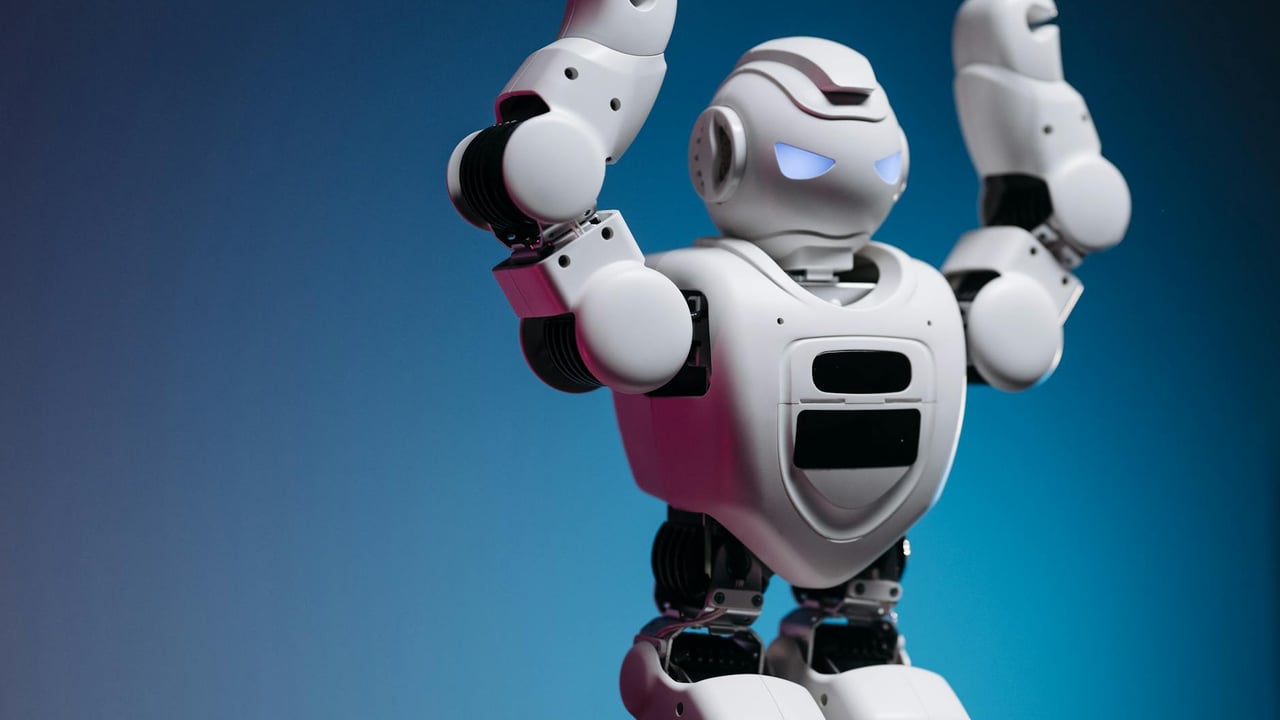

China’s Lunar New Year gala has turned into an unlikely battleground for robotics firms seeking national attention. Once the preserve of variety acts and celebrity cameos, the Spring Festival Gala is now a showcase for humanoids, quadrupeds and AI demos—symbols that last year’s breakout appearance by Yushu Technology transformed into a coveted shortcut to mainstream recognition.
This year nearly every well-funded, product-ready robotics company vied for a slot. Yushu returned alongside Galaxy General, Magic Atom and Songyan Dynamics, while other notable builders staged their own events after concluding that the cost of an exclusive Gala moment—rumoured to approach one billion yuan—was simply unaffordable. For many startups operating with heavy R&D burn and fragile cash flow, the choice between splashy exposure and cold engineering work is no longer rhetorical.
The pull of national attention is obvious: in front of an audience of some 1.4 billion viewers, a single performance can fix a brand in popular imagination. Yet investors and executives warn that the value being fought over is largely emotional rather than commercial. Most of China’s robotics industry still sells to factories and service operators, not consumers; a viral routine or a viral video does little to prove an armature can run three shifts without failure or that integration is cost-effective.
On the ground, the sector’s practical challenges remain stark. Deploying robots into industrial settings typically requires months of custom integration and debugging, a process only the largest firms can now do at scale. Standardised, repeatable delivery models are rare and project-based work dominates revenues. In short, the industry remains in a validation phase rather than in a deployment one.
That gap between spectacle and substance shows up in small ways with big consequences. The author witnessed live demos in a storefront a week before the Gala in which machines stumbled—one flipped while attempting an acrobatic trick and another botched a traditional lion dance routine. These incidents are not isolated mishaps; they reflect the operating margins of many companies still wrestling with stability and reliability.
Spending hundreds of millions on brand exposure therefore amounts to a reallocation of scarce resources. For firms still struggling to refine algorithms, secure component supply and shorten commissioning cycles, the choice to prioritise attention over engineering can prolong the path to repeatable revenue. Moreover, the marginal return on such attention is diminishing: after the first big Gala appearance the public now expects robots to perform, so additional spend may only increase name recognition marginally rather than expand the market.
Most consequentially, heightened public narrative can raise customer expectations and deepen buyer caution. Industrial purchasers care about reproducibility and risk mitigation, not applause. When the industry’s public claims outpace the reality on factory floors, the mismatch risks triggering a credibility problem that could slow adoption and tighten investment.
If the Gala solves the problem of being seen, it does nothing to solve three core issues: cash-flow pressure, the need for large-scale validation, and the slow accumulation of client trust. The companies that will ultimately succeed are unlikely to be those that win the most stage time, but those that deliver repeatable, proven performance in everyday industrial contexts.