
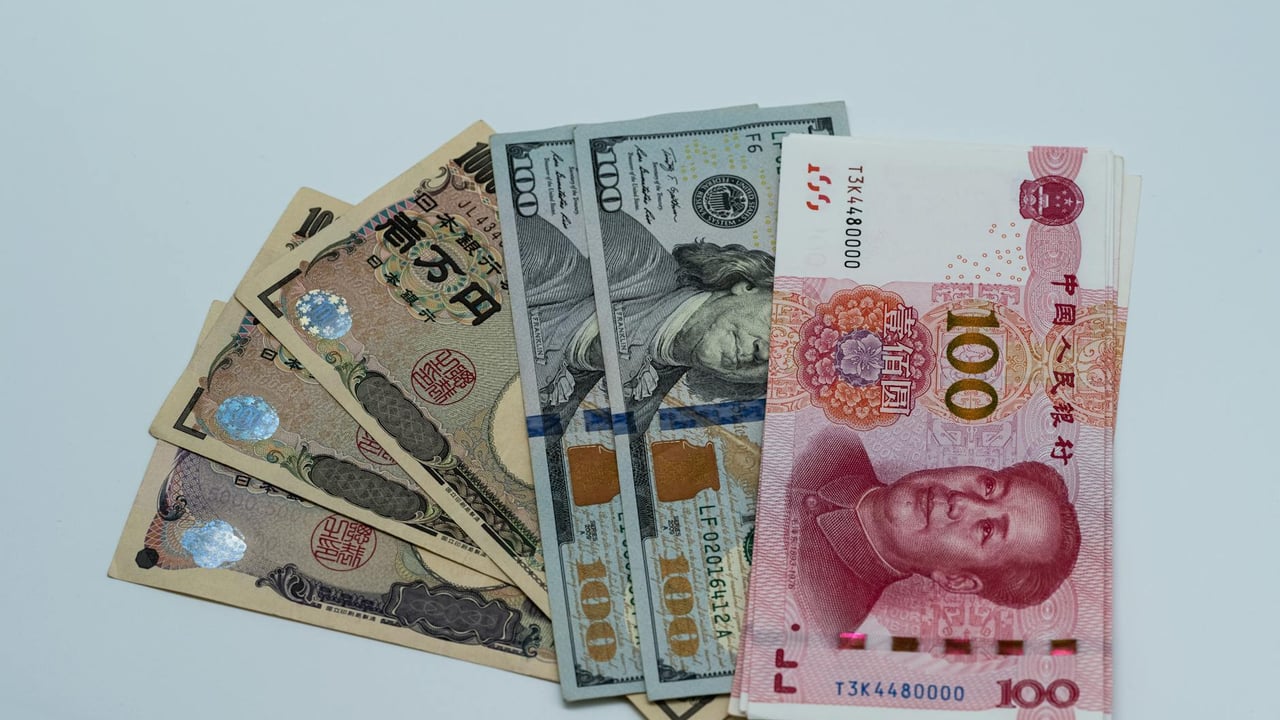

The offshore renminbi (CNH) continued its post‑Lunar New Year rally on February 26, climbing intraday to 6.83605 against the dollar — more than 0.25% stronger than the previous session — while the People’s Bank of China’s reference midpoint (CNY) was raised to 6.9228. Onshore and offshore rates both pierced the 6.87 level earlier in the week, marking the strongest levels since April 2023 and cementing the currency’s recovery after it fell through the 7.00 threshold at the end of December 2025.
Analysts point to a confluence of forces behind the move. Improved Sino‑US trade relations since November 2025, a generally softer dollar, and a rapid unwinding of exporters’ accumulated foreign‑exchange receipts have all supported the renminbi. Bank data show unusually large customer net settlement surpluses of $99.93 billion in December 2025 and $88.76 billion in January 2026, the largest and third‑largest monthly surpluses on record, respectively.
Market sentiment has been a further accelerant. Wang Qing, chief macro analyst at Orient Jincheng, said the offshore market’s leadership and elevated sentiment have been an important factor pushing the currency through key technical levels. He expects the renminbi to remain on the firmer side in the near term, noting that the currency’s path this year will hinge chiefly on the dollar’s direction, changes in China’s external economic environment, and the effectiveness of domestic policies to stabilise growth.
But other senior strategists counsel caution. Chen Liqing of GF Securities argues there are deliberate stabilising pressures after the holiday: the central bank has nudged the midpoint weaker since late January to keep the rate around a ‘‘reasonable and balanced’’ level; seasonal settlement demand should ease; volatility may mean‑revert after a concentrated appreciation; and the weak‑dollar story itself could acquire two‑way dynamics. Chen expects the one‑sided appreciation seen in recent quarters to moderate in 2026, although a modest annual strengthening trend remains possible.
The recent moves matter for global investors and trade partners. A firmer renminbi reduces the currency risk premium for foreign holders of Chinese assets and can ease offshore financing conditions, but it also bites into exporters’ margins and could slow export growth if sustained. Large FX settlement inflows signal that exporters are repatriating dollars, which can temporarily bolster the currency but also expose it to reversals if flows subside. Policymakers retain a suite of tools — from midpoint guidance to capital‑flow measures — to nudge expectations and prevent disorderly moves.
Looking ahead, the renminbi’s immediate trajectory will be shaped by three observable variables: the US dollar’s next directional move, incoming trade and settlement flows, and any shifts in Chinese macro policy aimed at lifting growth or smoothing volatility. Should markets diverge sharply from fundamentals, Beijing has signalled it will intervene swiftly to realign expectations, a reminder that price moves in China’s foreign exchange market continue to reflect both market forces and calibrated policy management.