
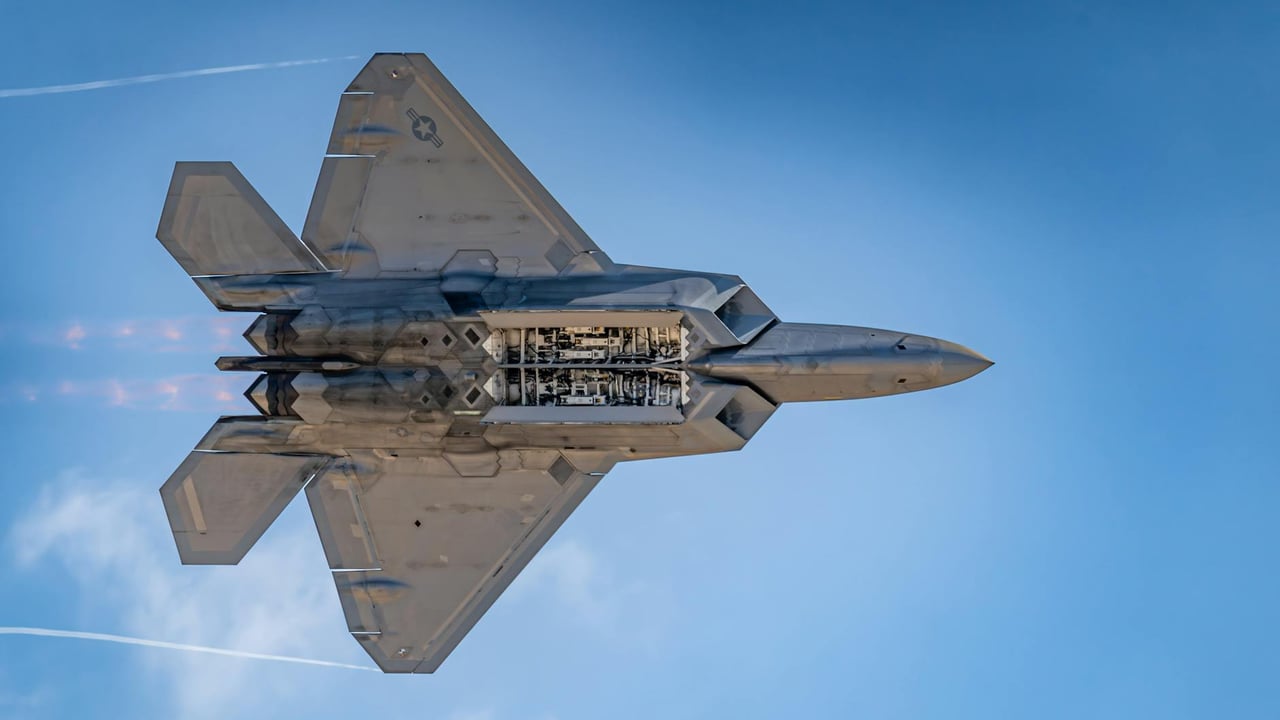

The United States has stepped up its military posture in Israel, with 11 F‑22 Raptor stealth fighters arriving at a southern Israeli air base on February 24 and another six expected to follow shortly. U.S. tanker and transport aircraft have also been deployed to Ben‑Gurion Airport near Tel Aviv, underscoring a logistics buildup that would support sustained air operations if required.
The military surge coincides with palpable strains in civilian life and diplomacy: KLM has said it will suspend Amsterdam–Tel Aviv flights from March 1, and Australia has advised the families of its diplomatic staff to leave Israel and Lebanon. At the same time, Washington and Tehran are engaged in indirect talks — in Muscat and Geneva — with a third round scheduled for February 26, even as U.S. President Donald Trump has acknowledged considering a “limited military strike” against Iran.
The deployment of F‑22s is significant for both practical and symbolic reasons. The F‑22 is a stealth air‑superiority fighter designed to penetrate contested airspace and establish aerial dominance; a squadron presence gives Israel and the U.S. a rapid, survivable strike and air‑defense capability. Paired with tankers and transports, it enables longer‑range missions, persistent patrols and quicker escalation should political decisions push toward kinetic action.
The juxtaposition of intense diplomacy and visible military reinforcement is a familiar script in crises but one with dangerous friction. Military posture can strengthen deterrence by raising the costs of aggression, yet it can also harden adversaries’ resolve and create windows for miscalculation. The arrival of stealth fighters reduces Israel’s and the U.S.’s tactical vulnerabilities, but it does not remove the strategic uncertainty that fuels escalation risks across the region.
Observers should watch three dynamics closely: the scope and outcome of the Geneva talks with Iran, whether the additional F‑22s are used for patrol and deterrence alone or integrated into offensive planning, and how allied civilian reactions — flight suspensions and diplomatic family relocations — affect international willingness to sustain prolonged crisis exposure. Each development will reshape the incentives for restraint or escalation.
For regional capitals and international markets, the immediate effect is a higher premium on contingency planning. Airlines and foreign governments are already adjusting their posture; energy markets and defence planners will monitor whether the U.S. presence stabilises tensions or accelerates them. In the short term, the U.S. decision to mass high‑end airpower in Israel signals a determination to preserve options and to deter direct Iranian action, while underscoring the fragility of diplomatic tracks.