

Second‑Class Staff Sergeant Jin Lei’s training world is a stark triangle: the bow of a pitching boat, a steely, patient gaze, and a distant orange target cresting on a wave. In a gruelling amphibious sniping exercise, he settles his knees to the hull, times a near‑imperceptible pause at the wave’s apex and squeezes the trigger. The shot finds the bullseye—an outcome his coach calls “full of meaning,” because Jin’s accuracy was not born of instinct alone but of a cross‑domain mindset forged over a decade in the Chinese navy.
Jin began his service as a communications specialist, literally learning to hear the battlefield in the hush of a radio room. Long nights of isolating faint ticks and learning signal attenuation taught him to think in chains and systems: how nodes break down, how networks reconstitute and how information gets from sensor to shooter. That patient, systems‑level habit of mind later underpinned his work as a drone pilot and, eventually, as a competition‑winning sniper who treats firing solutions as algorithms.
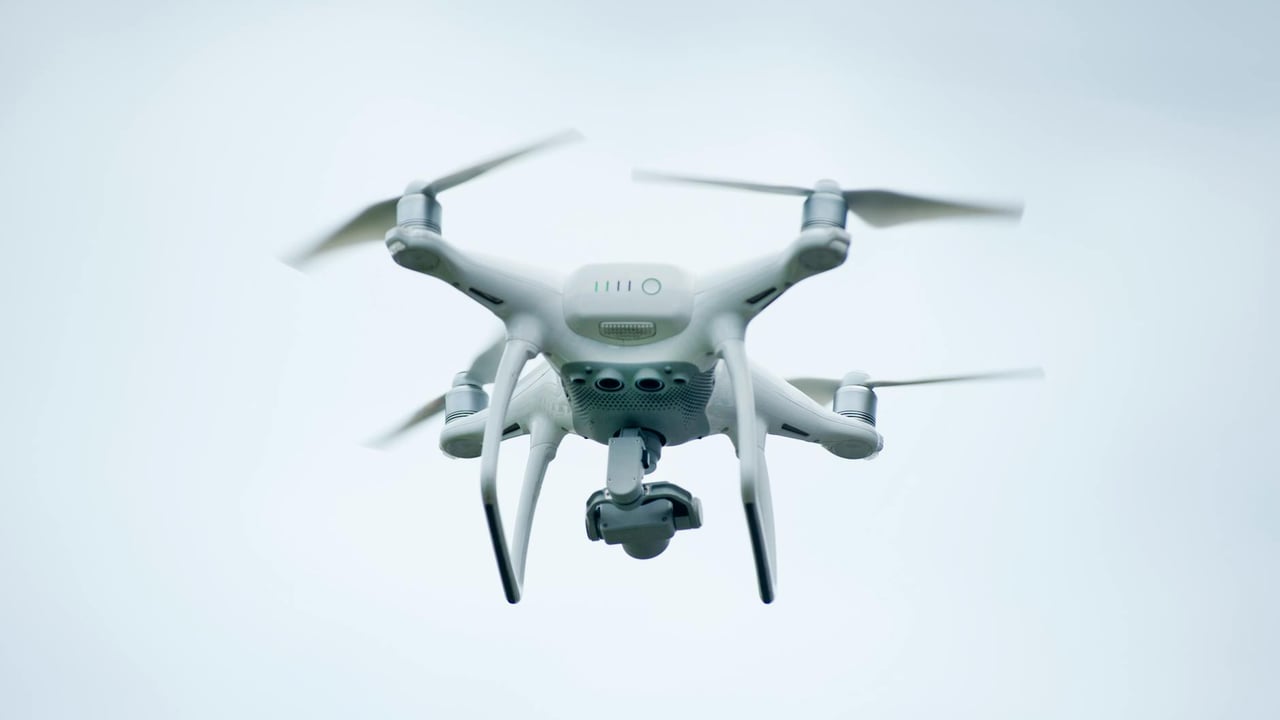
After basic training and years as a ‘communications’ soldier, Jin moved into reconnaissance in 2021 and was assigned to a drone‑reconnaissance unit rather than a sniper slot. The first time he lifted a small drone he described a “God’s‑eye” revelation: suddenly terrain, concealment and movement were visible in layers and at ranges the groundman could not easily apprehend. He began to map aerial imagery to likely sniper positions, annotating elevation, slope and vegetation while cross‑referencing radio nodes and fallback comms plans.
That synthesis paid operational dividends during red‑blue exercises when Jin guided a sniper team to a blind‑spot target by creeping a drone in at low altitude, relaying coordinates and meteorological corrections over the radio. The sniper’s later praise—calling Jin an “airborne guide”—captured a broader cultural shift in his unit: a grudging recognition that small‑unit lethality increasingly depends on information fusion as much as marksmanship.
Jin’s path was not merely technical. It was also procedural and psychological. When his trusted rifle failed during selection for the “Feng‑R?en‑2025” international sniper contest, he did not surrender to superstition about a lost personal weapon. Instead, he methodically treated the new rifle as a system: measure, fire, record, adjust. That engineering‑style loop—borrowed from years of radio diagnostics and drone telemetry—let him calibrate a fresh weapon in a single afternoon and secure a place on the national team.
At the competition his team emerged victorious, winning the small‑team all‑round title and returning home with formal commendation. Jin was awarded a second‑class merit for his performance, but he missed a promotion for administrative reasons related to age, a reminder that bureaucratic constraints still sit alongside merit in personnel decisions. He has since pushed to institutionalize what he learned: training programs that blend drone image interpretation, battlefield information fusion and sniper fundamentals.
Not everyone welcomed the change at first. Veteran snipers worried that “learning too much” might dilute trigger discipline; drone operators bristled at granular demands from shooters. Those tensions eased as joint drills demonstrated faster target acquisition, cleaner fire control and higher first‑round hit rates when UAVs and snipers practiced together. The end result in Jin’s unit was not merely a new course module but a mindset shift toward multi‑domain small‑unit integration.
Jin’s story is human and tactical, but it also signals doctrinal priorities. The People’s Liberation Army has invested heavily in unmanned systems and networked command and control; Jin’s experience shows how these investments are being operationalized at the squad and platoon level. Training elite sailors to operate across comms, ISR and precision‑fire disciplines produces force multipliers who can shorten the sensor‑to‑shooter loop in littoral and expeditionary scenarios.
That said, Jin is an exemplar, not a trendline by itself. Scaling this model requires institutional changes: cross‑training curricula, revised promotion incentives and logistics to sustain integrated teams under combat stress. If those changes follow, the PLA will enhance its capacity to pair organic airborne sensing with precise, distributed fires—an evolution with clear implications in contested maritime spaces where observation windows are fleeting and targets can hide behind complex terrain or the sea itself.
For international readers, the significance is straightforward. Jin’s arc—from radio racks to drone consoles to the shooting line—illustrates how modern militaries turn information skills into kinetic advantage. It is a reminder that technological access alone is insufficient; what matters is the human capacity to fuse sensors and shooters into a coherent operational loop. That combination is quietly reshaping the tactics available to navies and special‑operations forces in Asia and beyond.