

NASA has reworked the architecture of its Artemis lunar programme to reduce mission risk and give new commercial systems more time to prove themselves. The agency says it will rely on a higher cadence of launches and incremental testing—an approach it likens to the iterative validation used during Apollo—rather than attempting a single, complex mission that combines many firsts.
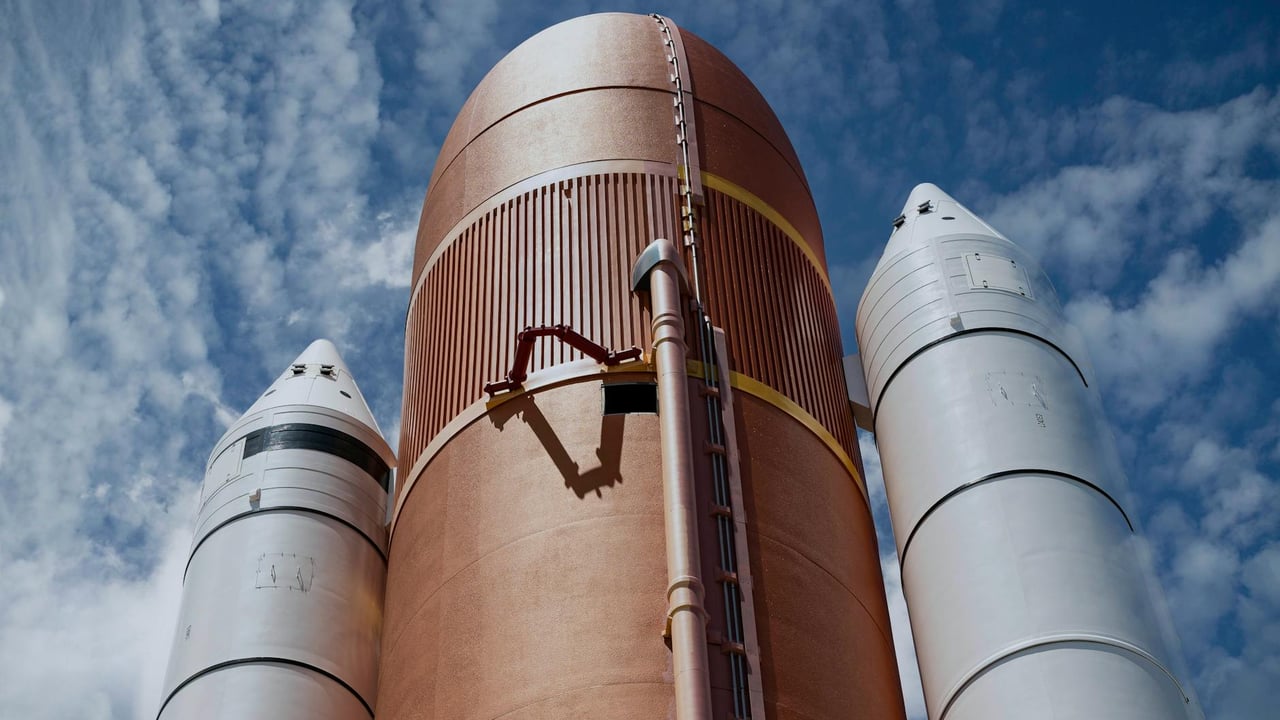
The immediate operational change leaves the crewed Artemis II lunar flyaround on course but highlights the vulnerability of the Space Launch System (SLS) rocket. SLS suffered a hydrogen propellant leak earlier and, this week, an upper-stage helium leak that forced the vehicle off the pad. If repairs go well, NASA says the next launch window will fall between April 1 and April 6.
Artemis III, originally planned as the mission to land astronauts near the lunar south pole, has been significantly reconfigured. Under the new plan the mission will launch a lander into near‑Earth orbit where Orion crew will practice docking and evaluate new extravehicular suits being developed by Axiom Space. SpaceX and Blue Origin remain the principal private contenders developing the full lunar landers that NASA expects to use down the road, making the landing timetable heavily dependent on the commercial sector's progress.
The change follows blunt counsel from NASA's Aerospace Safety Advisory Panel, which warned that Artemis III as originally conceived bundled too many first‑time activities into one mission and therefore carried an unacceptably high overall risk. To simplify operations, NASA has also shelved a planned upgrade to the SLS. Deputy administrator Amit Kshatriya argued there is no need to modify the rocket mid‑stream after completing Artemis 1 through 3.
NASA published a tentative schedule: if the reworked Artemis III proceeds in 2027, a crewed lunar landing could shift to Artemis IV in 2028, with Artemis V possibly following later that year. The agency envisions that as procedures and hardware standardise, lunar landings could become annual events.
The practical outcome is a programme that leans more on private industry and iterative testing to regain momentum. That reduces the number of simultaneous unknowns on any given mission but shifts programme timing and political headlines onto companies such as SpaceX, Blue Origin and Axiom. It also keeps attention on SLS reliability and on Boeing, which supplies the core stage and bears reputational and contractual exposure if further failures occur.
The rework matters beyond technical housekeeping. Artemis is a geopolitically salient programme: it underpins US claims to leadership in deep‑space operations, frames international partnerships under the Artemis Accords, and drives a nascent lunar economy. Slower-than-expected progress or repeated SLS setbacks will give rival space programmes room to shape norms and commercial markets on the Moon.
Near term, watch three variables: whether SLS can be repaired and relaunched on schedule; how quickly private lander teams can complete testing and certification; and whether Congress or the White House press for accelerated timelines or a change in procurement strategy. The new approach reduces single‑mission risk but increases dependence on a heterogeneous industrial base that must deliver on time.