
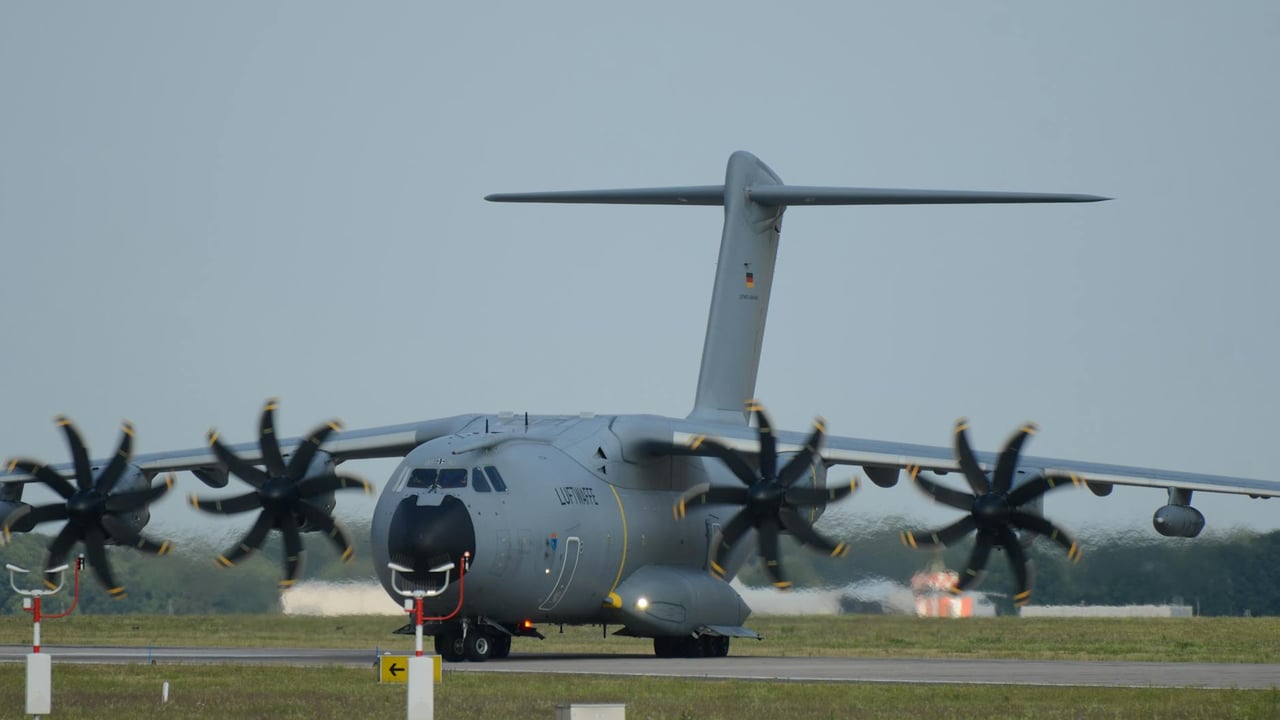

Indonesia has taken delivery of its first Airbus A400M Atlas and plans to receive a second aircraft in 2026, closing a procurement process that began more than a decade ago. Jakarta has also signed a letter of intent for four additional airframes, signalling a sustained investment in heavier, longer‑range airlift capacity for a state that stretches across thousands of islands.
The A400M was conceived by a European consortium in the 1990s to fill the gap between light tactical transports such as the Lockheed C‑130 and strategic heavies like Boeing’s C‑17. Its development was protracted and troubled: cost overruns, engine problems and delivery delays dogged the programme for years. Yet the aircraft’s technical profile — roughly 37 tonnes of payload, short‑takeoff and landing capability from semi‑prepared strips, and modular systems that allow rapid role changes — has kept it commercially relevant.
For Indonesia the choice is pragmatic. The archipelagic state needs something larger than its ageing C‑130s to move troops, equipment and humanitarian aid across dispersed islands without relying on long runways or forward bases. The A400M’s ability to carry light armoured vehicles, helicopters or large palletised cargo, and to be reconfigured quickly as a tanker, medevac or firefighting platform, matches a wide range of civil‑military tasks Jakarta faces.
Beyond peacetime utility, the A400M offers operational flexibility that appeals to mid‑size powers. Its turboprop engines and wide fuselage allow low‑speed refuelling of helicopters and tactical aircraft, a useful niche for navies and air forces that lack dedicated tankers. European operators are also experimenting with the type as a ‘mother ship’ for large drones, an airborne command node and even as a palletised weapons carrier — options that extend the platform’s potential into multi‑domain missions.
Those strengths come with constraints. The A400M’s 37‑tonne payload cannot accommodate main battle tanks or the heaviest wheeled armoured vehicles, forcing purchasers to retain access to larger strategic transports for very heavy lift. Its unit cost is high — reported at well over $400 million — making it more expensive per tonne than some competitors. Operational complexity and sustainment of a relatively rare type can also create long‑term logistical burdens for countries outside Europe.
Strategically, Indonesia’s procurement underscores a diversification of defence suppliers in Southeast Asia. Jakarta has long balanced Chinese, Russian and Western equipment; buying the A400M deepens industrial links with European defence firms and points to a preference for multi‑role platforms that serve both security and humanitarian ends. Regionally, enhanced Indonesian airlift improves the country’s ability to project presence, respond to natural disasters and contribute to UN peacekeeping deployments.
European manufacturers, for their part, are marketing the A400M as a flexible airborne node rather than just a transport. That narrative helps justify the platform’s price and plays to emerging concepts of operations that emphasise sensor fusion, airborne command and palletised mission kits. But technological shifts — including interest in blended‑wing bodies, faster transports and unmanned systems — could alter demand for conventional tube‑and‑wing turboprops over the next decade.
In short, Jakarta’s decision reflects a cost‑benefit calculation rooted in geography and mission diversity: the A400M will materially enhance Indonesia’s reach and responsiveness, but it is not a one‑size‑fits‑all answer to heavy strategic lift or high‑end contested operations. The aircraft’s future appeal will depend on how buyers manage sustainment, integrate new mission kits and adapt the type to evolving multi‑domain concepts of warfare.