
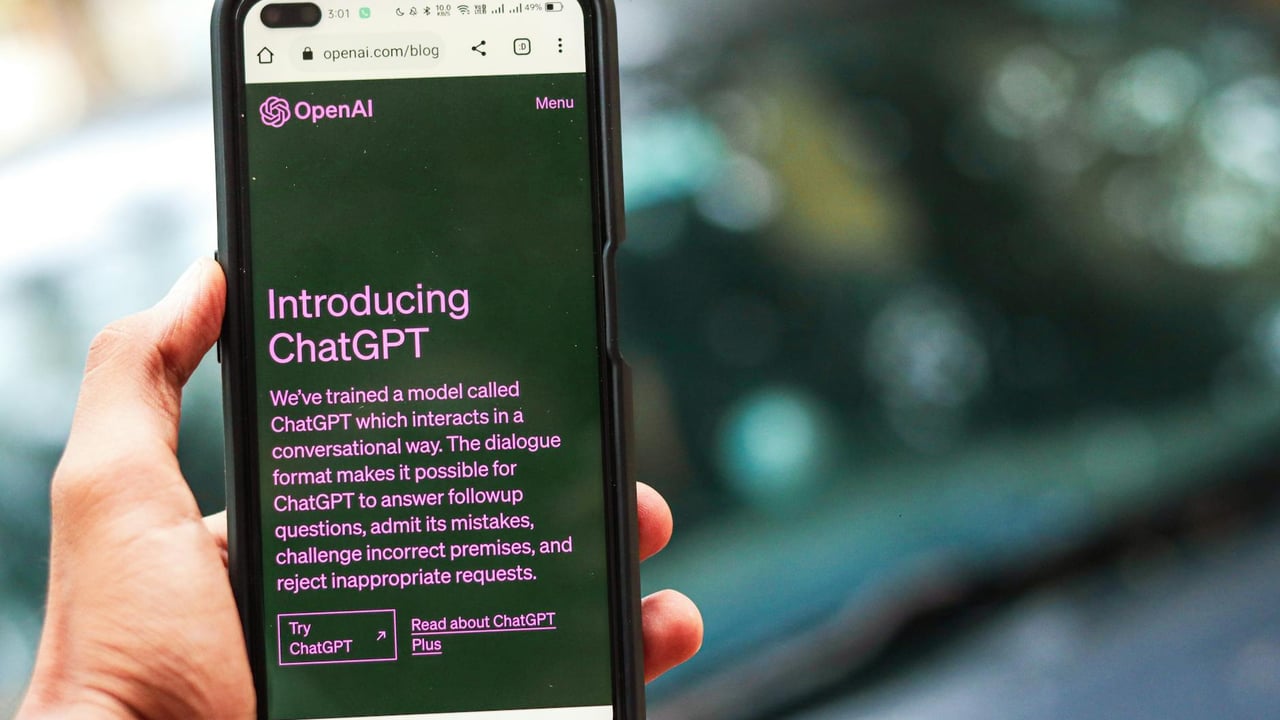

OpenAI said Friday that ChatGPT now attracts about 900 million weekly active users and is aiming for the next landmark of 1 billion. The company also reported more than 50 million paid subscribers and said subscription growth accelerated at the start of the year, with January and February likely to be its biggest months for new sign‑ups on record.
The scale-up has been dramatic: the platform crossed the 800 million weekly user mark in October 2025 and had roughly 200 million weekly users only 18 months earlier. That explosion underscores a shift in generative AI from a niche curiosity to a mass utility for learning, writing, planning, research and creative work, creating a self‑reinforcing cycle where more users generate richer interaction data and faster product improvement.
Geography matters. OpenAI said regions such as India have become major interaction hubs, reflecting both large populations and improving access to AI tools. Even among non‑paying users, the sheer size of ChatGPT has turned it into a global distribution channel for developers, enterprises and creators seeking to reach audiences at scale.
Scale brings benefits but also costs. Running a global AI service with real‑time responses, memory, safety and reliability requires vast compute, storage and engineering investment. Users’ expectations of low‑cost or free, near‑instant answers put heavy pressure on OpenAI’s operating model and commercial strategy; finding the right trade‑off between broad accessibility and financial sustainability will be a defining challenge.
OpenAI disclosed the user figures alongside news of a new, unusually large financing round totaling about $110 billion. Major participants reportedly include Amazon ($50 billion), Nvidia ($30 billion) and SoftBank ($30 billion), taking the company’s pre‑money valuation to roughly $730 billion, up from about $500 billion in a secondary transaction last October. The cash infusion will underwrite massive infrastructure spending and deepen ties with cloud and silicon partners, but it also amplifies scrutiny from regulators, customers and competitors.
For the industry, OpenAI’s growth and financing are a double‑edged signal: they validate the commercial potential of generative AI while highlighting concentration risks and the escalating economics of leading‑edge models. Competitors will need to match both product quality and capital intensity, while regulators will be watching how market power, data flows and national security concerns evolve as a handful of firms build global reach.