
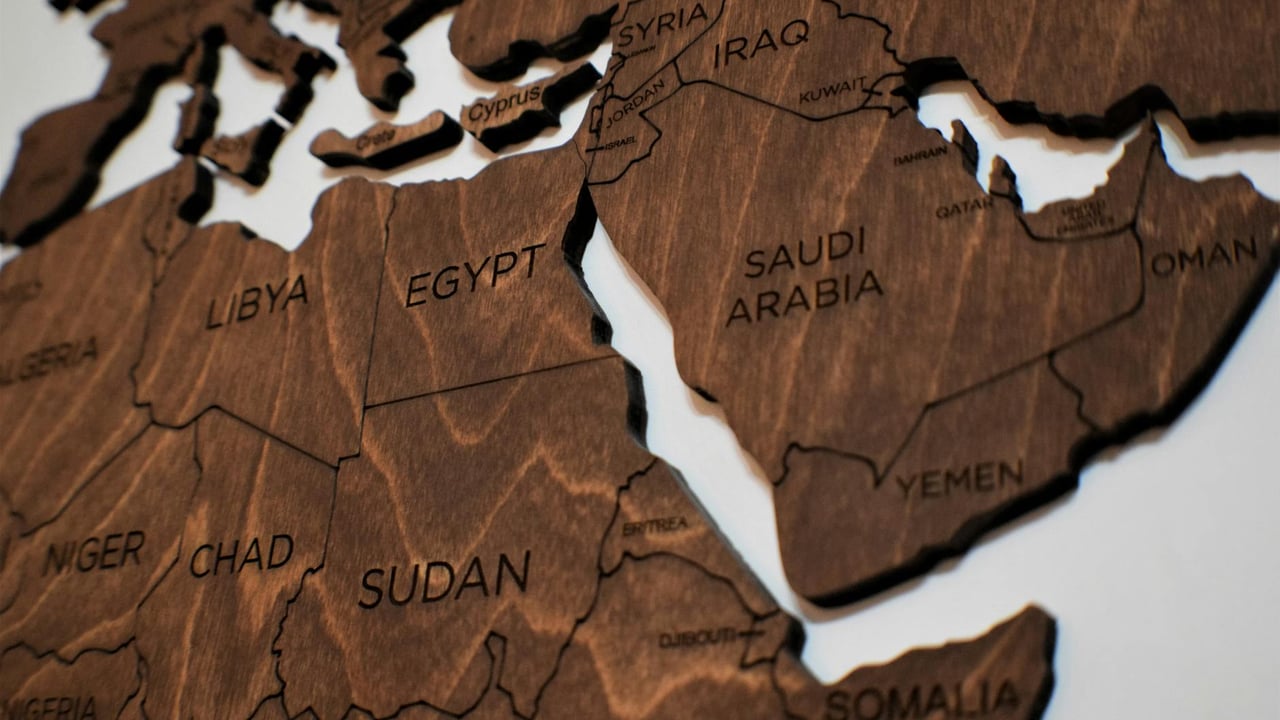

Multiple explosions in central Tehran on 28 February triggered sirens across Israel and an immediate declaration from Jerusalem that it had carried out "preventive" strikes on Iranian targets — strikes an Israeli official said were executed jointly with the United States. The attacks and subsequent claims of U.S. participation mark the most dangerous escalation between Tehran and its two principal adversaries since the 2010s, and have been accompanied by a sweeping American military buildup across the Middle East.
The Pentagon has concentrated what U.S. and open-source reporting describe as the largest aggregation of U.S. sea and air assets in the region since 2003. The nuclear carrier USS Gerald R. Ford returned to waters off Israel after a brief port call, joining a carrier strike group that has lifted U.S. naval assets around Iran to at least 16 major combatants and roughly 150 carrier aircraft. Hundreds of American combat and support aircraft have been re‑positioned across the Levant, the Gulf and the eastern Mediterranean in recent weeks.
Airpower deployments have included elite F‑22s placed at Israel’s southern Ovda base, movements of F‑16s from Japan to the Indian Ocean at Diego Garcia, and an influx of F‑35s and F‑15s through European staging points. Tankers were shifted from al‑Udeid in Qatar to Ben Gurion airport near Tel Aviv, extending the operational range and endurance of coalition aircraft. U.S. military planners have also advertised a new unmanned strike element — a "scorpion" task force modelled on the loitering munitions seen in Ukraine — that Washington says could alter the calculus against Iranian forces.
Washington’s footprint differs from past Middle Eastern wars in scale and shape. Unlike the massed ground formations of Desert Storm and the 2003 Iraq invasion, U.S. strategy today leans on maritime and airpower concentration, long‑range precision strike, and remotely piloted systems. That posture allows for rapid strikes without the political and logistical costs of large ground commitments, but it also compresses decision‑timelines and raises the risk of miscalculation in a crowded battlefield where drones, cruise missiles and air defenses intermingle.
Israeli leaders are positioning their country to serve as both sanctuary and launchpad. Stationing U.S. fighters on Israeli soil reduces exposure to Iran's short‑range rocket threat, offers more secure basing for refuelling and logistics, and enables deeper Israeli air operations without routing flights over hostile territory. For Washington, basing and overflight arrangements strengthen deterrence while giving the U.S. plausible deniability and operational flexibility — but they also tie American credibility to Israeli operational timelines and increase the risk that bilateral action will draw the U.S. deeper into a conflict with Tehran.
Iran has warned of "decisive and devastating" retaliation to any aggression. Tehran's statements, combined with its extensive network of allied militias and proxy forces across the Levant and the Gulf, mean that a limited strike risks a cascade of asymmetric responses: attacks on shipping, strikes on regional bases, cyber operations, and stepped‑up activity by Hezbollah in Lebanon. The international economic consequences would be immediate — energy markets would spike, insurance costs for shipping would rise, and regional instability would test fragile relations between Gulf states, Europe and Washington.
For global audiences the significance is simple but grave: the United States and Israel are showing they can project concentrated, modern combat power to threaten Iranian military and nuclear infrastructure at long range. That capability increases political options for coercion but does not reduce the probability of wider conflict if Tehran chooses to retaliate through proxies or direct strike. The coming days will test whether this posture restores deterrence or accelerates an irreversible spiral of escalation.