China Issues First National Standard Framework for Humanoid Robots — Industry Poised at a Turning Point

China has released a national standard system for humanoid robots and embodied intelligence that covers the full supply chain and lifecycle, aiming to accelerate commercialization and regulate safety and ethics. The move arrives as domestic firms show technical progress and growing orders, but the field’s core AI 'brain' remains a bottleneck that will determine whether humanoids reach mass production.

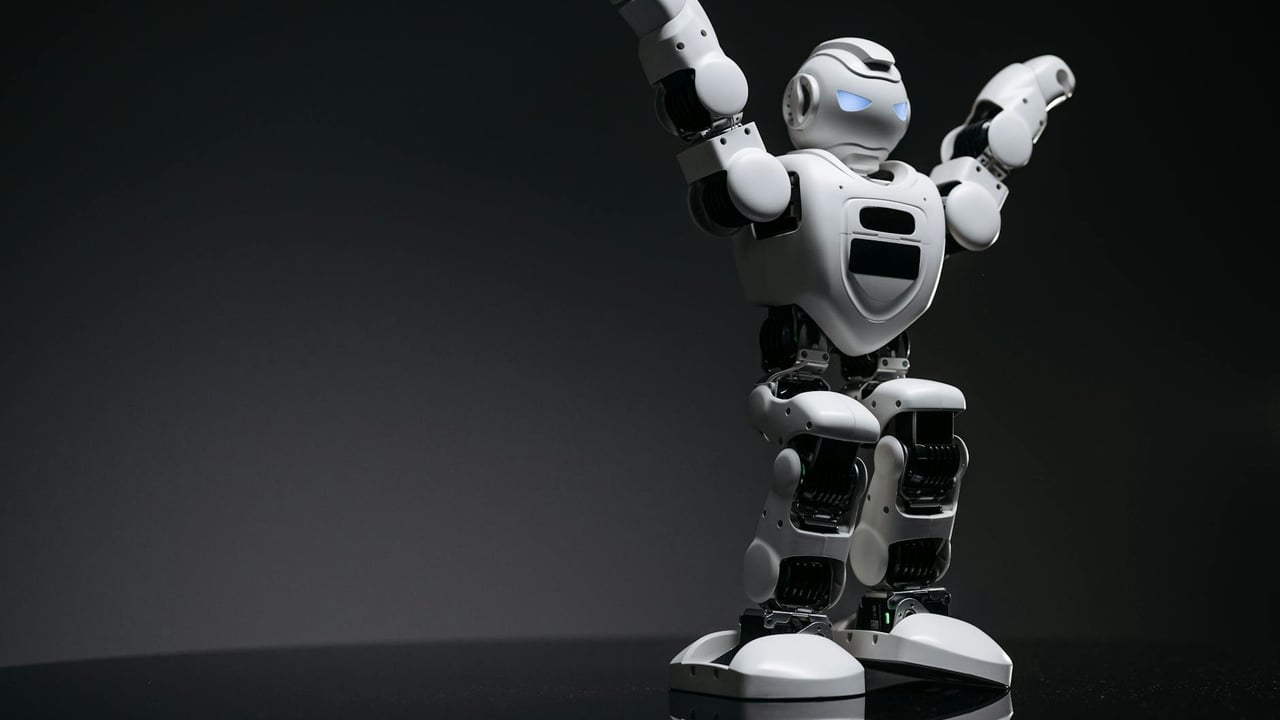
Close-up studio shot of a white robot toy with LED eyes raised in victory on a gray background.

Key Takeaways

  • 1Beijing published the first national-level standard system for humanoid robots and embodied intelligence, covering six domains including brains, limbs, systems, applications and ethics.
  • 2The standard seeks to harmonise the full industry chain and life cycle, reducing fragmentation and shaping procurement, safety and export credentials.
  • 3Chinese firms posted over RMB 4.6 billion in publicly reported humanoid robot orders in 2025 and demonstrated capabilities publicly, but the top-level decision 'brain' remains immature.
  • 4Analysts outline four commercial scenario archetypes (ToB/ToC × big‑brain/small‑brain) that map near-term viable markets such as retail guides, special‑industry clusters, companions and household care.
  • 5Standards will likely accelerate consolidation, advantage compliant suppliers, and focus investor attention on core component and embodied‑AI companies, while raising dual‑use and regulatory considerations.

Editor's
Desk

Strategic Analysis

China’s standardisation of humanoid robots is both a practical industrial step and a geopolitical signal. Practically, it lowers integration friction for buyers and lets the state nudge an emergent ecosystem toward interoperable modules, safer deployment and clearer certification pathways — all prerequisites for scaled procurement by hospitals, retail chains and factories. Strategically, a national standard locks markets and supply chains around domestic technical choices, benefiting local component makers and AI vendors and potentially creating exportable packages. The decisive variable remains embodied intelligence: if domestic teams close gaps in real‑time decision‑making, generalisation and multimodal fusion, standards will catalyse rapid commercialisation. If not, standards may merely crystallise a hardware‑led ecosystem that still depends on imported or foreign‑sourced cognition stacks. Policymakers and investors should therefore track not only deployments and orders, but advances in world‑model architectures, latency‑optimized inference, and the emergence of robust training datasets for embodied behaviours.

China Daily Brief Editorial
Strategic Insight
China Daily Brief

China has published its first national-level standard system for humanoid robots and embodied intelligence, marking a major attempt to put order around a rapidly evolving sector. The “Humanoid Robots and Embodied Intelligence Standard System (2026 edition)” sets a top-level architecture that spans the full industry chain and product lifecycle, and is the first time Beijing has codified standards covering both mechanical platforms and the AI ‘brains’ that animate them.

The standard framework, produced by the Ministry of Industry and Information Technology’s technical committee on humanoid robots and embodied intelligence, is structured into six parts: foundational commonality, brain and computing, limbs and component modules, whole machines and systems, applications, and safety and ethics. It explicitly covers both large-scale cognitive systems and lower-level motor and perception subsystems — from class‑human torsos and dexterous hands to execution, sensing and communications modules — signalling a government intent to shape interoperability, safety and industrial practices at scale.

The move comes as Chinese companies push for commercial traction. Publicly reported orders for humanoid robots in 2025 exceeded RMB 4.6 billion and more than 20,000 units, and Chinese firms already demonstrated notable advances on the national stage: multiple manufacturers sent humanoid robots to the Spring Festival Gala, showing faster iterations in language interaction, coordinated motion and fine manual tasks. Investors and brokers now describe the sector as “approaching a critical point” where standards, supply chains and applications could prompt a shift from prototype demos to pre‑mass‑production rollouts.

Market analysts frame near‑term commercial opportunities around four customer‑scenario archetypes derived from two axes: ToB/ToC buyers and ‘big‑brain’ versus ‘small‑brain’ capabilities. Examples include showroom guides and retail assistants that demand conversational agility and humanlike presence; special‑industry clusters that require real‑time coordinated motion and swarm control; personal companion use cases that rely on conversational and emotional intelligence; and household care tasks dependent on long‑range, fine‑manipulation sensorimotor coordination. These scenarios help explain why upstream suppliers — from motor and hydraulic component makers to precision optics and semiconductors — are now drawing investor scrutiny.

The announcement also exposes the industry’s central technical bottleneck: the ‘brain’. While mechanical agility, dexterous hands and cluster coordination have seen steady progress, top‑level decision systems that deliver real‑time responsiveness, robust generalisation and multimodal sensor fusion remain immature. Domestic securities firms and analysts caution that gaps persist vis‑à‑vis leading global research, and that the pace of advances in embodied AI will determine whether humanoids become economically viable at scale or remain niche automation tools.

Beyond technology, the standard system has immediate policy and commercial consequences. National standards reduce fragmentation, lower integration costs for buyers, and provide a blueprint for safety and ethical guardrails — all attractive to institutional purchasers in healthcare, retail and manufacturing. They will also shape procurement criteria, ease regulatory approvals, and influence export credentials. At the same time, codification can consolidate market winners by privileging suppliers that already conform to the new architecture, and it may draw increased scrutiny on dual‑use risks as humanoid platforms straddle civilian and military utility.

For global observers, China’s standardisation push is a signal that the country wants to lock in first‑mover advantages across an emerging ecosystem: component suppliers, integrators and embodied‑AI developers. Several listed domestic suppliers and specialised AI firms have been highlighted by brokers as worth watching, reflecting investor belief that hardware scale and localised AI stacks could create a defensible industrial cluster. Yet the strategic outcome will depend on whether breakthroughs in embodied intelligence translate into reliable, affordable products that address clear, high‑value use cases.

Share Article

Related Articles

📰
No related articles found