

Israel announced a pre-emptive strike on Iran on the afternoon of March 1, and explosions rocked central Tehran near the office of Iran’s supreme leader. Israel’s defence minister declared the country in a state of emergency and framed the operation as a preventive measure to eliminate an imminent threat. Sirens sounded across Israel, flights were diverted and several countries moved to evacuate citizens, instantly elevating regional tensions.
The attack follows the collapse of a third round of US–Iran indirect talks in Geneva earlier this week and comes against a backdrop of expanded US forces in the region. Open-source tracking and public statements point to an unprecedented American deployment of carriers, advanced fighters and a submarine posture that together amplify the prospect of a wider confrontation. Washington has publicly warned Tehran and said it would watch the aftermath of negotiations before deciding on military action.
Israel’s operation appears to be an attempt to blunt what it perceives as an accelerating Iranian nuclear and missile threat, and to pre-empt further Iranian support to regional proxies. Jerusalem’s security calculus has hardened since its 2025 campaign of strikes on Iran, and Israeli officials framed the new strike as necessary to prevent an intolerable escalation of risk.
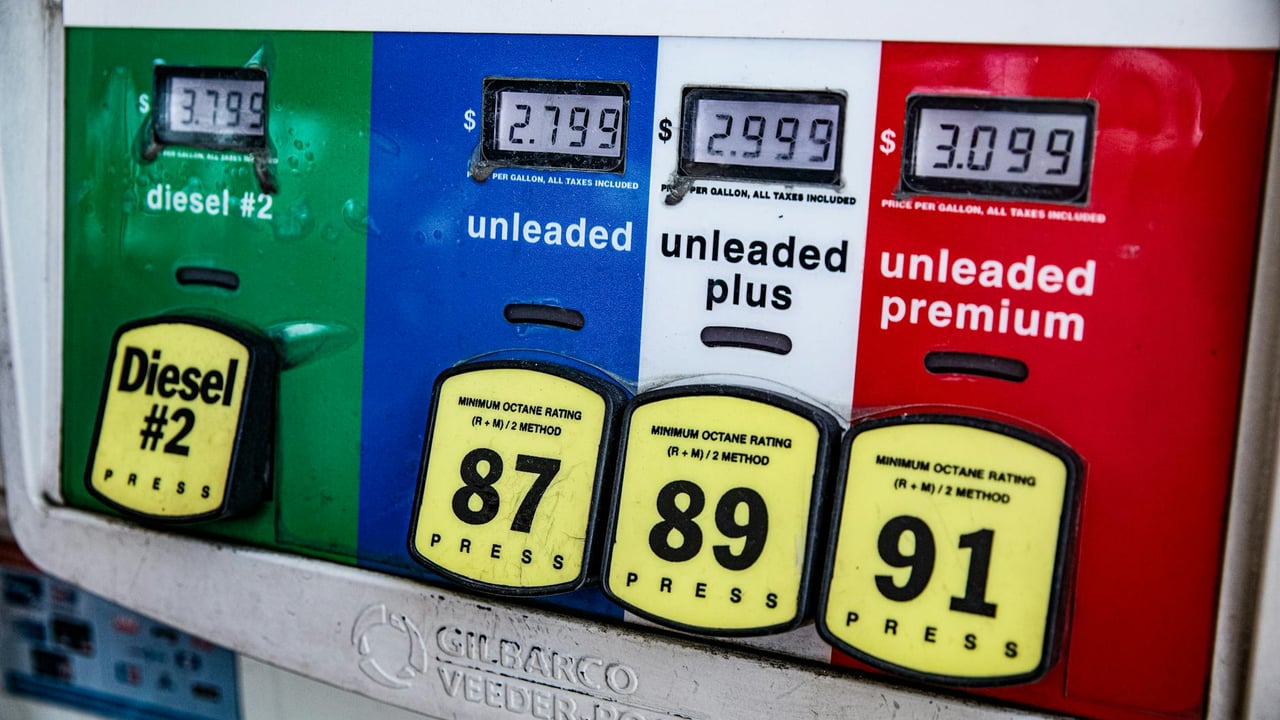
Markets reacted immediately. International crude futures jumped on news of the strike as traders priced a near-term risk premium into oil. Flight diversions, port disruptions and the prospect of damage to Iran’s export infrastructure pushed an already jittery market higher, with some participants forecasting prices could breach the $100 per barrel mark if fighting intensifies.
The supply risk is tangible. Iran sits on very large proven reserves and, by the figures cited in Iranian and industry statistics, has the capacity to produce several million barrels a day. The article’s data—capacity near 4.5 million barrels per day, output around 3.6 million and exports roughly 3 million—illustrate how an escalation that damages terminals or major fields could create a substantial immediate shortfall. Attacks on key export nodes such as Kharg Island or terminals in Khuzestan would be especially disruptive.
The Strait of Hormuz compounds the danger. Roughly one fifth of global oil trade transits the strait; Tehran’s geographic control of the northern approaches gives it leverage over global shipping. Even the threat of closure raises insurance costs, forces longer voyages around the Cape of Good Hope and pushes freight and refining margins higher—effects that all feed back into retail fuel prices.
Markets are therefore reacting not to present fundamentals but to a geopolitical risk premium. At the time of the strike, global inventories and production had shown signs of loosening, but traders routinely front-run potential supply interruptions. History shows that fear-driven buying, coupled with constrained spare capacity, can push prices sharply higher in a compressed window.
Spare production capacity among exporting countries is limited. Industry estimates place effective global spare capacity in the low single-digit millions of barrels per day, concentrated primarily in Saudi Arabia and the United Arab Emirates. If Iran’s exports were curtailed materially, OPEC+ would face a difficult choice: release strategic spare capacity and emergency stocks, or allow prices to spike and risk economic fallout for importers.
If the conflict remains contained and brief, price spikes could prove transitory. But if hostilities expand—especially with formal US engagement—analysts warn of a much larger, sustained supply shock. A prolonged campaign against Iranian infrastructure, tighter shipping constraints and punitive sanctions could widen a supply gap that spare capacity and releases from strategic reserves would struggle to cover.
Beyond near-term energy-market volatility, the strike could accelerate structural shifts. Importers in Europe and Asia may intensify efforts to diversify away from Middle Eastern crude, hastening investments in Atlantic and South American supplies and reinforcing the political impetus behind renewable energy and electrification. Over time, repeated shocks of this kind also increase the political and financial costs of reliance on a concentrated supply basin, altering both commercial strategies and long-term energy security planning.
The path ahead depends on three variables: the scale and duration of Iran’s response, whether the United States or other states deepen their military involvement, and how quickly OPEC+ and major consuming nations deploy spare capacity or emergency stocks. For markets and policymakers, the immediate task is crisis management; for businesses and strategists, the episode is a reminder that geopolitics remains a dominant and unevenly distributed risk in the global energy system.