
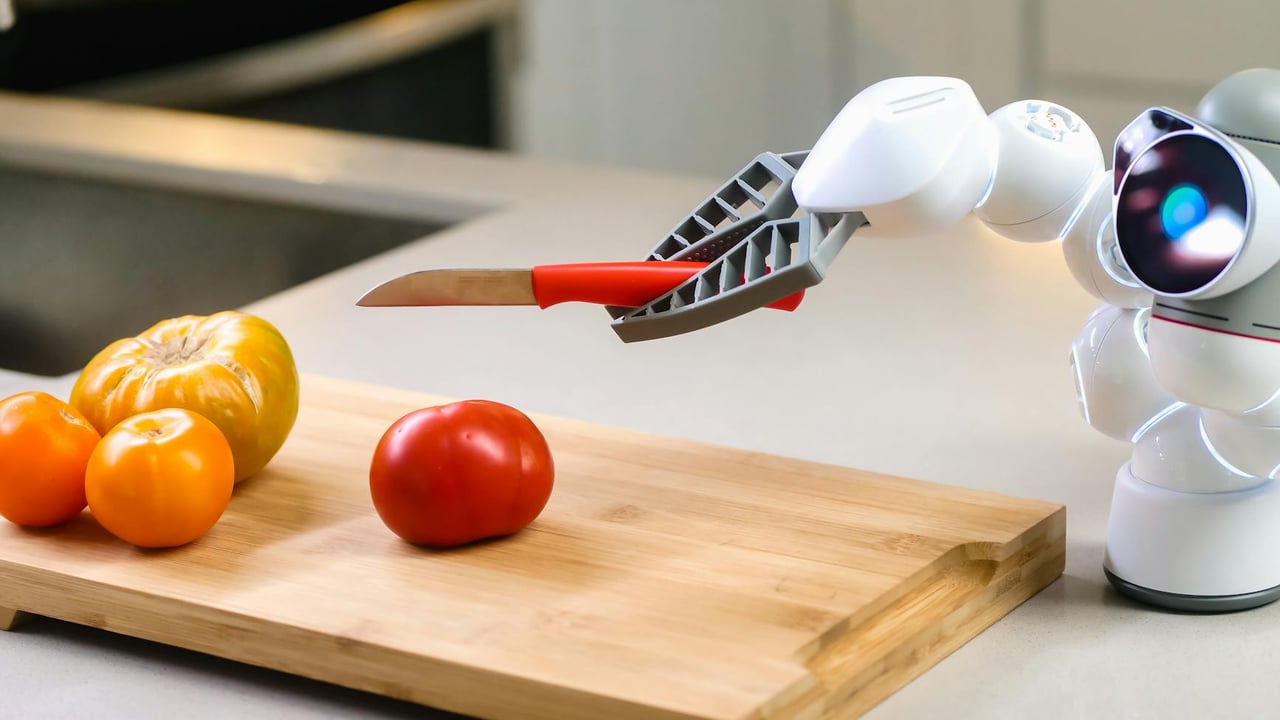

At the Mobile World Congress in Barcelona, Chinese smartphone maker Honor unveiled its first humanoid robot and put it through a theatrical routine, performing what the company billed as a "space dance" onstage. The brief demonstration was glossy and choreographed — exactly the sort of spectacle trade-show audiences expect — but it offered little hard detail on capabilities, pricing or when the device might reach customers.
The appearance matters less for the choreography than for what it signals: a continued pivot by handset makers into embodied artificial intelligence. As the smartphone market matures and growth slows, companies such as Honor, Xiaomi and others are following a broader industry trend of repackaging software, cloud services and hardware know‑how into new form factors, including robots that can bridge digital assistants and physical tasks.
Technical obstacles remain. Humanoid robotics is costly and technically demanding: actuation, battery life, perception, balance and tactile manipulation all remain areas where incremental progress is hard won. Equally important is the software "brain" — the real‑time integration of large language models, perception stacks and low‑latency control that allows a machine to operate safely and usefully outside tightly scripted demonstrations.
Commercial viability is not imminent. For now, show‑floor robots serve marketing and R&D signalling functions rather than clearing a path to mass consumer adoption. Early adopters are likelier to be enterprise customers — factories and logistics centres that can justify high unit costs and adapt environments — while household adoption depends on cheaper, safer, truly autonomous systems and a clear value proposition beyond novelty.
The entry of high‑profile consumer brands into humanoid robotics will reshape supply chains and competition. Phone makers bring strengths: industrial design, supply‑chain scale, sensor integration and large install bases for services. They also face constraints: advanced chips, high‑precision motors and the kinds of embodied datasets needed to train robust robots are expensive and sometimes subject to export controls and geopolitical friction.
For global observers, the Honor demo is a reminder that the robotics race is now as much about software ecosystems and business models as it is about hardware. Firms that can marry cloud AI, on‑device inference, and practical use cases — and navigate regulatory, privacy and safety concerns — will set the pace. In the near term, expect more theatrical debuts and incremental technical disclosures; meaningful, widespread humanoid deployments are likely to follow only after sustained engineering and economic progress.