
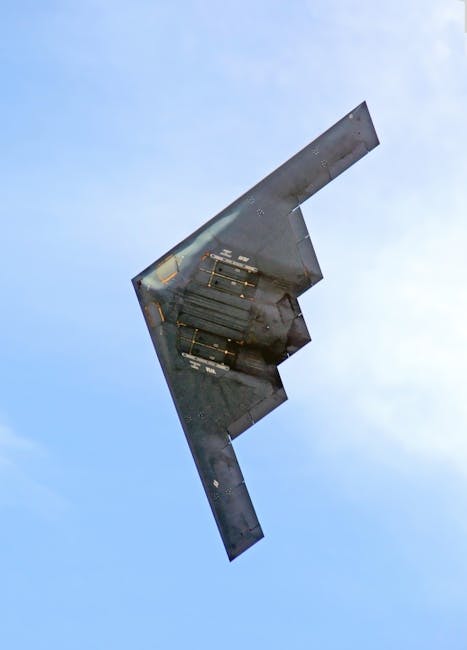

On March 1, the United States Central Command announced on social media that a B‑2 Spirit stealth bomber had conducted strikes the previous night against Iranian hardened ballistic missile facilities, employing 2,000‑pound conventional munitions. The terse statement presented the action as a precision strike on reinforced infrastructure associated with Iran’s missile programme, but provided few operational details and no imagery beyond the claim.
The use of a B‑2 — the Pentagon’s premier stealth, long‑range bomber — signals an intent to penetrate contested airspace while minimizing detection and escalation risk from integrated air defenses. The platform can carry large conventional and bunker‑penetrating ordnance, making it suitable for attacking fortified underground sites that smaller, stand‑off munitions might not defeat.
Washington’s announcement arrives against a backdrop of heightened friction between the United States and Iran and growing concerns among Gulf Arab states and Israel about Tehran’s ballistic missile developments and regional proxy networks. Even a single strike on hardened facilities has outsized symbolic value: it demonstrates American reach, informs allies and adversaries of US willingness to act, and seeks to degrade specific capabilities without committing to broader conflict.
There is limited independent confirmation of damage or casualties from open sources, and Iranian state media had not immediately acknowledged the strike at the time of the announcement. That opacity is typical in early reporting on covert or deniable operations and increases the political and strategic risk calculus for all parties in the hours and days after such actions.
Operationally, the strike underscores the evolving US approach to countering ballistic missile threats: combining high‑end platforms and precision munitions to target the most resilient elements of an opponent’s military infrastructure. The choice of a strategic stealth bomber rather than cruise missiles or fighter‑launched ordnance also reflects considerations about target hardness, the desire to limit offshore basing or allies’ overflight demands, and messaging to both domestic and international audiences.
For regional actors and global markets, the immediate impact is the heightened chance of reciprocal or asymmetric responses from Iran or its regional partners, including attacks on shipping lanes, escalation through proxy militias, or cyber and diplomatic retaliation. Such dynamics increase uncertainty across energy markets and complicate the posture of US forces and partners in the Middle East, which must now weigh deterrence, de‑escalation, and signalling in parallel.
Longer term, the episode may accelerate regional and global investments in hardened infrastructure, missile defenses, and offensive counter‑force doctrines. It also raises legal and political questions about thresholds for the use of force, the transparency of military operations announced via social media, and the chain of escalation in environments where multiple actors maintain plausible deniability.
The immediate story is short and sharp: a US strategic asset struck fortified Iranian missile targets, and the wider story is one of signalling and risk management. How Iran responds, how proxies interpret the message, and how allies recalibrate their own security postures will determine whether this action remains an isolated degradation of capability or becomes the opening move in a broader cycle of escalation.