
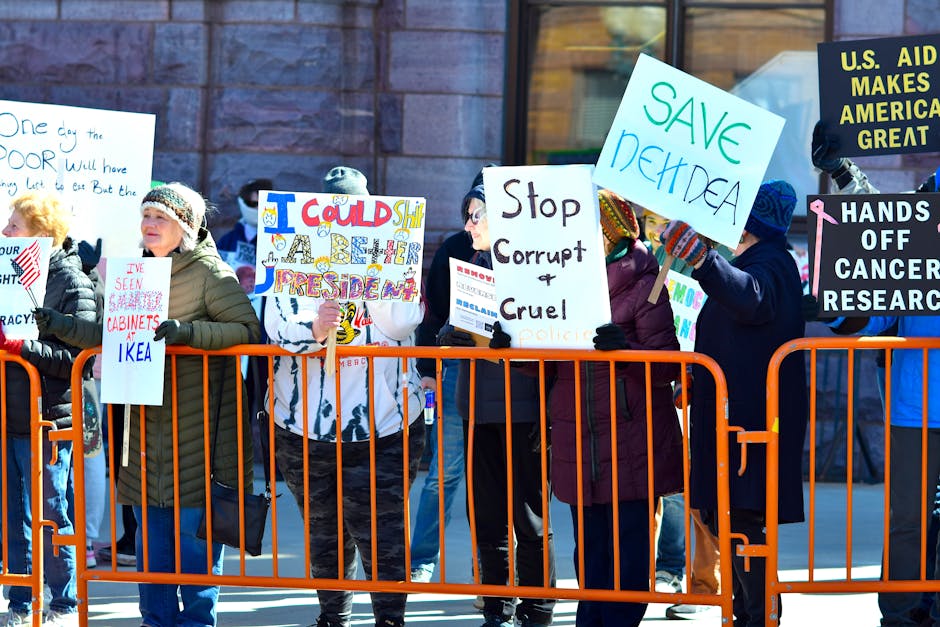

Mass demonstrations erupted across the United States after the United States and Israel carried out coordinated strikes on Tehran and other high-value targets on February 28, 2026. Tens of thousands of protesters poured into Washington, New York’s Times Square and scores of other cities from Los Angeles to Miami, accusing the White House of launching a war without Congress’s authorization and dragging the country into a dangerous foreign entanglement.
On the steps of the White House and in packed city squares, demonstrators denounced what they described as an executive overreach. Protesters held signs and chanted that the president had circumvented the Constitution and turned to military force to silence domestic controversies, with some likening the action to an authoritarian power grab.
Analysts and former officials have suggested the timing of the strikes was politically consequential. Commentators argued the military action came amid mounting domestic pressure on the president — from civil unrest in Minneapolis tied to a local rights dispute, the resurfacing of heavily publicized files in the Epstein saga, and a recent Supreme Court rebuke of a broad tariff policy — and that a dramatic show of force could be intended to refocus public debate abroad rather than at home.
Legal and political challenges to the strikes mounted immediately. The American Civil Liberties Union joined scores of Democratic lawmakers in demanding swift congressional action to halt what they called an unconstitutional use of force; they pointed to the constitutional requirement that Congress authorize sustained military engagements. Meanwhile federal law-enforcement and intelligence agencies moved to heightened alert, coordinating with state and local partners to monitor potential security threats on U.S. soil.
The domestic upheaval arrives as the United States faces multiple strategic risks. Military strikes on Iran’s capital risk rapid escalation across the Middle East, could fracture international support, and threaten to inflame militant networks that have previously used U.S. actions as a recruitment tool. Domestically, the confrontation threatens to deepen partisan divisions and could force a decisive congressional verdict on presidential war-making powers, a question with wide implications for the balance between the executive and legislative branches.
For international audiences, the episode is a reminder that Washington’s ability to project power is entangled with domestic politics and legal constraints. Whether the strikes achieve a lasting strategic objective or merely intensify chaos in the region will depend not only on military follow-up but on how quickly U.S. institutions — Congress, the courts, and allied capitals — respond to both the security challenge and the constitutional crisis at home.