
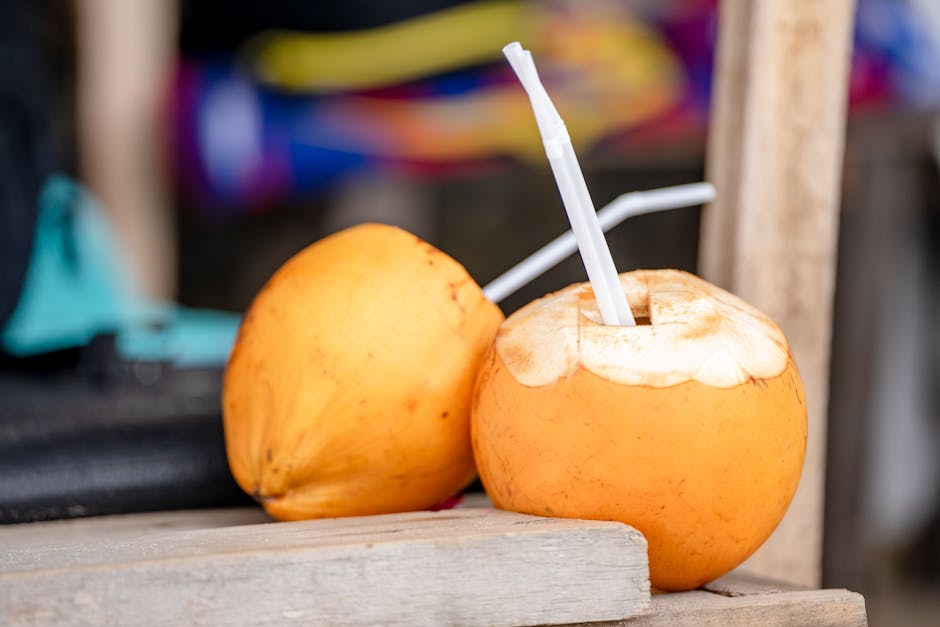

IFBH, the Hong Kong-listed owner of the if coconut-water brand, reported fiscal 2025 revenue of about US$176 million while net profit attributable to shareholders fell to US$22.8 million, a drop of roughly 31.7% year on year. The company blamed one-off listing-related professional fees and adverse currency movements from a stronger Thai baht against the US dollar, but the numbers also expose deeper strategic tensions.
The if label remains the engine of growth. Management says the if brand delivered roughly US$167 million in sales and accounted for about 94–97% of group revenue, with core coconut-water volumes and sales buoyed by stronger demand in China and expansion into overseas markets. That market strength helped overall revenue rise, but it masked a failure to convert top-line momentum into stable profit growth or into a credible second growth pillar.
Attempts to broaden the portfolio have so far underwhelmed. Innococo, the group’s electrolyte-water brand that the company is grooming as a second pillar, saw revenues plunge about 63% to roughly US$9.7 million after distributor disruptions and delayed product launches. Other adjacencies — coconut coffee and coconut black tea — also recorded material declines, leaving “other” beverage revenues sharply lower year on year.
IFBH’s asset-light model helped it scale rapidly: it has no owned factories, no proprietary warehouses and no full-fledged domestic subsidiary network, outsourcing production to General Beverage (a related-party manufacturer) and distribution to local partners. That lean structure drove an extraordinary productivity metric — just 46 employees generated the bulk of revenue — but it also concentrates execution risk in third-party distributors and leaves the company exposed when partners falter.
The wider market compounds the challenge. Greater China’s coconut-water segment is modest — roughly US$1.09 billion in 2024 with projections to rise to US$2.65 billion by 2029 — and incumbency attracts fierce local competition. Domestic beverage groups and retailers have rolled out coconut-water SKUs and aggressive distribution moves; meanwhile, domestic rivals are already building second curves in adjacent categories, notably Dongpeng’s rapid success with its electrolyte drink “Bu Shui La,” which has carved out a sizeable market position in just two years.
For IFBH the immediate task is existential: either invest behind channel control, supply-chain resilience and organisational capacity to make multi-brand expansion work, or re-embrace single-category leadership and defend the coconut-water moat. The company has signalled corrective steps — including switching distribution partners for Innococo and pushing further into Southeast Asia, Australia and the Americas — but execution will require deeper pockets and more operational heft than the current 46-person structure implies.