
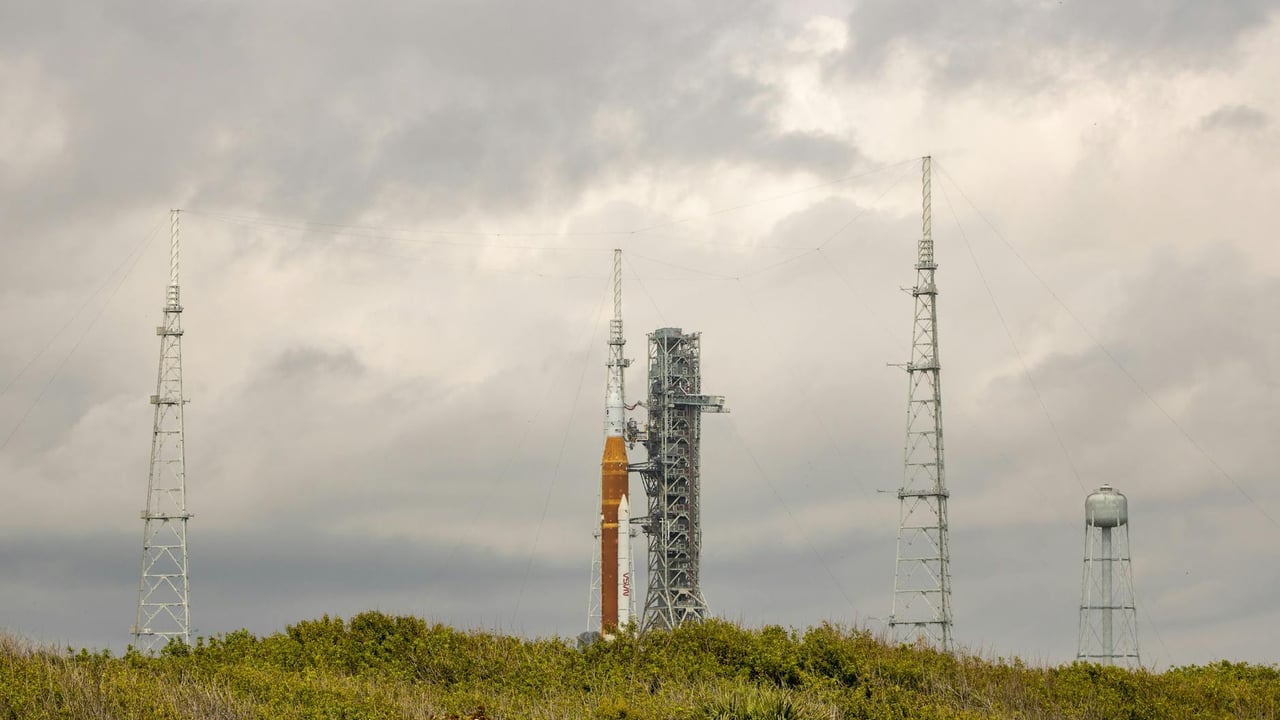

NASA has quietly reshuffled the timetable for its Artemis lunar programme, inserting an extra test flight and pushing a crewed return to the lunar surface out by several years. The agency told partners and the public this week that Artemis III — once billed as the mission to land astronauts on the Moon’s south pole within a few years of Artemis II — will instead be converted into a near‑Earth rehearsal mission to practise docking with a lunar lander in orbit in 2027.
The change follows a series of technical setbacks and safety warnings that have dogged the programme. A recent helium leak on the Space Launch System (SLS) heavy rocket delayed the originally planned Artemis II circumlunar crew flight from March into April, and prompted independent safety reviews. NASA said it must temper ambition with caution: rather than pressing straight to a landing, it will stage the return in later missions now labelled Artemis IV (targeted for 2028) and Artemis V (targeted for 2030).
Newly installed NASA administrator Isaacman has been explicit about his priorities: restore engineering rigour, raise launch frequency and standardise systems. In speeches at Kennedy Space Center, he complained that three‑year gaps between major launches are “unacceptable” and urged a return to an Apollo‑era tempo of operations, with standardised configurations and clearer, repeatable procedures.
The changes amount to a tacit recognition that the Artemis programme’s earlier, politically driven timetables were unrealistic. The ambitious 2019 White House directive that set 2024 as a return date to the Moon has long since slipped; a constellation of technical challenges, integration tests and contractor delays have eaten time and money. Safety reviewers and NASA’s own assessments flagged the original schedules as daring, if not reckless.
For Washington, the revisions have practical and strategic implications. On one level they are about risk management and protecting crews; on another they affect geopolitical signaling and commercial partnerships. Planned lunar lander developments, international contributions and commercial suppliers now must re‑align to a multi‑phase approach that delays a visible American Moonwalk until the later part of the decade.
The move also highlights a broader operational problem at NASA: a mismatch between ambitious policy goals and the agency’s current industrial tempo. Isaacman’s early tours of NASA centres and his calls for institutional reform underline an attempt to reforge an organisational culture that can sustain frequent, routine launches rather than episodic, high‑profile events. Whether that cultural shift will translate into faster, safer missions depends on budgetary commitments, contractor performance and technical fixes to heavy‑lift and human‑rated systems.
Internationally, the slower cadence opens opportunities for other players. China has accelerated its lunar and deep‑space efforts in recent years, and commercial actors such as SpaceX — with its Starship architecture proposed as a lunar cargo and crew system — will press their schedules and business cases. A staggered, test‑heavy Artemis may reduce near‑term prestige for the US but could produce a more resilient architecture if the extra rehearsals prove effective.
In short, NASA’s recalibration is a strategic pivot from political deadline‑driven goals to an engineering‑led, stepwise approach. The agency is betting that additional rehearsals and a return to standardised procedures will prevent catastrophic failures and build sustainable capability, even if it means ceding some short‑term headline victories.