

Beijing‑based humanoid robotics firm Songyan Dynamic has closed a near‑¥1 billion (about $140m) Series B round that industry sources and the company name as led by Chendao Capital, an investment vehicle tied to battery giant CATL. The round attracted follow‑on participation from state and industry investors including Guoke Investment, Jingguosheng Fund and Jiuhé Ventures, and brings Songyan’s financing history to nine rounds in total.
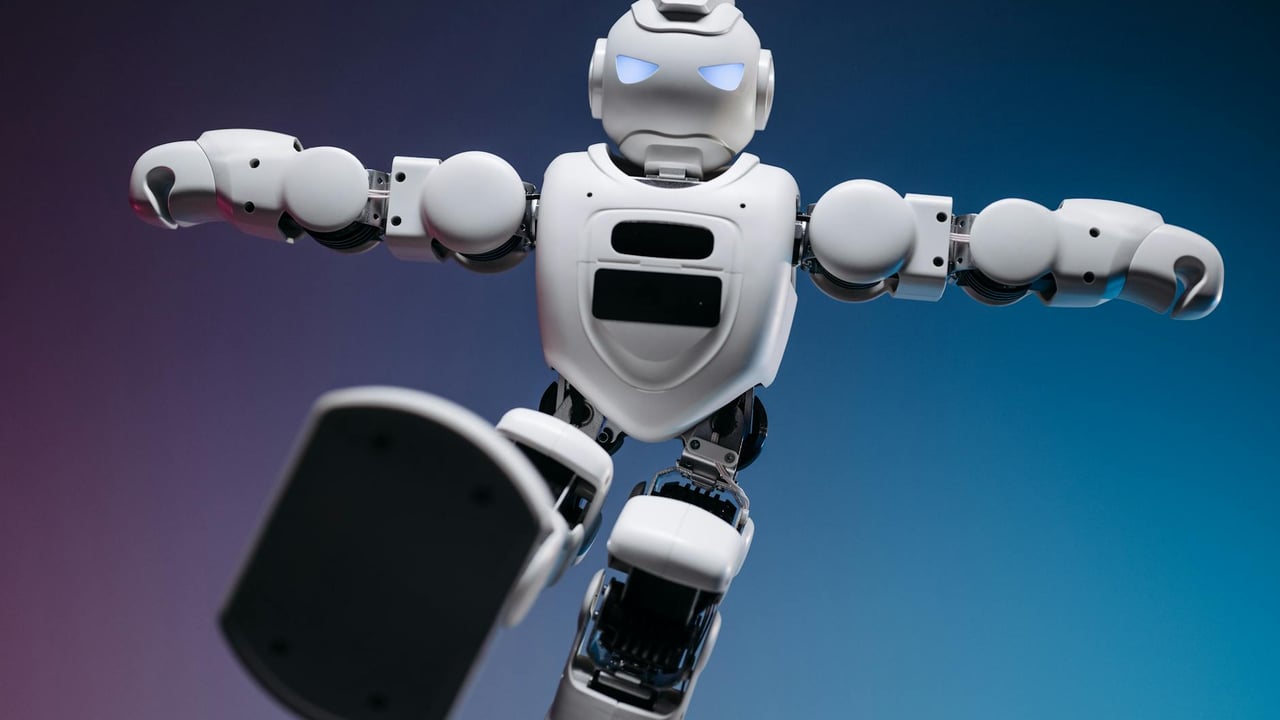
The company used a high‑profile demonstration during China’s 2026 Spring Festival gala cycle to underline its progress: in one month Songyan taught its entertainment humanoid “Xiao Bumi” 21 dance sequences and deliberately engineered hardware limits to meet safety and choreography needs. Songyan says the exercise showcased rapid scenario adaptation, lower‑limb motion control and lightweight mechanical design—capabilities the firm argues are essential as robots move from lab curiosities into repeatable, public applications.
What sets Songyan apart in a crowded field is its two‑pronged product strategy: the firm has been developing both bipedal humanoid robots and a separate line of biomimetic humanoids. That dual approach, Songyan claims, allows it to target distinct markets—from entertainment and customer‑facing services to industrial tasks that demand different locomotion and interaction paradigms—while giving investors a broader set of commercialization pathways to monetize.
The involvement of a CATL‑related fund is notable for what it implies about industrial convergence. Battery technology, power management and lightweight packaging are critical constraints for untethered humanoid machines; a backer with deep competence in battery systems could help shave weight, extend runtime and improve integration between energy systems and actuators—advantages that matter once firms attempt mass production.
Still, translating engineering milestones and theatrical demonstrations into profitable volume production remains a steep challenge. Humanoid robots face persistent hurdles: manufacturing cost, actuator reliability, perception and safe human interaction, and after‑sale support. Investors’ readiness to continue funding will hinge on clear unit economics, demonstrable use‑case ROI and supply‑chain robustness amid competition from other Chinese and international entrants.
For now, Songyan says the fresh capital will accelerate both scale manufacturing and industrial deployment. If successful, the company could become an exemplar of China’s push to move embodied artificial intelligence out of labs and into factories, venues and service environments—but the path from gala stage to mass market will test whether engineering progress can be matched by manufacturing discipline and a viable commercial model.