
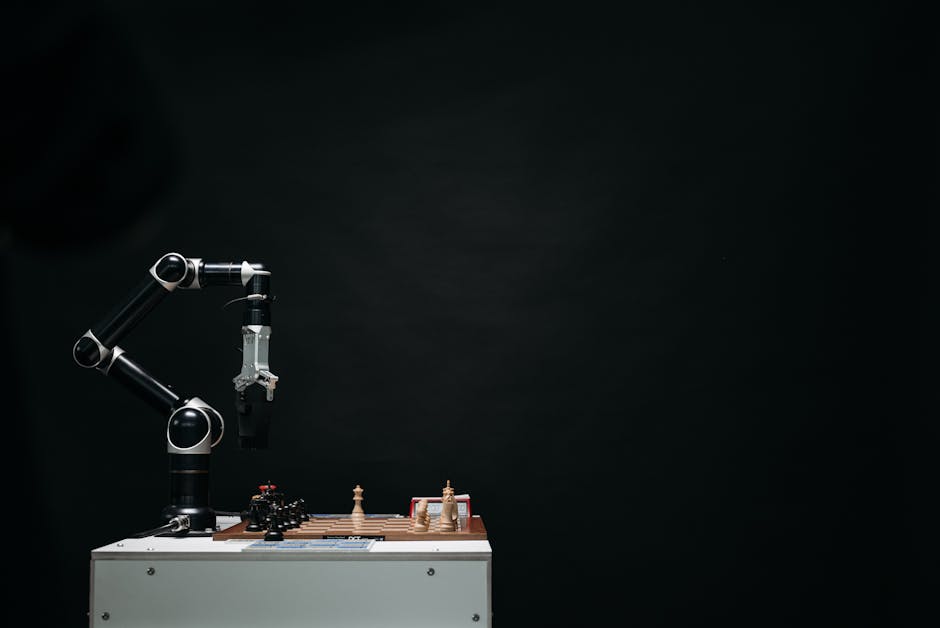

Zong Fuli has dissolved Wahaha Precision Machinery and effectively ended the group’s long-running push into industrial robots, undoing a diversification strategy her father, founder Zong Qinghou, pursued for more than a decade. The decision follows a sequence of recent retrenchments by the younger Zong: the group has already wound down an e-commerce entity, abandoned a chip project and exited health-management ventures.
Wahaha’s robotics effort dates back to 2011 with the formation of a precision-mechanics arm and expanded in 2019 with a dedicated intelligent-robot company chaired by Zong Qinghou. At its peak the precision-mechanics unit employed roughly 280 people and worked on palletizing robots, servo motors and automated production lines, even taking part in some national research projects. The robotics businesses formed a visible pillar of Zong Qinghou’s late-career drive to diversify Wahaha beyond drinks.
The logic behind the cut is straightforward: more than 95% of Wahaha’s revenue still comes from beverages, and robotics is a capital- and R&D-intensive industry with long payback periods. Insiders and many industry observers argue the company lacks the specialised know‑how to outcompete established robotics firms; years of investment failed to yield a clear competitive edge or profitable returns, making the projects a drag on core operations.
Not everyone agrees. Critics point to the sunk R&D, team experience and timing — at a moment when AI and robotics are receiving enormous global attention — and lament the decision as a loss of future optionality. Supporters counter that redeploying capital and management bandwidth into Wahaha’s core brands and product innovation is a more prudent, lower-risk path to stabilise the business.
The episode illuminates a broader theme in Chinese family-controlled conglomerates: a generational shift from “do everything” expansion to selective focus and capital discipline. Zong Qinghou’s strategy of building a sprawling group across real estate, apparel, dairy and tech reflected an older model of diversification; his daughter’s pruning reflects a newer consensus among executives confronting slower growth, tighter financing conditions and stronger competitive pressures in China’s consumer markets.
For the robotics sector, Wahaha’s retreat may free up human capital and IP for specialist firms and create acquisition or partnership opportunities. For Wahaha itself, the challenge is clear: doubling down on beverages can shore up profits and brand strength in the short term, but long-term growth will depend on effective product innovation, supply‑chain upgrades and sharper positioning against rivals in China’s crowded FMCG market.
The decision is neither a moral failure of the elder Zong’s ambition nor a simple triumph of the younger Zong’s prudence; it is a pragmatic reallocation of scarce resources. Whether the move helps Wahaha regain momentum will hinge on execution — how the company invests the freed resources into R&D, marketing and distribution — and on whether it can translate brand heritage into renewed commercial growth amid fast-changing consumer tastes.