
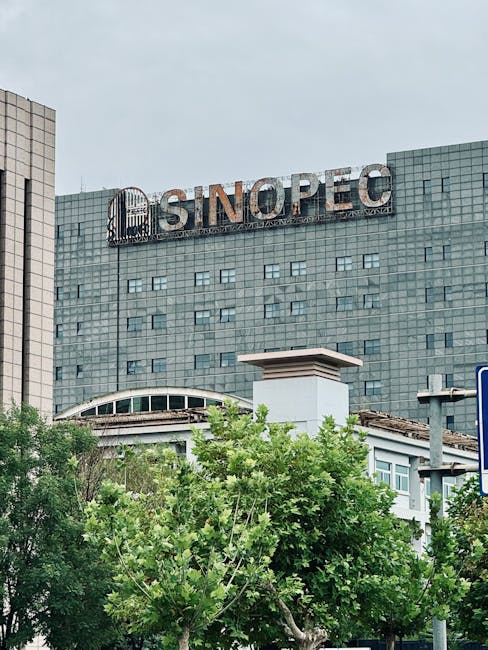

Chinese equity markets opened mixed on March 2nd, but energy stocks dominated the afternoon session as state-controlled oil companies China National Petroleum Corporation (PetroChina), China Petroleum & Chemical Corporation (Sinopec) and China National Offshore Oil Corporation (CNOOC) all finished the day at their daily upper trading limit. The Shanghai Composite closed up 0.47% while the Shenzhen Composite and ChiNext underperformed, down 0.2% and 0.49% respectively, with combined turnover on the three exchanges rising to RMB 3.0458 trillion.
The simultaneous close at limit-up for the three oil majors was unprecedented in Chinese markets; they had previously all touched their limits intraday on October 8, 2024, but this is the first time all three ended the day at the limit. PetroChina alone recorded its ninth historical limit-up, joining a string of previous surges that cluster around major oil-price shocks and domestic market rallies in 2008, 2014–15 and early 2024.
Global oil prices were the immediate catalyst. Brent crude surged as much as 13% at the open and was trading about 8% higher at roughly $78.6 a barrel by the time of reporting. Markets are pricing a sharp supply-risk premium after a large-scale joint military strike by the United States and Israel on Iran on February 28th, which has interrupted shipping through the Strait of Hormuz — the artery for roughly a fifth of seaborne global oil flows.
The market reaction highlights how quickly geopolitical shocks in the Middle East transmit into Chinese onshore markets. With the Strait of Hormuz reportedly near paralysis and several oil companies suspending transit through the waterway, traders and investors have repriced the probability of constrained supply and higher near-term crude prices, benefiting upstream and midstream oil names on China’s bourses.
Beyond the immediate geopolitics, the episode underlines two structural features of China’s market. First, the A-share daily limit-up mechanism can amplify short-term moves and crowd investor flows into a handful of liquid state-owned enterprises. Second, Beijing’s ownership stakes and the strategic importance of the three oil majors make their stock moves a barometer of market sentiment on energy security rather than pure corporate fundamentals.
Wider sectoral patterns were consistent with a risk-on rotation into commodity and cyclical names: oil and gas exploration and services, port and shipping, precious metals, defence equipment, coal, and chemical inputs outperformed, while consumer-facing and tech-related sectors such as games, media, AI applications, cloud computing, travel, and retail lagged.
For markets and policymakers the implications are immediate. Higher oil prices feed into inflationary pressures and could complicate central bank calculus globally and within China, where officials must weigh growth support against price stability. For corporate China, sustained higher crude would improve upstream cash flows but raise costs for refiners and downstream industries, creating uneven sectoral winners and losers.
Investors should watch three forward indicators: the path of Brent and regional shipping disruption through the Strait of Hormuz; any defensive moves by Beijing, including potential interventions to calm excessive speculation in strategic stocks; and insurance and logistics responses from shipping firms that will determine how long the elevated supply-risk premium persists. A prolonged disruption would keep energy valuations elevated and could shift trade and insurance routes, while a quick de-escalation would likely trigger profit-taking and a reversion in the most-volatile names.