
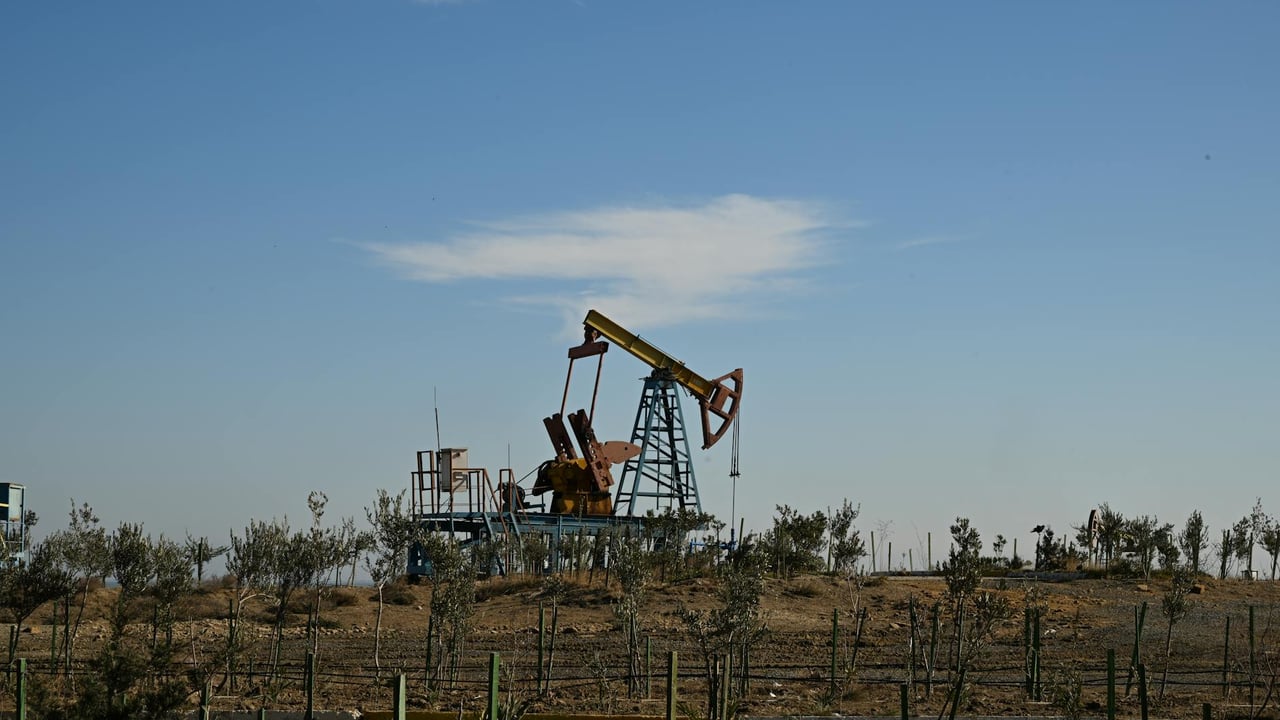

For the first time in history China's three state oil giants — PetroChina, Sinopec and CNOOC — all closed at their trading limit on March 2, a striking market reaction as investors priced in a sudden supply shock. The Shanghai Composite rose 0.47% on the day, while the Shenzhen Composite and the ChiNext index slipped modestly, underscoring a narrow rally concentrated in commodity and defence-related names.
Intraday momentum in oil and gas stocks accelerated in the afternoon, with PetroChina hitting its limit and Sinopec sealing a limit-up in the close after CNOOC had already been suspended at the top. PetroChina’s close marked only its ninth historical limit-up, and markets noted that the three majors had previously touched limit-up levels intraday in October 2024 but never recorded a simultaneous close at the ceiling until now.
The immediate catalyst was a sharp jump in global crude prices. Brent surged nearly 8% to about $78.62 a barrel by the time of reporting, after an earlier intraday spike of roughly 13%. The rise followed a major military strike on Iran on February 28 involving the United States and Israel, which precipitated stoppages through the Strait of Hormuz — a seaborne choke point that handles roughly 20% of global oil flows and around 27% of seaborne energy trade.
Chinese market breadth was weak outside a handful of commodity-linked sectors. Turnover across Shanghai, Shenzhen and Beijing reached 3.0458 trillion yuan, up about 540.3 billion yuan from the prior session, even as more than 4,200 stocks finished lower. Oil and gas exploration and services, ports and shipping, precious metals, defence equipment, coal and key chemical inputs outperformed, while consumer-facing and technology sectors — including gaming, media, AI applications and travel — lagged.
The episode matters because it combines a real geopolitical supply risk with a market structure in which large state-owned enterprises can become focal points for rapid re‑allocation of capital. A sustained disruption in Middle Eastern flows would raise China’s import bill, increase domestic fuel costs and complicate Beijing’s inflation and growth trade‑offs. For global oil markets, the price jump has reintroduced a risk premium that could feed through to refining margins and downstream energy prices worldwide.
Investors should treat the moves as evidence of short‑term risk repricing rather than a durable revaluation of China’s energy majors. Limit-up mechanisms, concentrated buying and the political salience of the oil sector mean the situation could reverse quickly once shipping through the Strait of Hormuz resumes or diplomatic developments reduce the immediate threat. Market participants and policymakers will be watching closely for further geopolitical signals and any Chinese regulatory response aimed at smoothing volatility.