

President Donald Trump said on March 2 that he was "very disappointed" with British Prime Minister Keir Starmer after London initially refused U.S. requests to use the military base on Diego Garcia to strike Iran. The White House dispute unfolded after the UK, citing international law, declined to authorise such use before reversing course on March 1 to allow access for "specific and limited" defensive purposes.
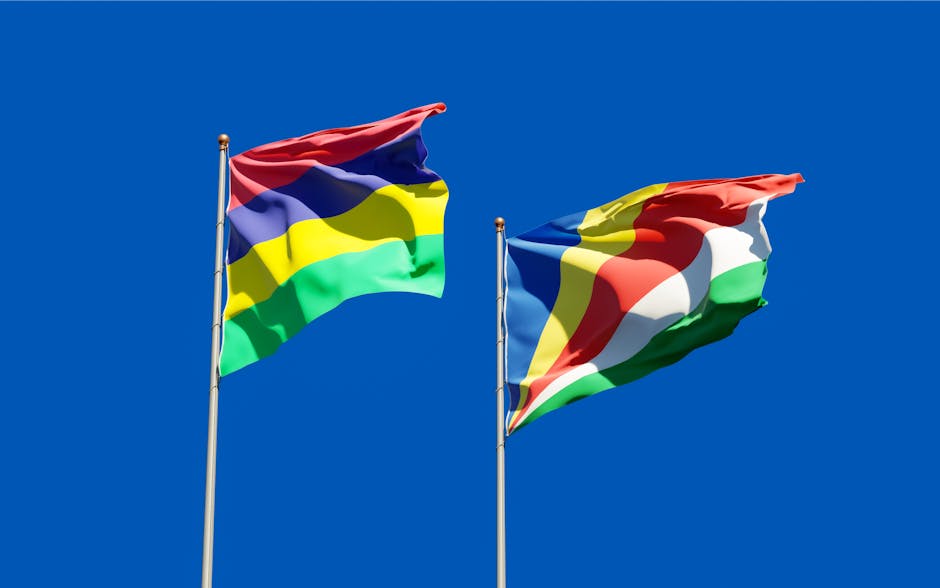
Trump told reporters that Starmer's change of heart took "too long" and that Britain should have agreed immediately, calling the delay unprecedented in the special relationship. The comments follow a fraught legal and diplomatic backdrop: the Chagos archipelago was transferred in sovereignty to Mauritius under a 2025 agreement, while practical arrangements preserve a lease for the Diego Garcia base to be used by the UK and the United States.
Diego Garcia, the atoll at the centre of the row, has hosted a U.S. air and naval facility since 1966 and sits roughly 750 kilometres northeast of Mauritius in the southwest Indian Ocean. The island's status has long been contentious: the Chagos group was detached and administered by Britain during the colonial era, and Mauritius has spent years seeking recognition of its sovereignty and redress for the displacement of the Chagossian people.
The recent episode illuminates both legal and operational wrinkles created by the 2025 sovereignty settlement, under which Mauritius owns the territory while leasing the base to Britain and the United States. That arrangement gives Mauritius a formal stake and complicates automatic U.S. access; London’s initial refusal invoked international law considerations, signalling a willingness to be seen as a responsible custodian of the new bilateral bargain with Port Louis.
Beyond legal technicalities, the spat has immediate geopolitical resonance. U.S. planners prize Diego Garcia as a logistics and power‑projection node for the Middle East and the wider Indo‑Pacific; restrictions on its use during a potential confrontation with Iran would constrain U.S. options and raise questions about alliance coordination in a crisis. For Britain, balancing treaty obligations to an ally with emerging duties to Mauritius and domestic political sensitivities is an awkward diplomatic exercise.
Politically, the episode is also domestic theatre. Trump, who opposed the 2025 handover of the Chagos islands and has repeatedly used foreign‑policy disputes for partisan messaging, framed the matter as a failure of alliance solidarity. Starmer, by contrast, appears to be navigating competing pressures — preserving special‑relationship ties while responding to legal and moral arguments tied to decolonisation and the rights of Mauritius and displaced islanders.
The frictions exposed by this dispute are likely to push both capitals to tighten protocols for contingency access to overseas facilities and to formalise consultations with third parties such as Mauritius. If similar operational requests arise in future crises, the allies will need clearer, pre‑agreed measures to avoid last‑minute diplomatic logjams that could limit military options and damage alliance credibility.