
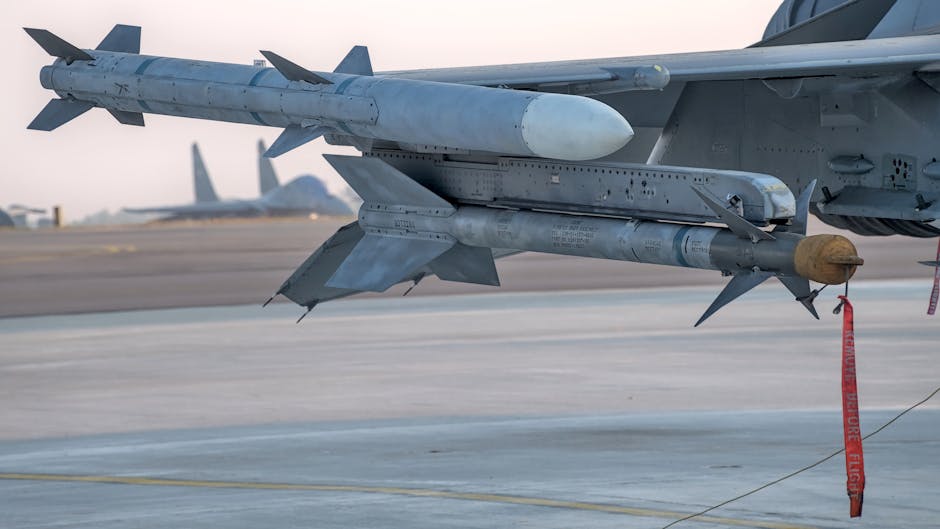

Iran announced a significant missile strike against Israel, deploying what Tehran described as advanced long‑range weapons and targeting multiple sites inside Israeli territory. Iranian state outlets framed the operation as retaliation for recent attacks attributed to Israel, portraying it as a calibrated but forceful message to regional adversaries and external backers. Israeli authorities reported that their air defenses engaged incoming threats, while initial accounts indicate impacts in several localities; official casualty and damage figures remain limited and contested.
The strike marks a notable escalation in a months‑long tit‑for‑tat pattern that has increasingly relied on long‑range precision fires and stand‑off munitions. Iran's public emphasis on advanced missile systems signals a shift from proxy‑only confrontation toward direct kinetic pressure, exploiting improvements in ballistic and cruise missile technology acquired and refined over the past decade. For Israel, the attack tests layered air‑defense networks and strains domestic resilience, while complicating operational choices for commanders who must balance retaliation with the risk of broader war.
Beyond the immediate battlefield, the episode reverberates through regional alliances and great‑power politics. Washington and European capitals face pressure to deter further strikes without dragging their forces into direct combat, and Gulf states are watching the standoff warily given potential spillover to energy infrastructure and maritime routes. Non‑state actors aligned with Tehran, from Lebanon's Hezbollah to armed groups in Syria and Iraq, now confront pressure to either escalate in solidarity or avoid actions that would spiral into a generalised conflict.
The attack also underscores the strategic utility of missiles in coercive diplomacy. Where airpower and special operations risk attribution and escalation, long‑range missile strikes allow states to impose costs while signaling red lines. That logic increases the likelihood of episodic, dangerous exchanges that fall short of all‑out war but steadily degrade regional stability and raise the risk of miscalculation, especially when communications channels are limited or unreliable.
Short‑term consequences are likely to include stepped‑up air‑defense readiness across Israel and potential pre‑emptive or punitive operations against launch sites or logistics networks attributed to Iran. Diplomatically, expect urgent shuttle diplomacy by the United States, European mediators, and regional intermediaries to forestall an escalating chain of reprisals. Economically, energy and insurance markets may react to heightened risk in the Strait of Hormuz and Red Sea shipping lanes, although the full impact will depend on the duration and intensity of further exchanges.
The episode is a reminder that the Middle East's security architecture is brittle: advances in missile technology have lowered thresholds for strategic coercion, and the involvement of global powers as backers or interlocutors complicates de‑escalation. Absent robust crisis management mechanisms and credible deterrence calibrated to avoid all‑out war, the region is likely to see recurrent, volatile confrontations that impose humanitarian, economic, and strategic costs well beyond the immediate combatants.