

Risk appetites on global markets diverged on Tuesday as renewed hostilities in the Middle East sent oil prices soaring and pushed tanker freight rates to unprecedented levels, while US equities finished the session mixed. The Dow slipped modestly, the S&P 500 was effectively flat and the Nasdaq posted a small gain, reflecting a market torn between safe-haven flows and selective buying of idiosyncratic sectors such as crypto-linked stocks.
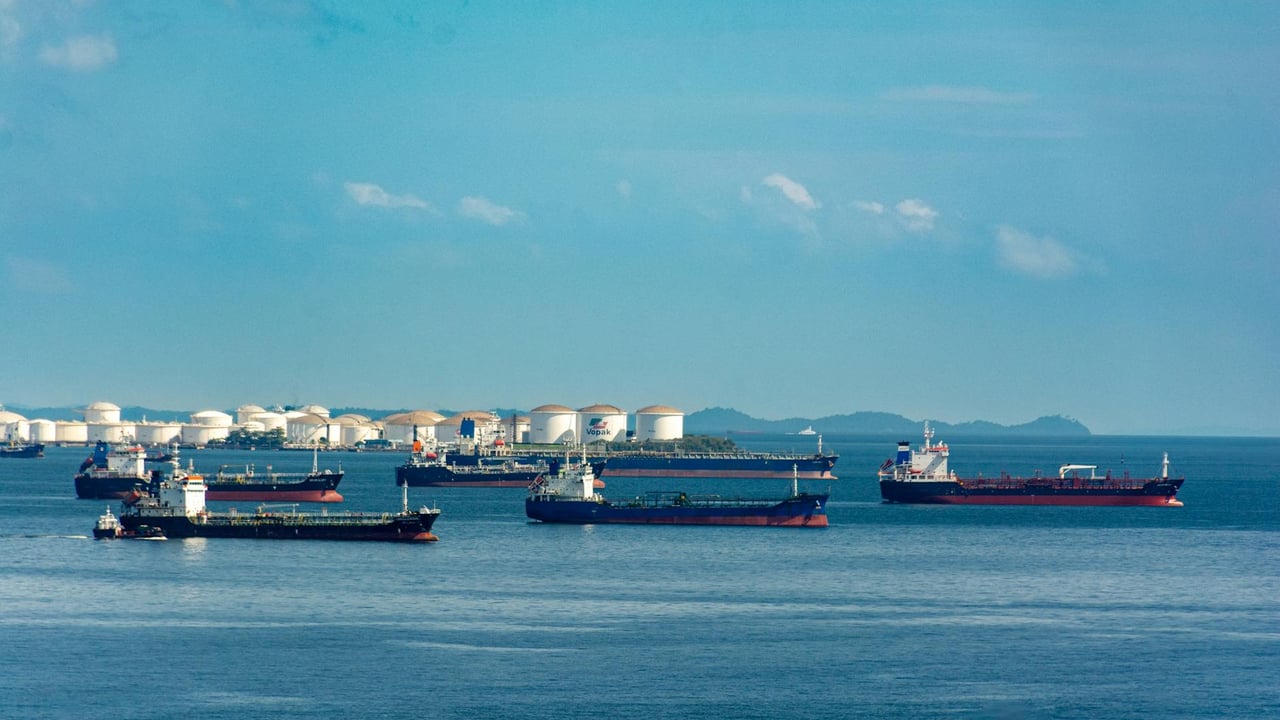
Oil led the charge: both WTI and Brent futures jumped more than 6%, responding to reports of heightened regional confrontation and Iranian statements that the Strait of Hormuz had been closed. The real market shock came from the Baltic Exchange, where benchmark tanker earnings exploded to roughly $424,000 per day — a record that signals acute short-term dislocation in the maritime crude transport market.
The spike in freight rates is more than a headline number. Tanker day rates at this magnitude make voyages prohibitively expensive and prompt immediate rerouting, longer voyage times and heavier reliance on refined fuel inventories. For energy importers such as China, the practical consequence is higher delivered costs for crude and refined products, with knock-on effects for refining margins, downstream fuel prices and inflationary pressures globally.
Beijing has sought to thread a diplomatic needle: China’s foreign ministry reiterated calls for restraint and said Beijing is urging relevant parties to halt military actions to prevent a broader escalation. Senior diplomats, including Wang Yi, have been in contact with counterparts in Iran, France and Gulf states, underscoring Beijing’s interest in preventing spillovers that would harm trade and commodity access.
Domestically, Chinese regulators are also active. The National Development and Reform Commission convened a private-enterprise roundtable to push implementation of policies aimed at stabilising investment and demand, and the technology ministries unveiled guidance to mobilise insurance capital behind strategic science and technology projects. Those moves signal Beijing’s twin priorities: shore up supply chains and maintain industrial momentum amid external shocks.
The confluence of geopolitics and market mechanics is already producing tangible disruptions: travel advisories and industry bulletins have been issued for Chinese tourists and carriers operating in the region, and the shipping industry faces sharply higher insurance and voyage costs. Financial markets reflected the unease — European benchmarks fell sharply even as parts of US tech and crypto-adjacent stocks outperformed.
For investors and policy makers the immediate questions are whether the spike in freight and oil is transient and how long elevated shipping costs will persist. If disruptions endure, expect higher energy import bills, pressure on trade-dependent emerging markets and a fresh input to global inflation that could complicate central bank policy paths already sensitive to growth data.