
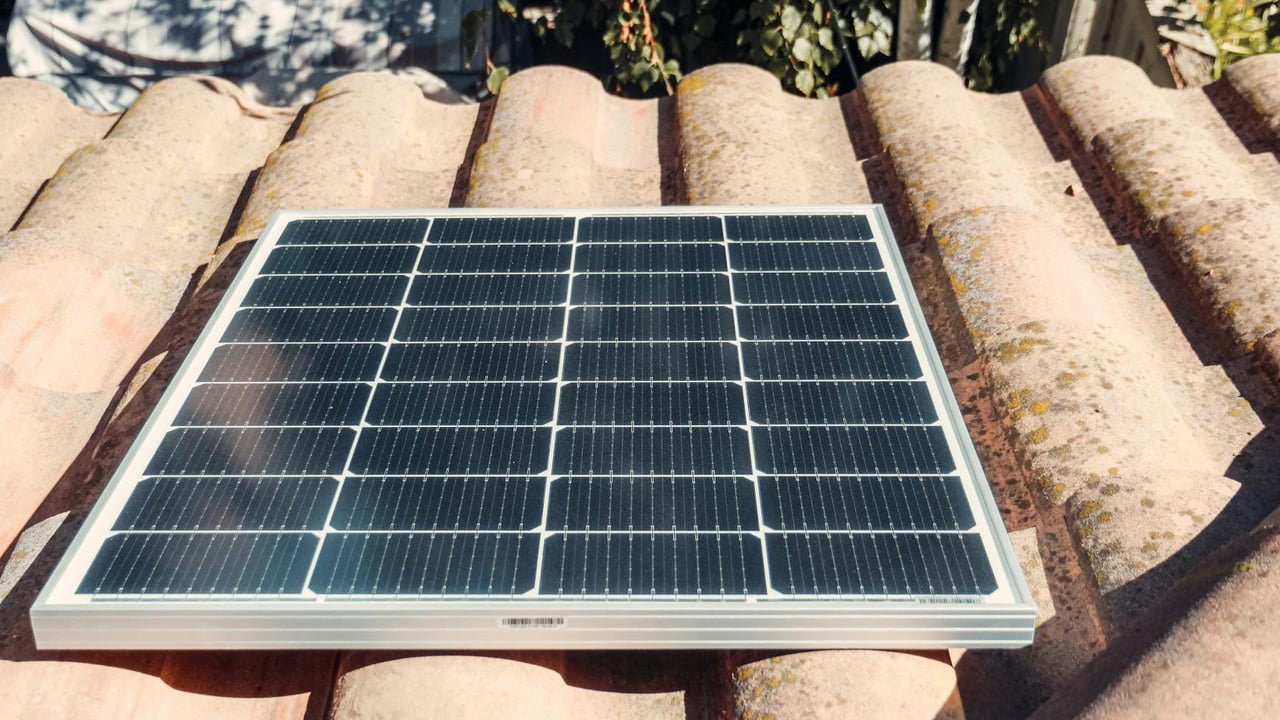

China’s industrial and environmental ministries have published a coordinated policy push to overhaul how the country designs, manufactures and recycles photovoltaic (PV) modules. The plan, issued jointly by six departments including the Ministry of Industry and Information Technology and the Ministry of Ecology and Environment, sets near-term targets to lift green production standards, raise the share of recycled inputs in new modules and develop the technical and market infrastructure needed to handle an accelerating stream of retired panels.
By 2027 the document aims for measurable improvements: clearer end-of-life evaluation standards and testing methods, breakthroughs in disassembly and high‑efficiency separation technologies, a set of technical standards for green design and reuse, and an industry capable of cumulatively processing about 250,000 tonnes of retired PV modules. The blueprint stretches to 2030 with ambitions to have an equipment base and industrial chain able to cope with a much larger decommissioning wave, widening application scenarios for recycled outputs and tighter upstream–downstream coordination.
The policy targets both product design and downstream recovery. Manufacturers are urged to adopt components and materials that make modules easier to dismantle — non‑crosslinked encapsulants, fluorine‑free backsheets and lead‑free solder and pastes are specifically mentioned — while procurement incentives should favour inputs with high recycled content. On the recycling side the plan prioritises automated, mobile and modular “fast‑dismantle” systems, physical and chemical separation techniques for single‑glass and double‑glass modules, and greener methods to extract valuable metals such as silver, copper and silicon.
Operational measures are equally practical: development of standards for determining when modules are ready for retirement, use of drone EL imaging, thermal imaging and AI for condition monitoring, establishment of trading platforms for waste modules, and regional deployment strategies that favour near‑site recycling clusters in the northwest, east and north of China where installations aggregate. The plan also signals fiscal and financial backing — loans, special funds and inclusion of advanced recycling technologies in national green technology catalogues — and encourages the cultivation of industry champions and “zero‑waste” industrial parks.
The policy responds to a looming industrial and environmental imperative. China hosts the world’s largest solar fleet and has led module production for more than a decade, so a sizable retirement wave is unavoidable as early‑generation installations reach end‑of‑life or are replaced by higher‑efficiency systems. Left unmanaged, discarded panels pose pollution risks and represent a substantial loss of scarce materials — notably silicon and silver — at a time when global supply chains remain sensitive to trade tensions and commodity volatility.
There are immediate winners and persistent challenges. Recycling firms, module makers that redesign for disassembly, equipment suppliers for automated teardown and companies capable of refining recovered silicon and precious metals stand to gain. Yet technical hurdles — cost‑effective, non‑destructive separation of laminated layers and economically viable purification of low‑grade silicon — remain significant. Logistics and scale are another constraint: collecting distributed modules safely and moving them to processing hubs will be costly unless more on‑site, mobile solutions prove commercially robust.
Internationally, China’s move has broader implications. Establishing technical standards, industrial capacity and commercial platforms at scale could lower the global environmental footprint of solar deployment and give Chinese firms a competitive edge in recycling technologies and secondary materials. It may also alter global flows of recycled inputs, affecting manufacturers elsewhere who rely on imported glass, silicon and silver. Conversely, the success of the policy will hinge on enforcement, financing and whether recycled materials can meet the quality and cost requirements of high‑performance PV manufacturing.
For investors and policymakers the immediate watchpoints are adoption of recyclable‑friendly module designs, pace of breakthroughs in separation and purification technologies, effectiveness of trading platforms and the emergence of vertically integrated players that can collect, dismantle and refine materials at scale. China’s plan frames PV end‑of‑life management not only as an environmental obligation but as an industrial opportunity to secure materials, save costs and export new capabilities as the global clean‑energy transition accelerates.