
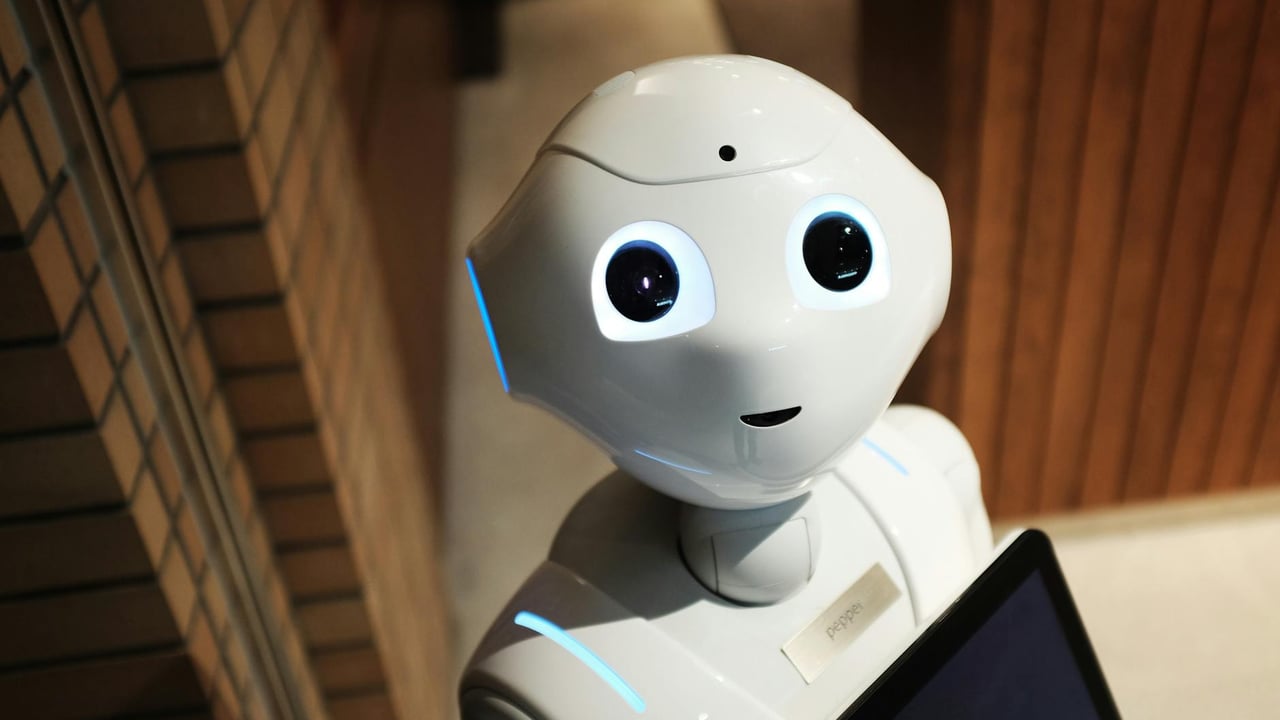

At the Mobile World Congress in Barcelona, Qualcomm chief executive Cristiano Amon said he expects robotics to reach scaled commercial deployment within roughly two years and described the category as a “bigger opportunity” for the company than many currently appreciate. The comment underscored a strategic push by Qualcomm to transplant the smartphone playbook — built around its Snapdragon chips — into the physical world of robots, where power efficiency, integration and an extensive partner ecosystem matter as much as raw computing performance.
In January Qualcomm unveiled a new robot processor under the Chinese-branded name “YueLong”, designed to run across multiple robot platforms. The chip is explicitly pitched as a cross-platform solution for makers of logistics, service and humanoid robots, mirroring Qualcomm’s earlier strategy of selling a widely licensed system-on-chip to phone manufacturers. That approach aims to give the chipmaker reach well beyond bespoke robotics startups and toward an array of established electronics firms.
Market forecasts for robotics vary wildly, but most agree the sector is poised for sizeable growth. McKinsey projects the general-purpose robotics market could reach roughly $370 billion by 2040, while RBC Capital Markets has put the long-term potential for humanoid robots as high as $9 trillion by 2050. Qualcomm’s timeline is shorter and more aggressive: Amon’s two-year horizon implies an expectation that advances in AI and system integration will push robots from pilot projects into mass commercial use in the near term.
Technological progress in large AI models and embodied intelligence is the proximate cause of renewed optimism. As perception, planning and control systems improve, robots are becoming faster at understanding their environments and acting reliably, moving the field from research demos toward practical tasks in warehouses, hospitality, elderly care and security. This convergence of compute, sensors and software is what industry participants increasingly label “physical AI.”
Qualcomm’s move is also a hedge against stagnation in the smartphone cycle. Snapdragon helped the company dominate mobile-device SoCs through a mixture of performance, energy efficiency and an extensive toolkit for developers. Replicating that model for robots means not only selling silicon but also cultivating software stacks, developer tools and reference designs that lower the barrier for manufacturers to adopt Qualcomm silicon.
The opportunity is not without rivals and risks. Nvidia and other AI-focused chipmakers remain prominent in robotics where high-throughput compute is required, and startups are experimenting with heterogeneous architectures combining cloud and edge compute. Beyond competition, the sector faces practical constraints: battery life, ruggedization, safety certification, and the economics of replacing human labor with automated systems. Regulatory scrutiny and supply-chain bottlenecks could also slow certain deployments.
For global tech companies, the short-term question is which segments will scale first. Logistics robots in warehouses and last-mile delivery, followed by constrained-service robots in hotels and retail, are the most plausible early winners. Humanoid robots — the imagination of headlines and some forecasts — will likely take longer to become ubiquitous, even if they ultimately underpin a larger market in the longer run.
If Amon’s timetable proves accurate, the next two years will be a period of intense platform-building: companies that can stitch together silicon, perception software, developer ecosystems and industrial partnerships will set standards. For Qualcomm, success means becoming the de facto supplier of the “Android-like” stack for robots; failure would leave heavy lifting to cloud-centric incumbents and specialized AI hardware firms.