
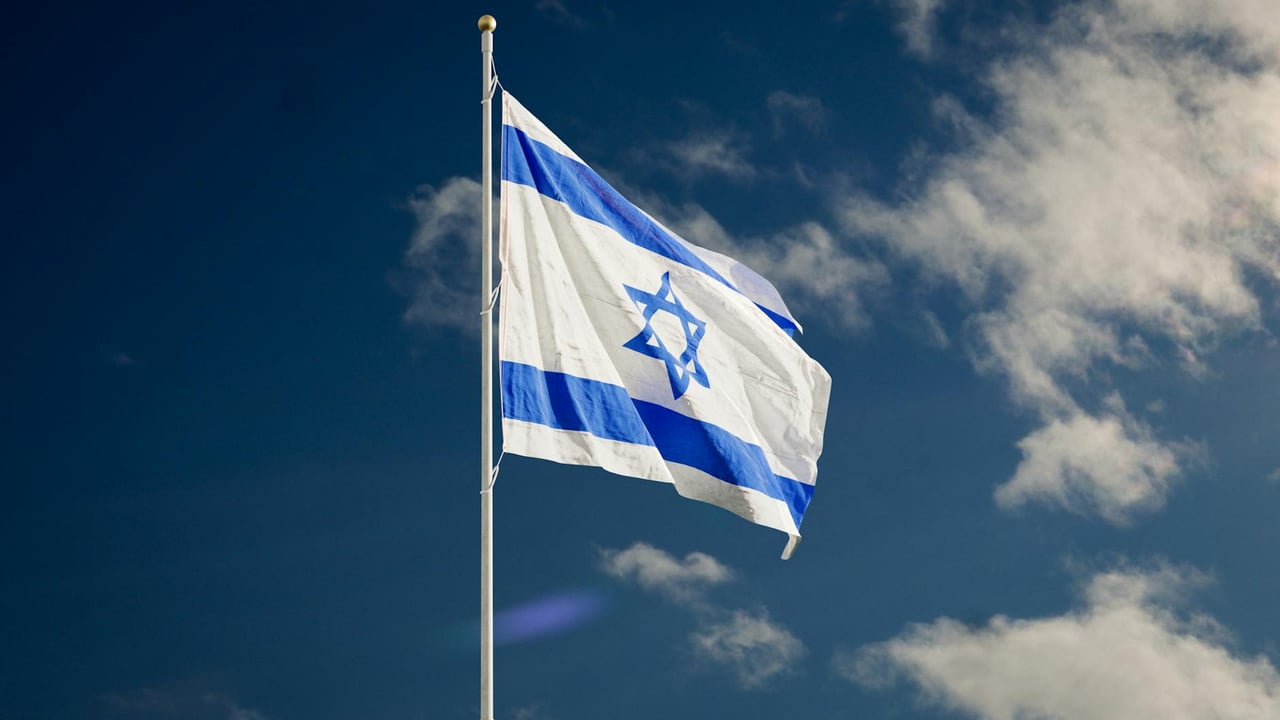

The US and Israel entered the fourth day of coordinated military operations against Iran on 3 March, widening the confrontation beyond air strikes into cross-border and maritime domains. Israeli ground units crossed the temporary Blue Line into southern Lebanon while Iran and its proxies intensified missile and drone attacks against US and Israeli targets across the region.
U.S. Central Command said American forces had struck Iran’s command-and-control nodes, air-defence systems, missile and drone launch sites, and several military airports, asserting a sustained campaign to blunt threats to US forces. Israel announced it had conducted precision strikes on targets in Tehran and on Lebanese Hezbollah positions around Beirut, while explosions were reported in Tehran’s Lavizan district and sabotage at Iran’s Natanz nuclear site was confirmed by the International Atomic Energy Agency.
Tehran painted a grimmer picture of the human cost. The Iranian Red Crescent reported 787 dead from the strikes, and the Islamic Revolutionary Guard Corps (IRGC) said five of its members were killed in an attack on Bushehr province. Iranian authorities also accused the strikes of hitting the presidential compound and the country’s supreme national security institutions, claims that, if verified, underscore how the campaign has moved beyond purely military targets.
Iranian forces and proxies responded with a range of asymmetric attacks. The IRGC said it had degraded all infrastructure at the US Sheikh Isa airbase in Bahrain with a coordinated missile and drone assault and claimed to have fired four cruise missiles at USS Abraham Lincoln, which Washington has not publicly confirmed. Hezbollah said it struck multiple Israeli facilities in the north, and Israeli forces deployed the 91st Division in southern Lebanon to bolster forward defences.
The confrontation has prompted immediate diplomatic and civilian repercussions across the Gulf. US embassies in Saudi Arabia, Bahrain and Kuwait temporarily closed and the State Department issued multiple evacuation orders for non-critical personnel in Jordan, Bahrain, Iraq, Kuwait, Qatar and the UAE. Several governments and international figures condemned the strikes as violations of international law and warned of wider destabilisation.
Global reaction has been mixed. France, Croatia, Malaysia, Brazil and Turkey publicly criticised the US–Israeli actions as lacking UN authorisation and liable to deepen regional instability. In parallel, domestic pressure in Washington is rising: polls indicate a majority of Americans oppose further military action in Iran, protests have erupted in New York, and Congress is preparing votes on measures to curb presidential war powers.
The trajectory of the conflict now hinges on two fragile dynamics: the capacity of US and Israeli forces to suppress Iranian strike capabilities while avoiding broader escalation, and Tehran’s willingness to accept attrition or to widen engagements through proxies across the Levant and the Gulf. Both sides are signalling readiness for sustained operations, increasing the risk of miscalculation and a protracted regional conflagration.
For international audiences, the immediate consequences include heightened risk to shipping lanes in the Persian Gulf and Red Sea, potential spikes in energy prices, and the prospect of a wider regional war that could draw in states beyond the immediate actors. The coming days will test whether diplomatic channels, international institutions and third-party states can blunt escalation or whether the campaign will metastasise into a long-running, multi-front conflict.