
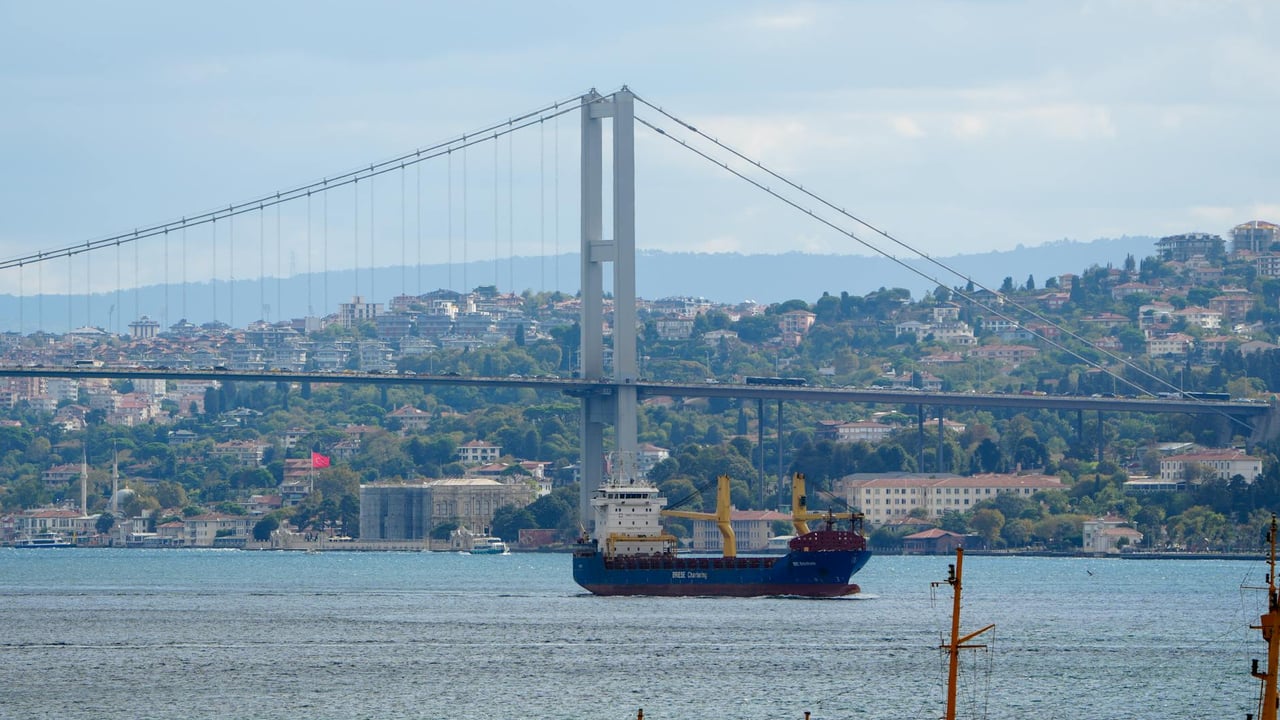

Iran's Islamic Revolutionary Guard Corps (IRGC) has declared effective control of the Strait of Hormuz and says more than a dozen oil tankers were struck by shells as they ignored warnings to stay away. Senior IRGC officers broadcast blunt threats that any vessel attempting to transit would be destroyed, and they reported that tankers, merchant ships and fishing boats can no longer pass following Tehran's proclamation of a no‑sail zone.
The IRGC said 26 tankers are currently loitering near the waterway and 27 have stopped altogether, representing some 12 million barrels of carrying capacity. On live television an IRGC commander warned that “we will not allow a drop of oil from this region,” underscoring the intent to deny seaborne exports unless the confrontation abates.
The Strait of Hormuz links the Persian Gulf and the Gulf of Oman and is the chokepoint for crude exports from Saudi Arabia, Iraq, Qatar, the UAE and other Gulf producers. About one‑fifth of the world’s seaborne oil moves through the strait; JPMorgan analysts calculate that if exports cease, regional producers would exhaust available storage within roughly 25 days and be forced to shut production.
Markets and shipping reacted almost immediately. Tanker freight rates have surged to record levels, with benchmark daily earnings reported above $420,000 and market participants predicting VLCC rates could reach half a million dollars a day. Brent crude spiked sharply — climbing briefly into the mid‑80s per barrel before settling lower — while some shipping stocks plunged, with at least one major Chinese tanker operator’s Hong Kong listing tumbling more than 30 percent.
Container lines and airlines have also adjusted operations. Mediterranean Shipping Company has suspended new bookings for shipments to the Middle East and Maersk is rerouting vessels around the Cape of Good Hope to avoid both the Suez Canal and the contested Gulf approaches. CMA CGM and Hapag‑Lloyd announced substantial surcharges for cargo to and from Gulf states, and analysts warn that the longer voyages and diverted sailings could tie up millions of TEUs of global capacity.
Air cargo is under strain too: several carriers and logistics firms have suspended flights into Gulf markets or altered routings as national airspace is closed or restricted. Freight forwarders say available belly and freighter capacity on key Asia‑Europe and Asia‑Middle East lanes has fallen sharply, a shortfall that will push air rates higher and stretch delivery windows for time‑sensitive goods.
The immediate consequence is a squeeze on energy and transport capacity that will translate into higher prices and slower deliveries worldwide if the standoff continues. The choice facing markets is stark: a rapid de‑escalation would ease the supply shock, but a protracted disruption would force permanent changes to trading patterns — higher insurance and freight costs, longer transit times and tighter inventory management for manufacturers and importers.
For businesses, the near term will be defined by contingency planning: redirecting shipments, booking space far in advance, hedging fuel and freight costs and, where possible, shifting sourcing. For policymakers the dilemma is strategic: protect global commerce and deter further escalation without becoming entangled in a widening conflict that would deepen the economic sting of disrupted oil and trade flows.