
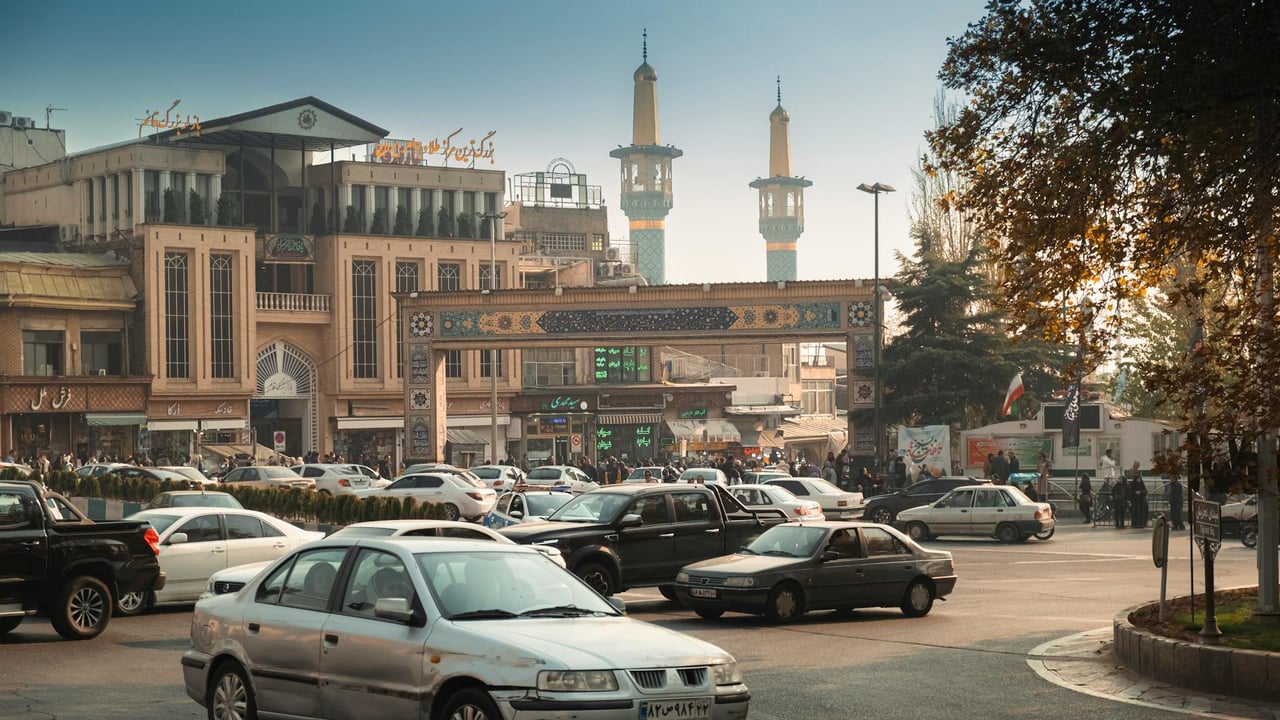

Photographs released on March 4 by Chinese state news agency Xinhua show damaged buildings near Tehran’s Revolution Square, the symbolic center of the Iranian capital, after an overnight airstrike. The images capture shattered facades and structural damage in an area that is typically bustling with officials, protesters and shoppers, underscoring the strike’s strikingly public character.
Strikes on central Tehran are uncommon and carry a psychological weight that goes beyond the immediate material damage. Targeting or hitting the heart of the capital risks altering domestic political dynamics by exposing civilians to danger in previously protected urban spaces, while signalling to both domestic and foreign audiences that established deterrents can be breached.
The attack lands against a backdrop of long-running shadow conflict between Iran and states and non-state actors in the region. Over the past decade Tehran has been engaged in a regional contest of strikes, sabotage and retaliatory operations, often carried out at arm’s length through proxies, cyber operations or clandestine strikes. A strike that visibly impacts central Tehran raises the spectre of escalation, because it collapses that arm’s-length separation and invites direct responses that are harder to contain.
For Iran, the domestic politics are acute. Revolutionary Square is not only a transport and commercial hub but also a focal point of national symbolism. Damage there can be used by the government to rally public opinion, justify retaliatory measures and portray the country as a victim of external aggression. Conversely, visible civilian harm may fuel public unease about the government’s ability to protect the capital and its populace.
Internationally, the incident complicates already fraught diplomatic calculations. Governments and investors watch Tehran closely: a pattern of strikes that appear to target the capital could nudge global energy markets, alter military postures in the Gulf, and prompt allies and adversaries to recalibrate their support and signaling. It also increases pressure on mediators and backchannels to reduce the risk of miscalculation.
Attribution will be central to what happens next. Whoever is held responsible—from a state actor seeking to degrade Iranian capabilities to a non-state group exploiting a wider conflict—will shape Tehran’s strategic response. Iran has options ranging from cyber countermeasures and proxy attacks to direct military reprisals, each carrying different risks of broadening the conflict.
The near-term outlook is one of heightened uncertainty. Visible damage in central Tehran is likely to harden rhetoric and increase security measures inside the city while pushing regional actors to test responses and thresholds. For policymakers, the priority should be clear: immediate steps to de-escalate, protect civilians and re-establish reliable lines of communication to avoid inadvertent escalation into a wider conflict.