
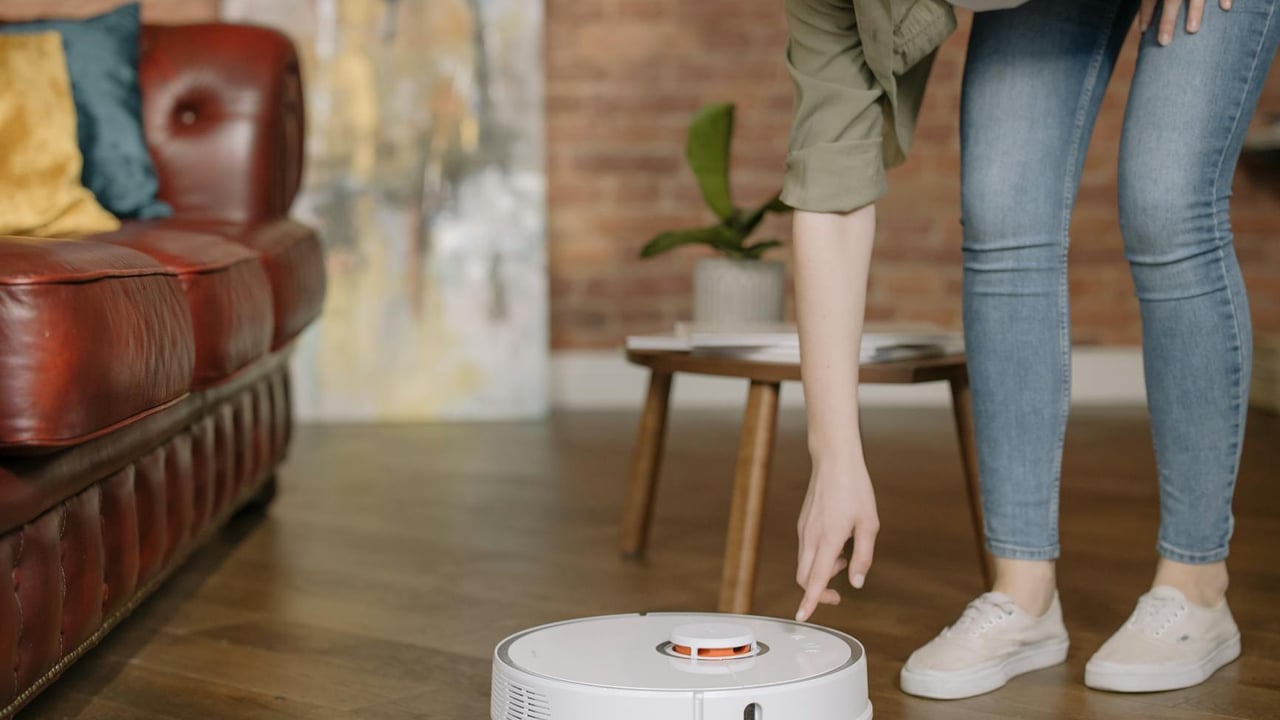

In the summer of 2021 Stone Technology (marketed overseas as Roborock) looked like the poster child of China’s hardware-as-tech narrative. The company’s shares rocketed after its STAR Market IPO and for a while it carried a valuation close to 100 billion yuan, prompting comparisons with the country’s most vaunted consumer brands and earning the sobriquet of the A‑share “Moutai of robot vacuums.”
Four years on the script has flipped. Stone’s market capitalisation has slid to roughly 34 billion yuan, even as top-line revenue keeps growing. The firm’s 2025 results bulletin underlined that contradiction: revenue jumped 55.9% year‑on‑year to 186.16 billion yuan in aggregate terms, yet profit attributable to shareholders fell 31.2% to 13.6 billion yuan — a reminder that sales growth no longer guarantees healthy margins.
The roots of Stone’s predicament are familiar to observers of consumer hardware: cut‑throat competition, a push for premiumisation that has not consistently delivered better user outcomes, and rising costs of customer acquisition. Roborock pioneered the transition from cheap Xiaomi‑branded white‑label devices to higher‑margin, feature‑rich models and enjoyed a prolonged growth run between 2017 and 2021, but rivals multiplied quickly.
Legacy makers such as Midea and Haier, specialist challengers like Ecovacs and Dreame, and new entrants from across the tech sphere including DJI have crowded the market, compressing price points and seizing channels. Stone remains a leading global shipper — IDC put its share at about 16% — but domestic online rankings show margins for leadership are wafer‑thin, with market share gaps measured in single digits.
Pressure is visible in Stone’s gross margin, which slid from a 2023 peak of 55.1% to 43.7% in the third quarter of 2025 as the company leaned into promotions and subsidised sales. At the same time, consumer sentiment around smart cleaning appliances has dimmed: social platforms are full of “avoid” posts alleging poor reliability, complex features that don't work in real‑world homes, and disappointing after‑sales support. That scepticism undercuts the premium upgrade cycle upon which makers have been banking.
Complicating Stone’s corporate narrative is founder Chang Jing’s side bet on electric vehicles. From 2021 Mr Chang began backing and building Jishi Auto, whose first model delivered modest volumes (about 4,500 cars in 2024 and 15,318 in 2025) and is not directly owned by Stone. Investors nonetheless punished Stone’s equity, viewing the distraction as a strategic diversion and reacting to founder share sales: Chang has sold nearly 900 million yuan of stock since 2023, a fact that fed concerns about capital allocation and alignment.
Internal turnover has added to governance anxieties. Several senior managers and early institutional backers such as Shunwei and Qiming have reduced exposure or exited, and the company has faced public scrutiny over product launches beyond its core vacuum line. Moves into washing machines and “embodied intelligence” — legged vacuums and arm‑equipped robots — have had mixed results, including service complaints and prototype mishaps that underline the difficulty of migrating scale across disparate appliance technologies.
Still, the picture has some stabilising signs. Stone’s third quarter of 2025 showed a single‑quarter rebound in attributable profit growth, and management has moderated sales spending while lifting R&D intensity. The company’s sales‑to‑R&D balance shifted as marketing growth decelerated and R&D expense ratio rose to 8.9% of revenue, suggesting a reorientation toward product engineering rather than pure channel blitzes.
A broader industry shakeout may help. The restructuring of foreign rival iRobot has opened shelf space in some markets, and several smaller home‑robot start‑ups are struggling for profitability, which could reduce the ferocity of price competition. Stone is also pursuing a second listing in Hong Kong — a successful IPO would provide fresh capital and a governance reset — but a listing alone will not restore investor confidence without clearer proof that the firm can convert engineering into dependable, defensible products and higher sustainable margins.
Stone’s dilemma exemplifies a wider tension in consumer robotics: hardware makers must choose between two hard things at once — relentless feature escalation to justify premium prices, and disciplined cost control to protect margins — while also delivering the simple, reliable user experience that mainstream consumers value. For Stone, the near‑term imperative is pragmatic: consolidate where the company has technical differentiation, fix service quality, and show consistent profit recovery before asking markets to buy another growth story.