

China’s annual legislative session opened in Beijing with President Xi Jinping and other top leaders attending the opening meeting of the 14th National People’s Congress. Premier Li Qiang delivered the government work report, framing the session as a checkpoint for 2025 achievements, the legacy of the 14th Five-Year Plan and the priorities and targets for 2026 under the incoming 15th Five-Year planning horizon.
The first ministerial “press channel” and delegate “representative channel” of this year’s Two Sessions signalled an emphasis on science, industry and state-led investment. Officials from the Ministry of Science and Technology, the Ministry of Industry and Information Technology (MIIT) and the State-owned Assets Supervision and Administration Commission (SASAC) used the platform to publicise headline numbers on research spending, artificial intelligence, robotics and SOE investment in strategic emerging sectors.
Minister of Science and Technology Yin Hejun highlighted an upswing in China’s innovation inputs in 2025: total R&D spending surpassed 3.92 trillion yuan, R&D intensity reached 2.8% of GDP, and basic-research spending approached 280 billion yuan, accounting for more than 7% of total R&D — a historical high for that category. Yin also pointed to the growing global standing of Chinese innovation clusters, citing the Shenzhen–Hong Kong–Guangzhou cluster’s ascent in international rankings, and noted an uptick in innovative drug approvals and cross-border licensing revenue.
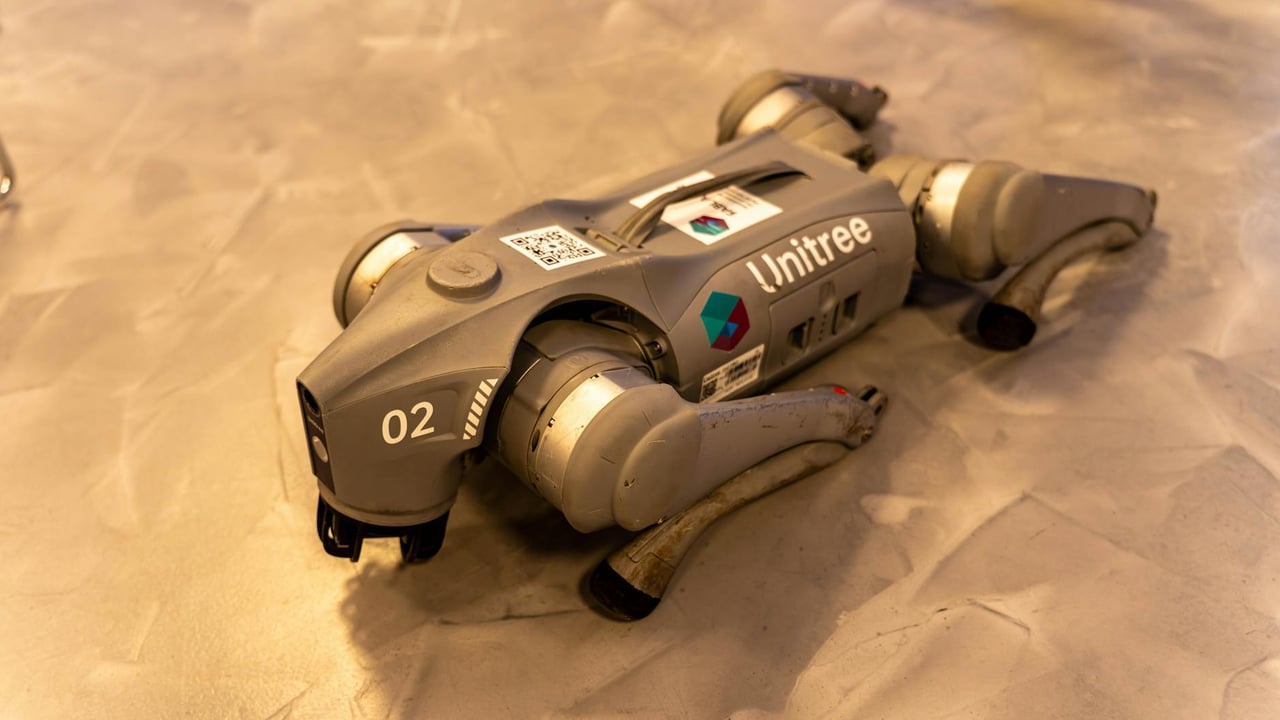
MIIT minister Li Lecheng cast the rapid proliferation of humanoid robots and AI applications as visible proof that Chinese innovation is moving from laboratories into everyday scenarios. He reported an AI core-industry size exceeding 1.2 trillion yuan and said more than 30% of large manufacturing firms had adopted AI applications by the end of 2025. The ministry also noted that Chinese firms’ open-source large models led global download volumes and that more than half of new humanoid robot models launched worldwide over the past year came from Chinese companies.
SASAC chair Zhang Yuzhuo disclosed that central state-owned enterprises invested about 7.4 trillion yuan in strategic emerging industries over the past three years, making up roughly 42% of their total investment. Those sectors generated about 12.3 trillion yuan in revenue in 2025 and produced five industries each with revenues on the order of a trillion yuan. Zhang outlined three priorities for the next phase: consolidating leadership in renewables and aerospace, pursuing catch-up in new energy vehicles, AI and advanced materials, and accelerating incubation of nascent fields such as quantum information, nuclear fusion and low-altitude economy applications.
The delegate channel showcased complementary micro-level advances and social-policy proposals. A representative from a Beijing research institute described a domestically developed blockchain acceleration chip that he said improves performance by 50-fold, underscoring the government’s drive for indigenous digital infrastructure. Separately, a proposal to shorten the interval between postgraduate entrance exams and admissions — aimed at compressing the recruitment timeline and easing graduate employment pressures — drew attention as a practical labour-market measure.
Taken together, the messaging ahead of Tuesday’s economic-themed press conference by senior economic and financial officials — including the directors of the NDRC, Ministry of Finance, Ministry of Commerce, the PBOC governor and the securities regulator — signals Beijing will emphasise industrial upgrading, technology self-reliance and continued state-directed capital deployment. The data and commitments showcased at the opening are designed to reassure domestic and international audiences that China’s growth model will lean on high-tech investment, SOE firepower and targeted support for future industries.