

On a late autumn night in Beijing’s Shunyi district a rented villa glowed with the light of soldering irons. There was little decoration inside — only stacks of circuit boards and makeshift benches — and a handful of young engineers worked through the night until they collapsed on the floor. That shabby scene was the origin story of Songyan Power (松延动力), a team that would go from being dismissed as a “three‑nothing” outfit to one of China’s most watched consumer humanoid robot challengers.
The company’s founder, Jiang Zheyuan, had left a doctoral programme at Tsinghua University at 25 to found the start‑up, trading a predictable academic path for the high‑risk business of building bipedal machines. Early investors were sceptical. Even after cutting the company’s valuation to attract interest, Jiang cobbled together only about RMB1m to begin work. Within weeks the team produced a working hardware prototype — a rarity in a sector where many projects remain at the concept stage — and that prototype won them seed capital and a move out of the villa.
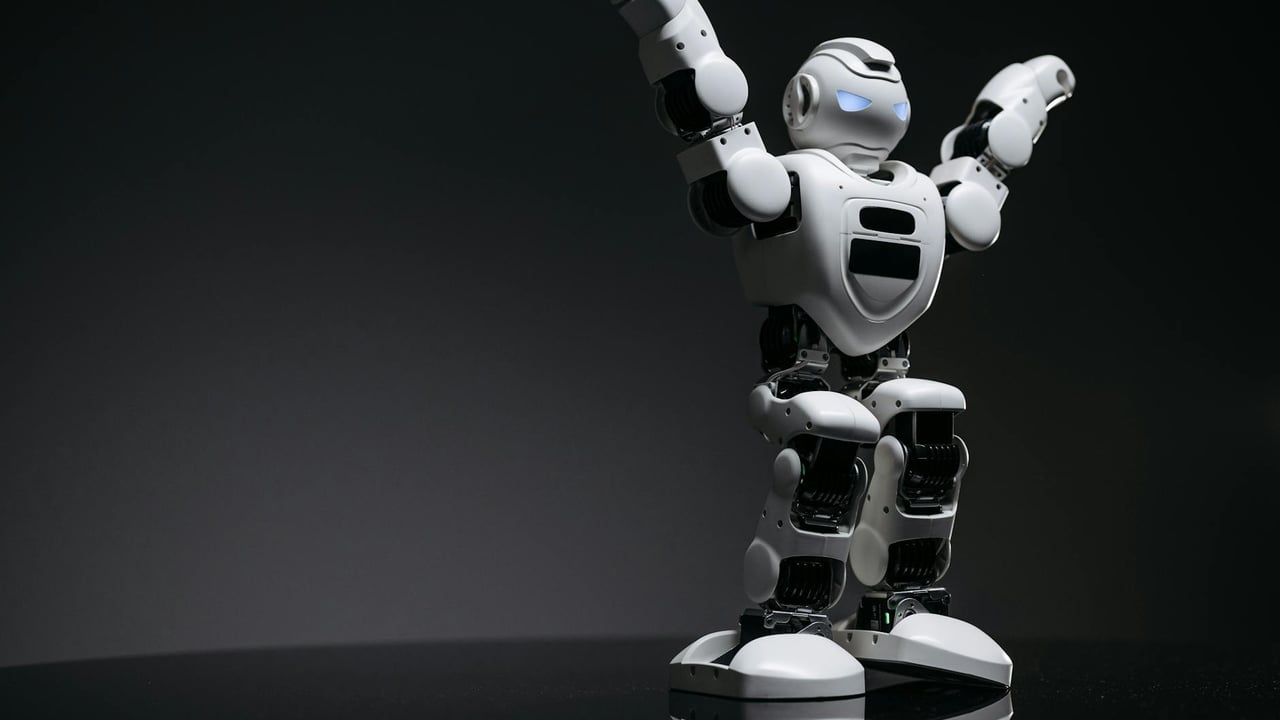
Songyan’s trajectory since then has been dizzying. Viral videos of a robot backflip and competitive finishes in a humanoid robot half‑marathon propelled the brand into public view. A spring‑festival appearance in which five of the company’s robots performed sketches and stunts culminated in a flurry of orders and a fresh funding round. The company now reports cumulative financing of more than RMB2bn across nine rounds and has launched a sub‑RMB10,000 consumer model called “Xiaobumi” that it hopes will open mass markets.
Yet the story is not just one of triumph. Jiang’s early windfall of capital led to reckless expansion: headcount surged and monthly burn hit RMB3m before the company realised the runway would last only ten months. Engineering setbacks and a delayed next‑generation product prompted a dramatic pivot — a wholesale shift from traditional model predictive control (MPC) to deep reinforcement learning (DRL) — and a rebuild of the team. The pivot, achieved by recruiting and rapidly training a cohort of junior engineers, generated a string of technical improvements that helped lift the company back into funding favour.
Songyan’s market push comes at a moment when humanoid robotics has left the laboratory and is entering consumer spaces. Industry research cited by the company suggests a dramatic increase in unit shipments — global humanoid robot shipments rose sharply in 2025, with forecasts for an even steeper rise in 2026 — and China’s showstopping media moments have helped normalise the machines in households and businesses. Songyan’s strategy now is twofold: capture the domestic education and consumer segments with low‑price units while pursuing higher‑margin overseas buyers for premium models.
That strategy, however, collides with sober technical and commercial realities. The start‑up still wrestles with engineering fragilities — motor overheating and structural fatigue among them — and is heavily reliant on third‑party suppliers for key components. Its products have tended to be scenically impressive rather than tightly matched to urgent needs, leaving the company vulnerable if consumer enthusiasm wanes. Investors, too, are restive: some established backers have withdrawn or tempered their involvement, and the sector’s capital‑intensive nature has already driven exits by players that relied excessively on continuous financing.
Songyan is emblematic of a broader inflection in China’s robotics scene. Where early rounds rewarded daring prototypes and big visions, the next phase will favour companies that can prove reliable manufacturing, durable unit economics and real use cases. For Jiang, the scramble to become the consumer leader in 2026 is as much a technical race as a test of managerial discipline. If Songyan can stabilise production, shore up its supply chain and turn headline‑grabbing demos into steady revenue, it may avoid the fate of many flamboyant start‑ups that burn bright and fade fast. If it cannot, the company will be a cautionary tale about the limits of hype in a hardware‑heavy industry.