
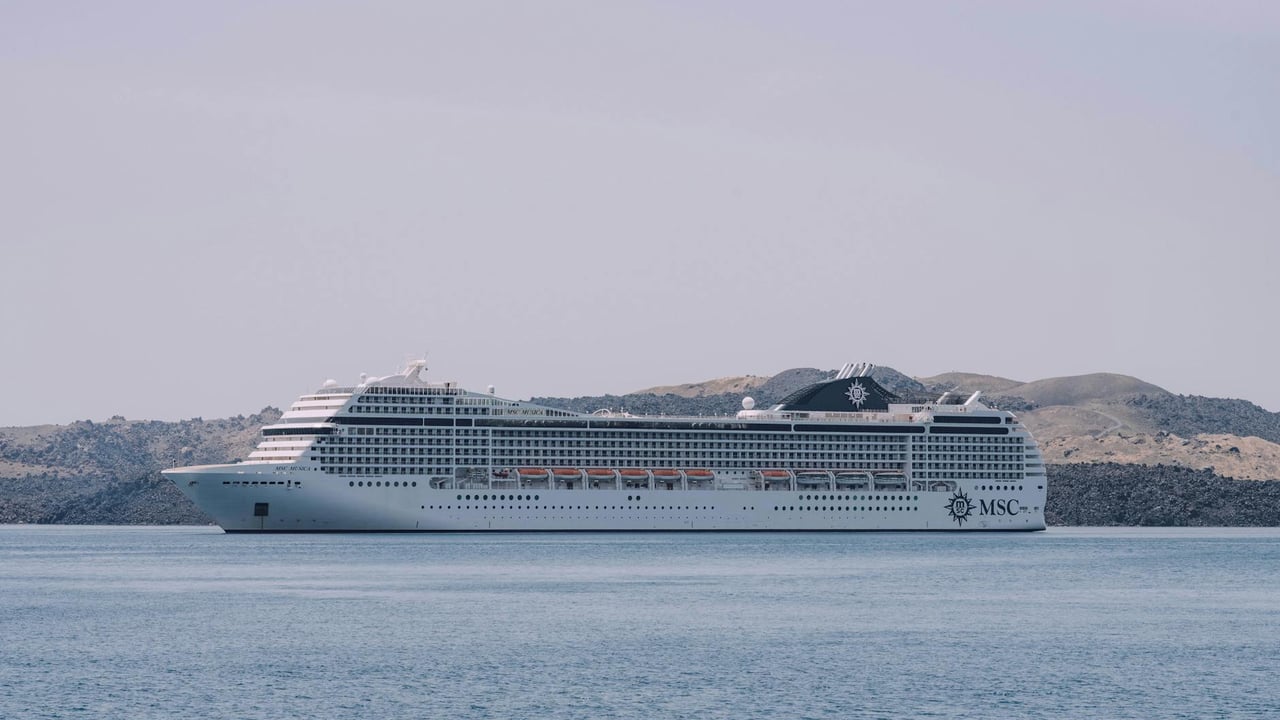

When 55-year-old Wang Yan boarded a gleaming Mediterranean Shipping Company megaship at Dubai’s Rashid Port on the afternoon of February 28, she expected eight days of palm-fringed shore visits and theatre shows. Hours later she received a terse notice: the ship would not depart until further notice. What began as routine cruise disruption quickly became an episode of geopolitical entanglement as American and Israeli strikes on Iranian positions—and Iran’s subsequent retaliatory strikes—sent air-raid alerts through the Gulf and forced ports and airports across the United Arab Emirates to suspend operations.
The vessel—known among Chinese passengers as the “Goddess” and typical of MSC’s 331-metre, 19-deck winter deployment in the Persian Gulf—was carrying more than 5,000 passengers when it was ordered to remain at anchorage. For many of the Chinese travellers, who had chosen to travel after the Lunar New Year and were predominantly in retirement age groups, the cruise had promised a gentle tour of Dubai, Qatar and Bahrain; instead they found themselves watching city skylines that appeared outwardly calm while their phones filled with warnings and maps of strikes.
Daily life on board settled into a new normal. Crew members kept services running—self-service buffets, cabin cleaning and evening shows—and the captain’s voice provided regular updates. Limited internet access initially left many without reliable contact to family; travel guides and seven Chinese group leaders banded together, creating messaging groups to share information, allaying fears and helping elderly passengers manage medication needs.
The episode highlights how quickly a localized military escalation can cascade into civilian disruption in a globalised transport hub. The UAE Defence Ministry reported dozens of ballistic missiles and hundreds of drones detected and intercepted during the strikes, with several civilian casualties and damage to infrastructure. Airline operations were suspended in Dubai and Abu Dhabi at times, and Clarkson Research estimates roughly 3,200 commercial vessels—including bulk carriers, container ships and several cruise ships—were effectively stalled in the Gulf, demonstrating the vulnerability of maritime traffic when the Strait of Hormuz is threatened.
For the cruise industry the commercial consequences are immediate and reputational. MSC Cruises has cancelled the remainder of its 2026–27 winter Gulf sailings, and at least six cruise ships carrying some 15,000 passengers and crew were stuck at ports along the Arabian Peninsula. Insurance premiums, rerouting costs and cancelled itineraries will erode margins; longer term, operators must weigh the appeal of winter Gulf deployments against the political and security risks of the region.
Chinese tour operators and consular teams also faced logistical strains. Agencies assembled emergency response units to coordinate with ship operators, buy alternative air tickets and liaise with consulates. The ship operator agreed to refund full-ticket passengers and to keep them onboard until flights could be organised, an important concession for older travellers with limited visa options who might otherwise be unable to secure immediate onward travel.
The human dimension remained prominent: passengers described scenes of cross-cultural empathy, impromptu performances on deck and communal efforts to stay calm. Others reported nearer-misses—missile debris and falling fragments that struck hotel facades on the Palm and damaged a luxury resort courtyard—underscoring how the conflict had crossed from distant headlines into the immediate environment of international tourists.
The broader implications extend beyond the comfort of stranded holidaymakers. The Persian Gulf is a chokepoint for global energy and container flows; sustained hostilities could force long detours around Africa’s Cape of Good Hope, raise shipping costs and insurance premiums, and test the limits of diplomatic crisis management. For nations with large outbound tourist markets—including China—the episode will feed into risk calculations by travel agents and customers contemplating trips to geopolitically sensitive regions.
In the days after the initial attacks, flights to China resumed and some passengers were repatriated, but uncertainty lingered. For those left onboard, the choice was between patience and costly rerouting: some accepted tickets and waited for scheduled flights, while others disembarked and paid extra to reach alternative hubs in Oman or Southeast Asia. The immediate emergency passed for many, but the disruption will echo in industry earnings, insurer models and travellers’ appetite for Gulf itineraries.