
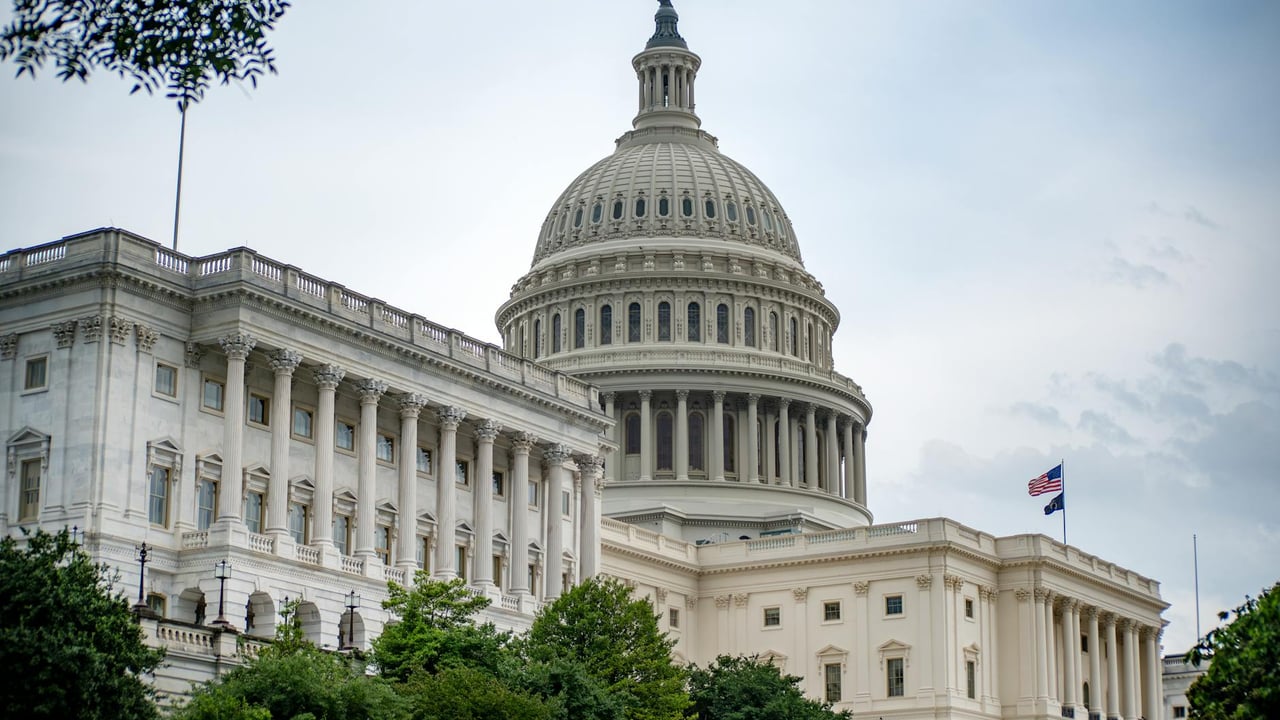

The U.S. Senate on March 4 rejected a bid to require President Donald Trump to obtain congressional authorization before undertaking further military action against Iran, voting 47–53 against the measure. The outcome was widely anticipated: Republicans hold 53 of the chamber’s 100 seats and lined up to shield the president. Democrats lambasted the administration’s recent strikes on Iran as unlawful and lacking evidence of an imminent threat, while Republicans countered that past Democratic presidents had exercised similar authority and accused opponents of partisan obstruction.
The vote revives a perennial constitutional tension between the executive and legislative branches over who may take the nation to war. Under the Constitution, only Congress can declare war, and the 1973 War Powers Resolution was intended to restrain unilateral presidential uses of force by requiring notification to Congress within 48 hours and limiting unauthorized military engagements to 60 days (with a possible 30-day withdrawal period). In practice, however, presidents of both parties have frequently operated within or around those limits, citing national-security exigencies.
For Democratic backers of the bill, the episode is as much legal as it is political. Senator Tim Kaine and others argued the administration had not produced evidence that the United States faced an immediate attack from Iran, rendering the strikes and any follow-on operations outside the scope of the War Powers Resolution and therefore ‘‘illegal.’’ Republicans, by contrast, framed the vote as preserving the president’s ability to respond quickly to threats and underscored partisan symmetry with prior administrations’ conduct.
The vote also forecasts the fate of a companion measure in the House of Representatives. With Republicans also holding a majority there, the prospects for congressional constraint are slim. That reality underscores a practical limit of constitutional checks: when the White House and Congress are controlled by the same party, institutional guardrails intended to restrain executive action may be politically blunted even amid sharp public debate.
Beyond domestic politics, the decision carries implications for U.S. foreign policy and allied confidence. Unchecked presidential latitude to use force risks sudden escalations in the Middle East and complicates coördination with partners who expect consultation on kinetic operations. Congress retains other tools—funding restrictions, oversight hearings and subpoenas—but those remedies are slower and often less decisive than a clear, statutory rebuke of military action.
With courts historically reluctant to resolve many interbranch disputes over war powers, the result of this vote is likely to be political rather than judicial. Expect Democrats to press investigations, public messaging and possibly targeted appropriations riders as alternative pressure points. For now, however, the Senate outcome has preserved the president’s immediate freedom to pursue further military options against Iran without new congressional authorization, at least for the time being.