

China has elevated the concept of an “intelligent economy” into its 2026 government work report, signalling a shift from talk about artificial intelligence in abstract to concrete industrial strategy. The move follows a series of policy steps — including a 2017 national AI roadmap and last year’s State Council guidance on “AI+” — that set 2030 targets for widespread adoption of next‑generation smart terminals, intelligent agents and high coverage of AI applications across the economy.
At the Two Sessions this spring, Li Meng, a vice‑ministerial veteran of the Ministry of Science and Technology and a member of the national political advisory body, sketched what the smart economy means in practice. She divides it into three layers: an upstream “intelligent production” sector that builds models and compute infrastructure; vertical integration of AI into existing industry chains to lift productivity; and new consumer markets born of embodied intelligence, such as companionship robots and elderly care services.
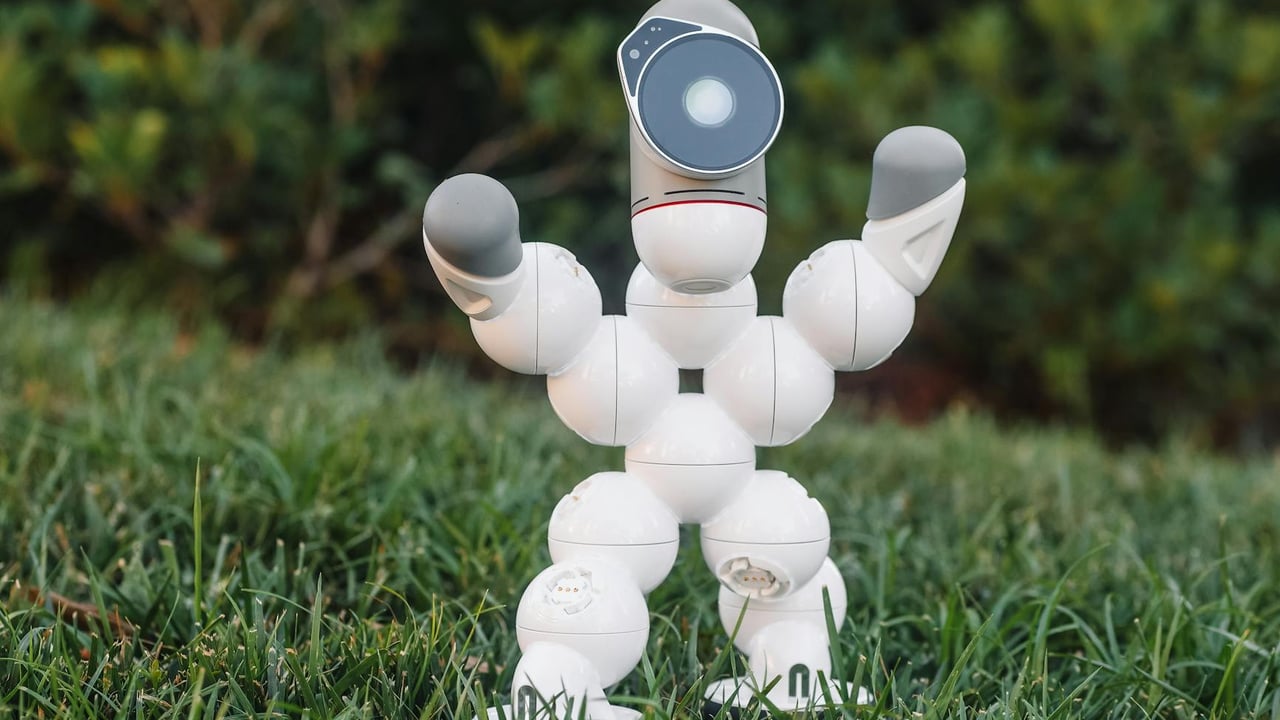
Li argues that companionship robots are likely to be among the first embodied AI products to enter Chinese homes at scale. They demand less dexterous hardware than household helpers and place their commercial value on conversational and emotional interaction — capabilities where many domestic firms already claim a cost and performance advantage over Japanese competitors. For a rapidly ageing cohort of older adults who are physically independent but socially isolated, Li sees a pragmatic consumer market for machines that supply emotional value rather than precise manual labour.
The last year’s visible leaps in humanoid robotics — from festival‑stage choreography to acrobatics and sketch comedy — reflect two converging trends, Li says. First, large multimodal models and multiple R&D pathways have accelerated progress on the cognitive side; second, the mechanical “body” has improved, notably in electric drive systems and finer manipulators. Competition among different technical routes has concentrated talent and capital, producing fast iteration in both software and hardware.
Yet Li stresses that a crucial technical frontier remains the “world model” — the robot’s internal representation of the physical environment. Today many systems rely on geometric approximations; the next step is models that encode physical causality and long‑term memory so a robot can, for instance, understand that a shadow is not a graspable object. Bridging the gap from “predict the next token” in language models to “predict the next action” in open, physical environments will require architectural re‑thinking and richer embodied datasets.
China’s teams and firms are competitive across different layers of the stack. Li points to advances in motion controllers and end‑effector design from domestic companies, the rise of electric over hydraulic drives for agility and safety, and breakthroughs in multimodal content tools such as video‑generation platforms. She acknowledges that U.S. research retains strengths in foundational theoretical paradigms for spatial intelligence, while Chinese groups have shown rapid progress in applied motion control, hardware integration and productisation.
On the question of an “iPhone moment” for humanoid robots — a single product that suddenly makes the category indispensable — Li differentiates general‑purpose humanoids from specialised embodied agents. She judges a consumer‑grade, general humanoid is still some way off; by contrast, specialised domains such as autonomous driving, caregiving companions and even intelligent toys could hit commercial inflection points within years. Smart toys, in particular, are highlighted as an underappreciated global market: lower mechanical complexity, heavy reliance on conversational AI and broad consumer demand make them an attractive early mass market.
Li also frames the smart economy in political‑economic terms. In the short run it offers a growth lever to offset cyclical weakness; over the medium term it can raise product quality and competitiveness across Chinese industrial chains. But she warns of distributional risks: AI efficiency gains must translate into aggregate productivity and equitable income distribution, or an “intelligence gap” could morph into a social and political fault line. Her policy prescription stresses inclusive deployment, employment safety nets, real‑world data collection jobs and international cooperation on governance so AI becomes a shared global public good.
Her remarks link several policy threads Beijing has been weaving: an emphasis on industrialised AI applications (the “AI+” agenda), investments in compute and 6G as enabling infrastructure, and careful messaging about human agency. Li suggests humans should remain the designers and governors of AI’s trajectory; firms and states must steer development toward tools and “partners” that augment rather than replace human judgement and social control.