
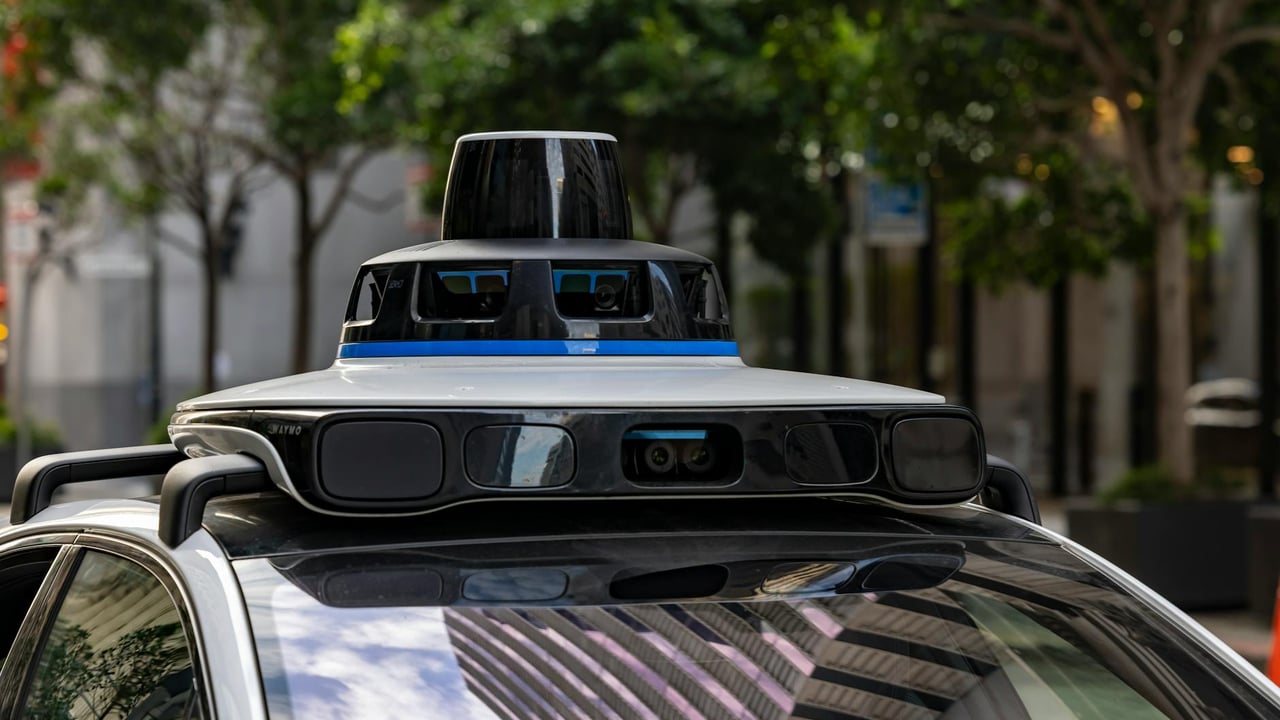

A senior member of China’s political advisory body and the chairman of EV maker Seres has urged Beijing to accelerate legislation specifically tailored to autonomous driving and to permit, under law, the orderly deployment of high‑level self‑driving vehicles on public roads.
Zhang Xinghai, a standing committee member of the National Committee of the Chinese People’s Political Consultative Conference (CPPCC) and chair of Seres, argued that China’s current legal framework remains rooted in a “human‑driven” assumption and therefore leaves a regulatory vacuum for vehicles that do not rely on an on‑board human driver. He recommended a dedicated statutory regime and a standards system aligned with industry development to push technical breakthroughs while reinforcing safety foundations.
The call comes as Chinese automakers and technology firms race to commercialize advanced driver‑assistance systems and higher levels of automation. Unlike countries such as Germany, the United Kingdom and parts of the United States where specific legal frameworks or regulatory pathways for autonomous vehicles already exist, China’s approach has relied largely on piecemeal rules, local pilot schemes and administrative guidance rather than a unified special law.
Proponents say special legislation would resolve practical barriers to scaling up autonomous fleets: harmonized technical standards, clearer rules for testing and certification, defined liability and insurance arrangements, and a legal basis for data governance and cybersecurity controls. For manufacturers and suppliers, a codified regime would reduce uncertainty, unlock investment and allow broader commercial deployment beyond pilot zones.
But the legislative push also raises familiar tensions. Accelerating legal permission for high‑level autonomy risks public backlash if it precedes robust safety validation; conversely, overly onerous rules could choke innovation and hand advantage to foreign players or incumbent platform firms. The content and pace of any law will reflect how Beijing balances industrial policy goals—such as promoting domestic EV and AI champions—with road safety, social stability and data sovereignty concerns.
Zhang’s dual role as an industry executive and a CPPCC standing committee member makes his pitch consequential: it signals coordinated industry lobbying inside China’s political process during the annual national deliberations. If Beijing heeds such calls, the next 12–24 months could see intensified drafting of a special autonomous‑driving law, tighter national technical standards and clearer pathways for high‑level automated vehicles to move from pilots to public deployment.