
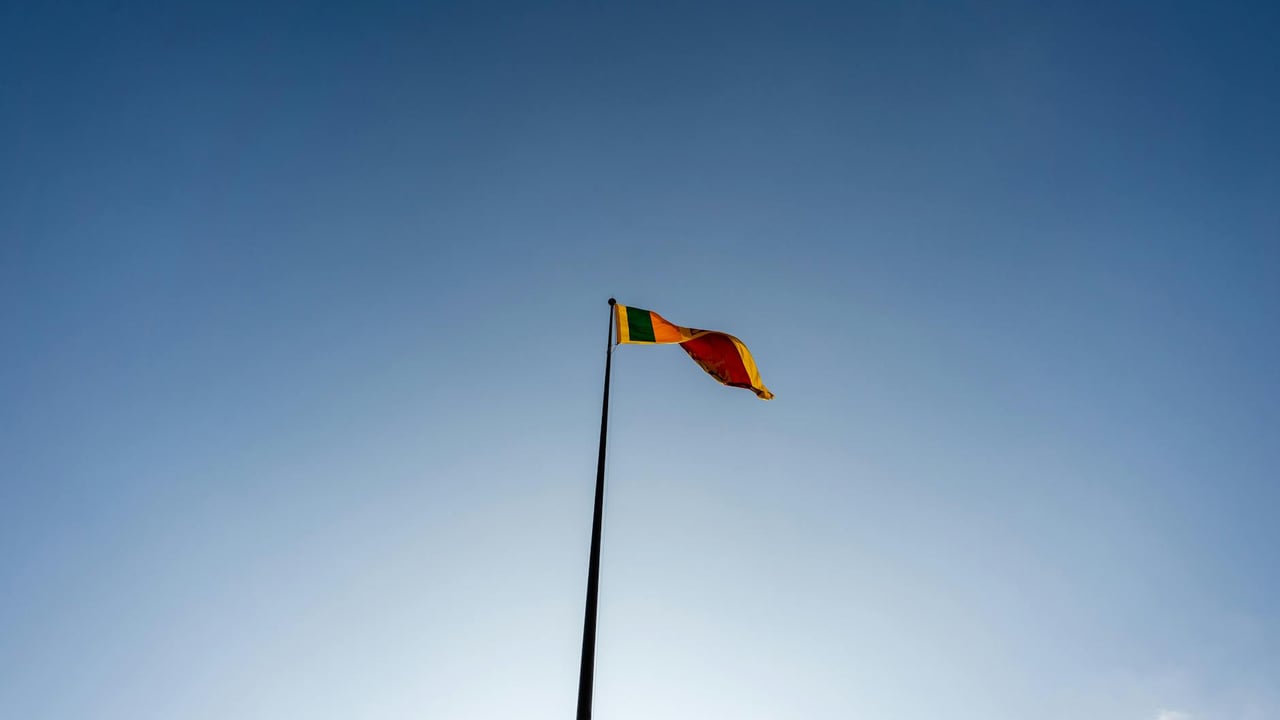

Washington has privately urged Colombo not to repatriate Iranian naval personnel rescued after a U.S. attack that sank an Iranian frigate in the southern Indian Ocean, a move that underlines how the confrontation between Tehran and Washington is spilling into the wider Indian Ocean and putting neutral states in an awkward position.
According to an internal U.S. State Department cable seen by Reuters, the U.S. chargé d’affaires in Sri Lanka told local authorities on March 6 that personnel from the Iranian frigate Dena and crew from the logistics ship Bushehr should not be returned to Iran on the grounds that Tehran might exploit them for “unfavourable publicity” about the U.S. sinking of the Dena on March 4. Sri Lankan officials allowed the Bushehr to dock and transferred more than 200 crew to Colombo, while Sri Lankan forces recovered 87 bodies and rescued 32 survivors from the sunken Dena.
The U.S. has framed its outreach to Sri Lanka as a security-driven dialogue aimed at reducing the threat Iran poses to American forces and partners; a State Department spokesperson said Washington was not trying to dictate Sri Lankan decisions. Sri Lankan authorities, including the president’s office and foreign ministry, have not publicly responded to the reports of U.S. pressure.
For Colombo the episode is fraught. Sri Lanka permitted the Bushehr to enter port and moved survivors and crew to military facilities, but any decision about repatriation will force a small, cash-strapped island state to weigh humanitarian obligations against pressures from a superpower with global reach. The choice also has reputational risks: appearing to bow to Washington could damage relations with Tehran and with other partners that view Sri Lanka as a neutral maritime hub.
Beyond bilateral frictions, the incident illustrates a broader strategic ripple. The Indian Ocean has become an operational theatre for U.S.-Iran tensions, and third-party states are increasingly objects of diplomatic manoeuvring. How Colombo handles the Iranian personnel could set a precedent for how other littoral states respond when combatants’ survivors and matériel wash up in neutral ports after actions by powerful navies.
There are legal and ethical dimensions too. International maritime law and humanitarian norms give coastal states obligations to rescue and treat survivors, but they are less prescriptive about onward movement and repatriation, especially when national security and potential propaganda uses are cited. That ambiguity allows outside powers to press host governments to take politically convenient paths.
The short-term calculations for Sri Lanka are clear: avoiding immediate escalation with Washington and preventing any use of survivors in Iranian messaging. The longer-term stakes are whether small states will be drawn into broader strategic contests and whether humanitarian responses will be securitised in future incidents at sea. Colombo’s next steps — whether to repatriate, detain, or transfer the Iranians to a third country — will be watched closely by capitals across the region.