
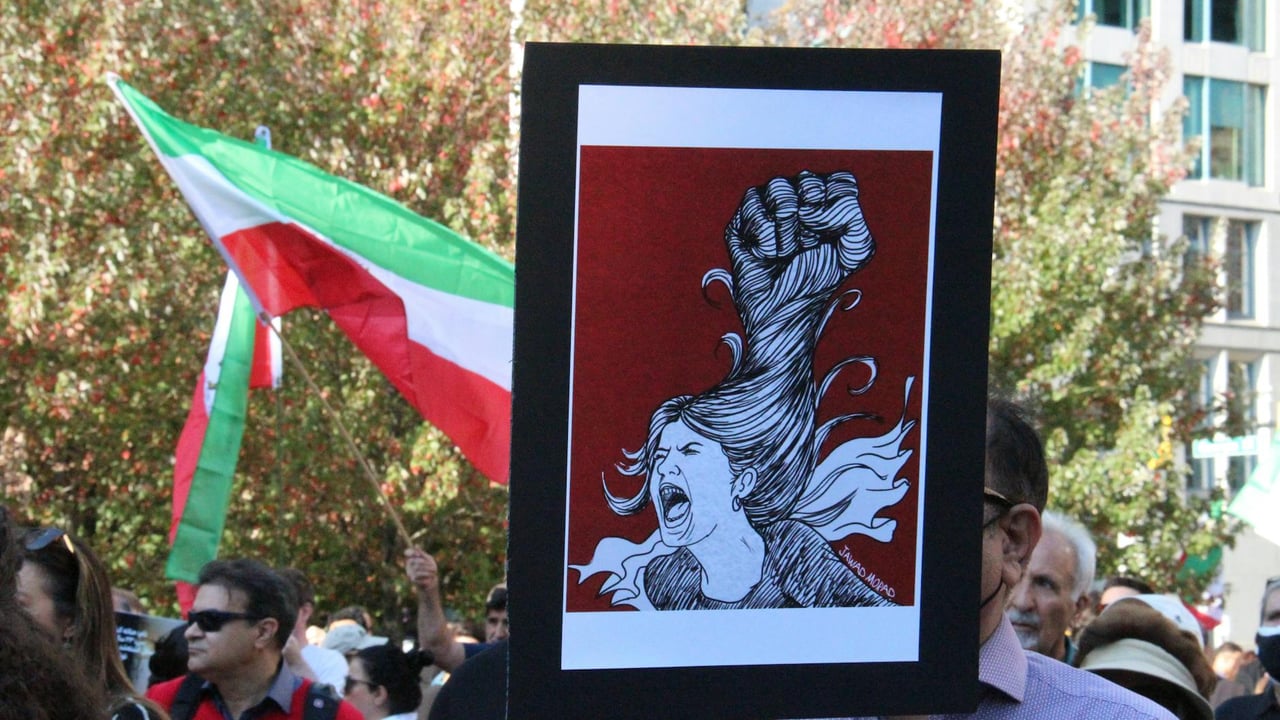

Thousands of people gathered in multiple American cities on March 7 to protest recent U.S. and Israeli military strikes against Iran, in scenes captured by the Chinese state news agency Xinhua. Demonstrations were reported in Washington, New York and Los Angeles, with rallies, marches and vigils staged outside government buildings and public squares. Photographs showed multi-generational crowds, including children, carrying placards and chanting slogans opposing further military action.
The protests reflect a broader unease among segments of the U.S. public about renewed kinetic confrontation in the Middle East. Organisers drew on long-standing anti-war networks — from peace groups to diasporic Iranian and Arab-American communities — to mobilise visible demonstrations in the nation’s political and media centres. The use of emblematic urban locations such as Los Angeles City Hall and New York streets helped ensure high-profile images circulated domestically and internationally.
Domestic opposition matters because it can shape the political environment in which the White House and Congress make foreign-policy decisions. While presidents retain considerable latitude to authorise limited strikes, sustained public backlash raises the political cost of prolonged or expanded military campaigns, complicating calls for authorising legislation, funding, or troop deployments. Lawmakers sensitive to constituencies in swing districts or with large diaspora populations may press for hearings, oversight or conditional support.
Beyond immediate U.S. politics, the protests feed into a larger diplomatic narrative about legitimacy and public consent for the use of force. Allies and adversaries alike observe whether American actions command home-front support; visible domestic dissent weakens the perception of a unified Western front and may embolden Iran and its regional partners. Conversely, if the demonstrations persist and grow, they could constrain further escalation and provide leverage for diplomatic initiatives aimed at de‑escalation.
The coverage of these protests by Xinhua is itself noteworthy: Chinese state media’s amplification of U.S. domestic resistance serves Beijing’s broader strategic aim of highlighting U.S. political fracture and limited moral authority abroad. That framing will circulate in international media ecosystems already attuned to messaging battles over the conflict, even as many American outlets focus on the policy and security dimensions rather than foreign propaganda angles.
For now, the protests underscore the fragility of public support for renewed conflict in the Middle East. Policymakers in Washington face a choice between pressing a military advantage at the risk of deepening domestic opposition and seeking diplomatic channels to reduce the chance of a wider regional war. How that choice plays out will shape both American credibility overseas and the stability of a volatile region.