
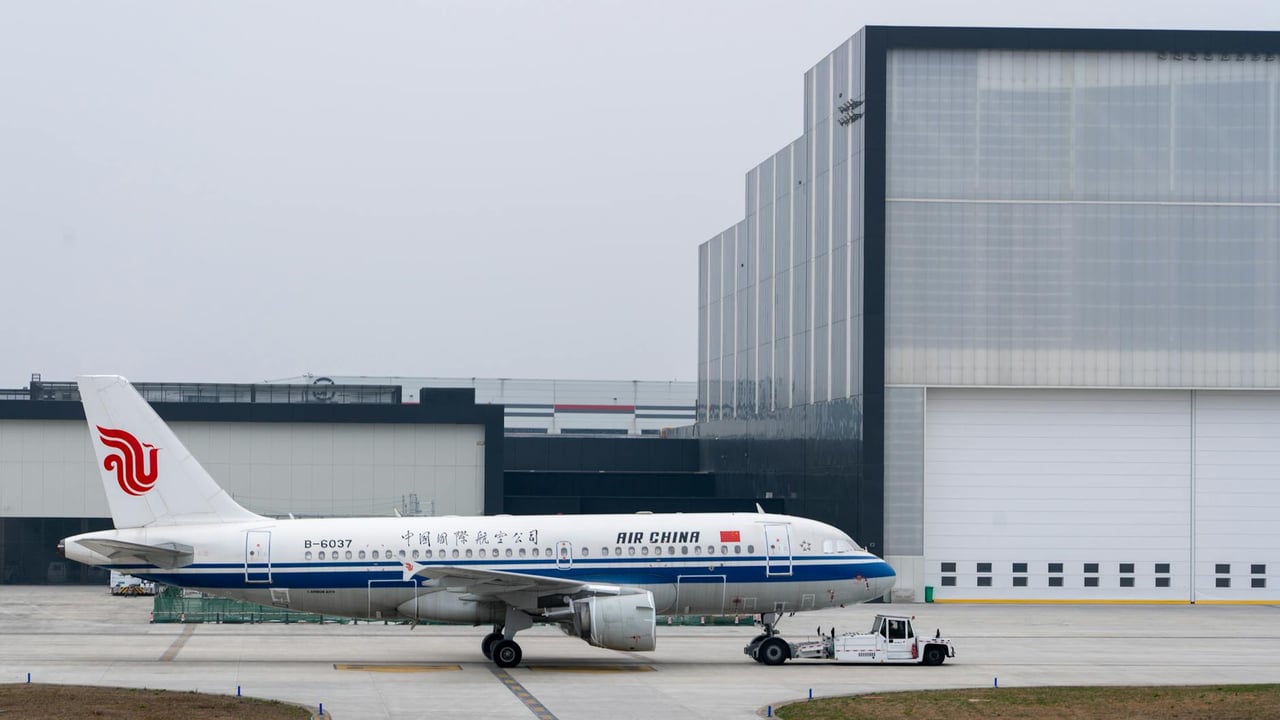

China’s transport minister Liu Wei told the annual national legislature’s ministerial channel on 9 March that the domestically built C919 narrow-body airliner has carried more than four million passengers safely during the 14th Five-Year Plan period. Liu framed this tally as part of a wider acceleration in transport technology and equipment modernisation, alongside a claim that China’s automated container terminals now lead the world in both scale and technical sophistication. The remarks were delivered at the second ministerial passage of the 14th National People’s Congress, a platform the government uses to showcase policy wins and industrial progress.
The C919 is the most visible symbol of China’s long-term strategy to move up the aerospace value chain and reduce dependence on foreign aircraft-makers for domestic air travel. Reaching four million passenger journeys is not merely a production metric: it signals operational maturity, growing airline acceptance, and a body of in-service reliability data that regulators and potential overseas customers will scrutinise. Yet the figure speaks primarily to domestic deployment; international certification, global airline confidence and an independent supply chain remain unfinished steps before the airplane becomes a genuine export competitor to Boeing and Airbus.
Beyond aircraft, the ministry’s claim that automated ports lead globally points to a complementary, albeit quieter, transformation in logistics and trade infrastructure. Large-scale automated container terminals reduce turnaround times, lower labour costs and increase throughput—advantages that feed into export competitiveness and the efficiency of domestic supply chains. For an economy seeking to insulate itself from external shocks and to sustain export growth, better ports are as strategically important as better planes.
These technological advances are the product of a highly coordinated industrial policy: state-backed investment, targeted subsidies, and close collaboration between ministries, state-owned enterprises and private suppliers. That model accelerates deployment and scale, but it does not eliminate obstacles. The C919 still relies on foreign-made components in key areas, and international certification regimes and geopolitical tensions could complicate any rapid pivot from domestic success to global market share.
The practical upshot is twofold. First, China is moving from demonstration projects to systems operating at meaningful scale, which strengthens its bargaining position and narrows the technological gap in mature industries. Second, the trajectory raises questions for global competitors and regulators about how to respond to a rising indigenous aviation industry that is being built within a state-directed ecosystem. For observers outside China, the milestone is a reminder that industrial capacity is increasingly judged by operational performance, not just prototype announcements.