
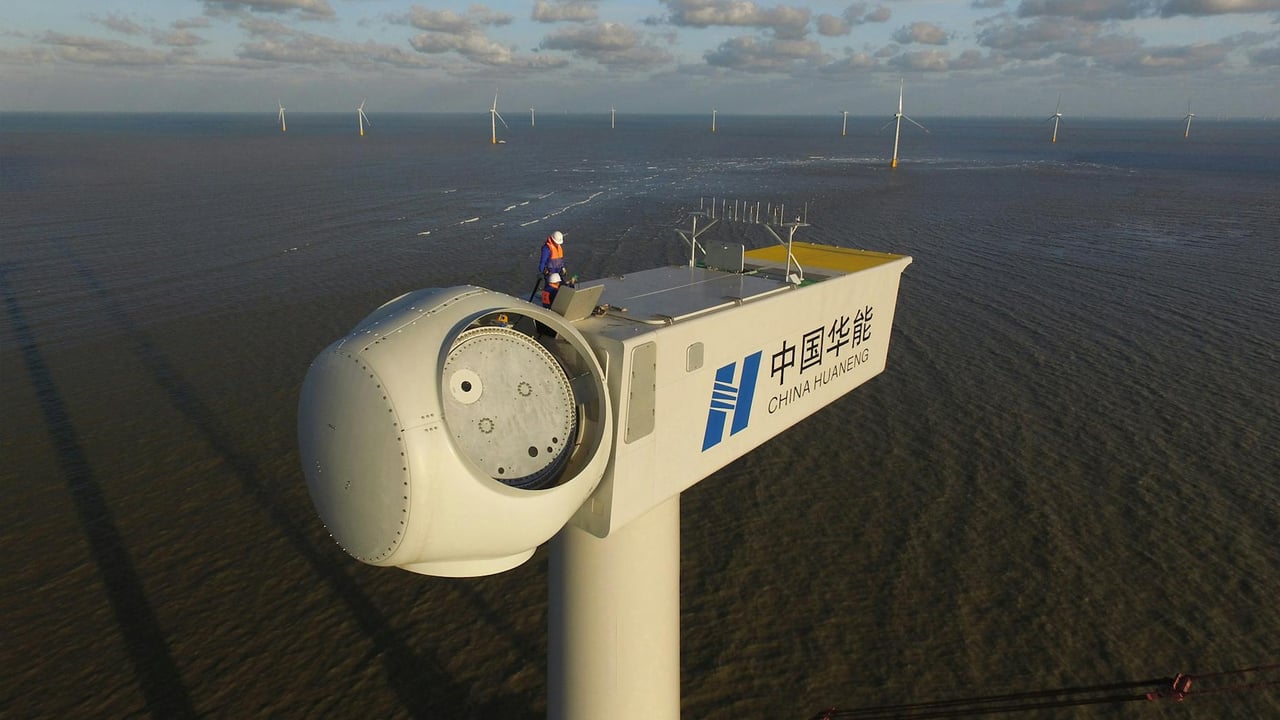

A spike in geopolitical risk in early 2026 has converted Europe’s long-term ambition for offshore wind into an immediate procurement imperative, and Chinese manufacturers have moved fast to fill the gap. As tensions around the Strait of Hormuz and disruptions to LNG flows from Qatar put energy security at the top of buyers’ agendas, firms such as Dajin Heavy Industry signed urgent supply deals — including a pact with Poland’s state-owned Szczecin Wulkan shipyard to provide 40 core foundation components for the Nordseecluster B project — and loaded monopiles bound for the UK’s Hornsea 3 project onto their own 40,000-ton transport vessel KINGONE. European buyers now open conversations with a single question: “Can you guarantee delivery?” that question has eclipsed price as the primary procurement criterion.
Procurement rhythms have contracted dramatically. Where European utilities and engineering firms once took three to six months to make supply decisions, they now demand capacity to be locked, material to be committed and ships to be scheduled within one to two months. Dajin’s overseas orderbook has swelled beyond RMB 10 billion and is scheduled through 2027, with some capacity reservations extending to 2030. A landmark warning of the market shift came when SeAH Wind lost its Hornsea 3 contract amid delays and labour disputes, and that work promptly migrated to Chinese suppliers.
Chinese firms assert three concrete advantages that explain their new inroads. First, many have secured long-term steel supply agreements with domestic mills such as Baosteel and Hualing at prices reportedly about 30% below European levels, insulating margins despite commodity volatility. Second, vertical integration and logistics control—illustrated by proprietary heavy-lift and deck-transport vessels like KINGONE—cut single-ton transport costs by an estimated 40% versus third-party chartering and reduce exposure to high-risk sea lanes. Third, companies are adopting a “manufacture-in-China, final-assembly-in-Europe” model by building or partnering on quays and yards in Germany, Poland and the UK to meet local-content expectations while preserving cost advantages.
The surge is visible on balance sheets as well as on quays. Domestic-focused manufacturers, such as Haili Wind Power, reported an almost vertical recovery in mid-2025: second-quarter revenues rose by 570.6% year-on-year and net profit by 315.8%, while Mingyang and Goldwind also flagged overseas order growth and new large-scale investments in UK and Middle Eastern bases. Cable-makers and steel suppliers have similarly accelerated international expansion, with Dongfang Cable citing overseas revenues up nearly fivefold in 2024 as it established subsidiaries in the Netherlands and the UK.
The boom comes with sharp risks. Shipping reroutes around the Cape of Good Hope have pushed freight costs up by 30–50%, and escalations in Middle East tensions risk further commodity-price contagion. Political risk is perhaps the largest unknown: European Union measures such as the Carbon Border Adjustment Mechanism and tightening local-content rules could be reanimated once the emergency eases, potentially cutting the durability of the current opportunity. Chinese executives privately worry that a rush to capture market share could spawn price competition that erodes margins and invites protectionist responses.
Firms are responding with hedges and political insurance. Several Chinese manufacturers have initiated “front-shop, back-factory” models that preserve European assembly footprints while keeping heavy fabrication in China, and are offering DAP (Delivered At Place) contracts that internalise transport and delivery risk for clients. Companies are also fast-tracking local bases: Tianshun converted a trial plant in Cuxhaven into full production capacity for 500,000 tonnes of monopiles, while Mingyang has committed to a £1.5 billion full-chain site in the UK and is pursuing megawatt-scale deals in Saudi Arabia and the UAE.
The broader significance extends beyond balance sheets. Europe’s energy-security-driven buying preferences have transiently loosened protectionist constraints and reordered supplier hierarchies: capacity, delivery certainty and logistics have trumped origin in procurement decisions. That recalibration could accelerate offshore wind deployment by easing near-term bottlenecks, but it also raises delicate geopolitical and industrial-policy questions about dependency, reciprocity and the future of high-value manufacturing in Europe.
Chinese exporters now occupy a strategic middle ground: they are simultaneously indispensable stabilisers for Europe’s fast-accelerating offshore wind build-out and exposed political targets for a bloc that seeks both security and industrial sovereignty. For the firms involved, the next phase will hinge on balancing aggressive order-taking with disciplined pricing, deepening localization to blunt trade frictions, and convincing European stakeholders that supply from China can be a durable, not just expedient, answer to an energy crisis.