
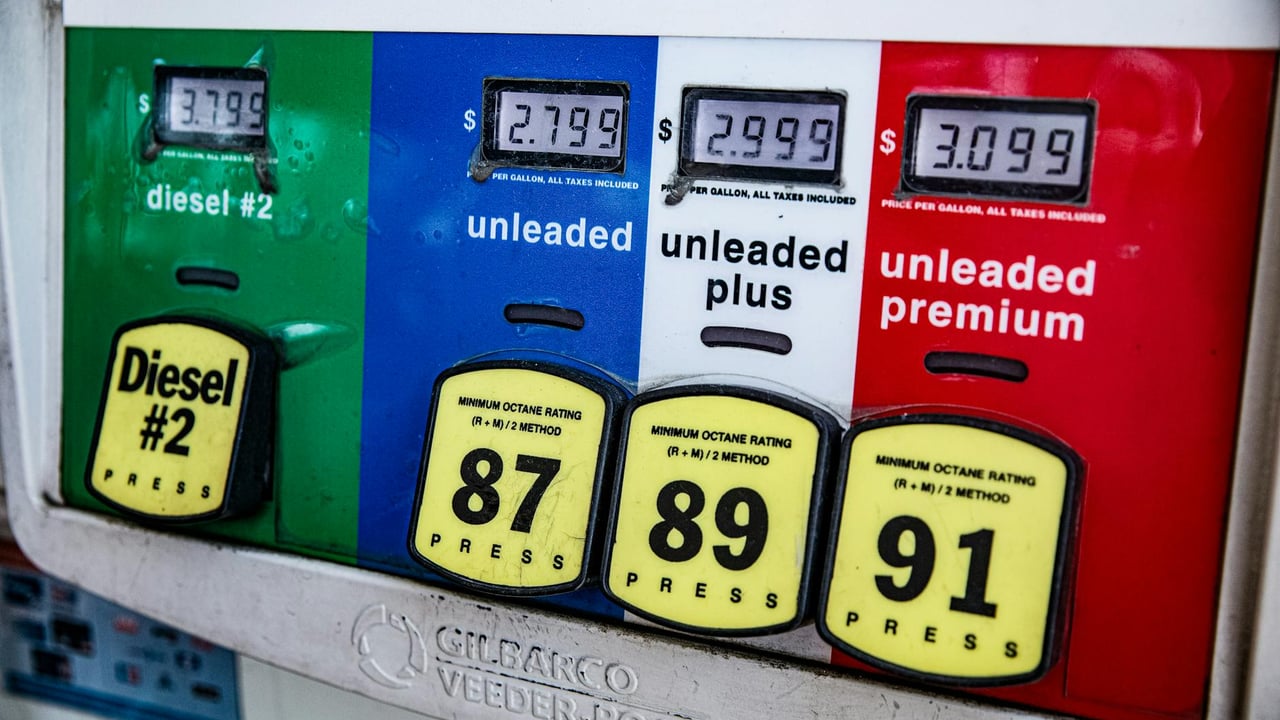

A week into the renewed US–Israel–Iran confrontation, commodity markets have already delivered a first invoice to the global economy. Brent briefly spiked to about $110 a barrel, European gas benchmarks surged more than 40%, Qatar curtailed LNG exports as shipments through the Strait of Hormuz were disrupted, European diesel futures jumped roughly 34% in two days, and Chicago wheat contracts rallied as traders priced in greater risk. These moves, thousands of kilometres from the front lines, translate swiftly into higher household energy, transport and food costs.
The reason is structural: modern globalization rests on an intricate, efficient — and fragile — web of supply chains whose critical arteries run straight through the Middle East. When those arteries are threatened, the shock is not local. It propagates through energy markets, agricultural inputs and shipping routes, raising production costs and inflation expectations across continents.
The economic toll begins with the combatants and then radiates outward. Israel’s economy is unusually exposed: high-tech sectors account for a disproportionately large share of output and exports, and a quarter of its goods exports are defence-related technology. Mobilising some 300,000 reservists removes engineers and technicians from factories and R&D labs; after the Hamas attack in October 2023, Israel’s GDP plunged nearly 20% in a single quarter. A conflict of greater intensity promises deeper, longer-lasting damage.
Military consumption also has a high cash cost. Israel’s air-defence interceptors are expensive — roughly $50,000 for an Iron Dome shot and $3–5 million for an Arrow‑3 intercept — and Tehran fired in excess of 150 ballistic missiles in its first salvos. That tally means hundreds of millions of dollars of munitions expended in a single episode and a costly replenishment bill. The Israeli central bank has already sold foreign reserves to stabilise the shekel, while sovereign credit-rating pressure and potential capital flight would raise financing costs for reconstruction and defence procurement.
Iran faces its own economic trap. Oil revenues account for roughly 40–50% of government receipts, and a declared “conditional control” of the Strait of Hormuz risks cutting off more than 80% of the country’s exports that transit the waterway. The rial has collapsed, import bills for food and medicine are soaring, and inflation is compounding a five‑year erosion of middle‑class wealth. A policy that signals strategic deterrence can therefore quickly become a self-inflicted fiscal wound.
Gulf oil producers confront a paradox: higher nominal oil prices are of little use if physical exports cannot leave the Gulf. Saudi Arabia ships about 77% of its exports through Hormuz and the UAE ships nearly all its LNG by sea; a choke point renders revenue “on paper” but illiquid. Meanwhile Dubai and Abu Dhabi’s reputations as financial and tourism hubs have been dented, prompting quiet discussions about corporate headquarters and high‑net‑worth asset relocation that will show up only in long‑run investment flows.
Three overlapping transmission channels explain how a regional war becomes global pain. The first is shipping: the Strait of Hormuz handles about 20% of seaborne oil and roughly 30% of LNG. The four Asian importers — China, Japan, South Korea and India — take more than 14 million barrels a day collectively; when Gulf supplies are constrained, buyers scramble for alternatives such as US shale or North Sea crude, forcing a rapid re‑pricing of oil and gas.
The second channel is agricultural inputs. Iran is a significant exporter of urea (around 5 million tonnes annually) and the region supplies a sizeable share of global sulphur used to make phosphate fertilisers. Interruptions in those flows push fertiliser prices up, which then raise farming costs and depress yields. The 2022 Russia–Ukraine crisis is a recent precedent: sanctions on Russian fertiliser caused an 80% rise in urea prices in three months and translated into meaningful crop losses in vulnerable countries.
The third channel is the broad price pass‑through from oil into manufacturing and services. Oil is not just a transport fuel; it is a feedstock for plastics and chemicals, and a key input to logistics and power. Historically, a $10 rise in Brent pushes global inflation up roughly 0.3–0.5 percentage points. That amount may sound modest, but it is sufficient to delay central‑bank easing, keep borrowing costs elevated and slow investment just as multiple economies are trying to regain momentum.
When those channels combine, a fourth mechanism compounds the damage: a wage‑price spiral. Simultaneous jumps in energy, food and basic manufactured goods squeeze real wages. Workers demand higher pay; firms raise prices to protect margins; central banks tighten; and growth slows. The result is a self‑reinforcing cycle that can be stubbornly persistent, as seen after the 2022 inflation surge.
The distributional consequences are stark. Energy exporters and owners of commodity assets — US shale operators and, even under sanctions, some Russian energy firms — stand to gain windfall revenues. Large energy‑importing manufacturing economies such as China, Japan, South Korea and India will face a systemic rise in input costs: China’s energy import dependence is close to 70%, and an additional $10 on oil adds tens of billions of dollars to its import bill each year. Low‑income households will bear the brunt, spending a larger share of income on food and fuel, while wealthier investors and defence contractors capture much of the upside.
The macro figures are sobering. Publicly disclosed military spending by the US and Israel runs at roughly $1–1.5 billion a day; a hundred‑day campaign could mean direct military bills north of $150 billion. The US Congressional Budget Office has suggested that six months of sustained conflict could add more than $200 billion to deficits through military outlays and aid. The International Monetary Fund’s scenario models put a serious Middle East‑related oil disruption at a 0.5–1.5 percentage‑point drag on global GDP in the year of the shock — translating into hundreds of billions of dollars in lost output and millions pushed back into poverty.
Beyond immediate costs, the conflict accelerates a structural shift: the erosion of the security assumptions that underpinned three decades of hyper‑efficient globalisation. Firms will accelerate near‑shoring and “friend‑shoring” strategies, shortening but raising the cost of supply chains and reducing trade efficiency. The globalisation dividend — cheaper goods, higher specialisation — will be harder to reclaim, and resilience will be bought at the price of higher recurring production costs.
If there is a practical takeaway for policymakers and businesses, it is that geopolitical risk has become endemic rather than exceptional. Building buffers — strategic reserves, diversified energy mixes, domestic fertiliser capacity, and stockpiles for critical inputs — is no longer optional. The economic calculus of peace has acquired a precision that should make deterrence, diplomacy and risk‑mitigation core elements of national security strategies.