

Chinese appliance giant Midea has announced an aggressive push to rewire its business around artificial intelligence, committing to more than 600 billion yuan of further R&D over the next three years and unveiling a suite of software and platform initiatives designed to turn whole homes into proactive, interconnected living systems.
On March 10 Midea published its 2026 whole-home intelligence strategy and introduced MevoX, a self-evolving home intelligence agent, alongside a “three ones” blueprint: one appliance network, one intelligent brain and one open platform. The plan is backed by the company’s claim that it already spent over 600 billion yuan in R&D in the past five years and that it has integrated AI across more than 150 appliance categories.
Midea presented MIA 1.0, a unified household dispatch system that uses MevoX’s higher-order reasoning and memory capabilities to coordinate devices. The group says over 500 million of its products now have networking capability and that more than 140 million smart appliances are currently activated worldwide. Its Meju app registers monthly active users in excess of 23 million, a customer reach the company intends to deepen through platform openness and third-party integrations.
The strategic thrust is as much about software and ecosystems as about hardware. Industry consultants quoted by Chinese media stress that platform interoperability, data consolidation and the capacity to attract external partners will determine winners in the whole-home market. Midea has already begun linking with phone and car makers — naming Huawei, vivo, BYD and NIO — claiming industry-first A2A (app-to-app) phone-to-appliance interconnection with vivo and bidirectional seamless car-home control.
Executives and sector analysts acknowledge obstacles. Fragmented standards and proprietary device stacks create “data islands” that blunt cross-brand orchestration. Many current “smart” appliances are effectively remote-controlled or scene-triggered rather than proactively intelligent. Midea’s AI research head conceded that product breakthroughs that materially change user behaviour have been limited so far, but argued that rising inference capabilities now make complex, multi-device scenarios feasible in the field.
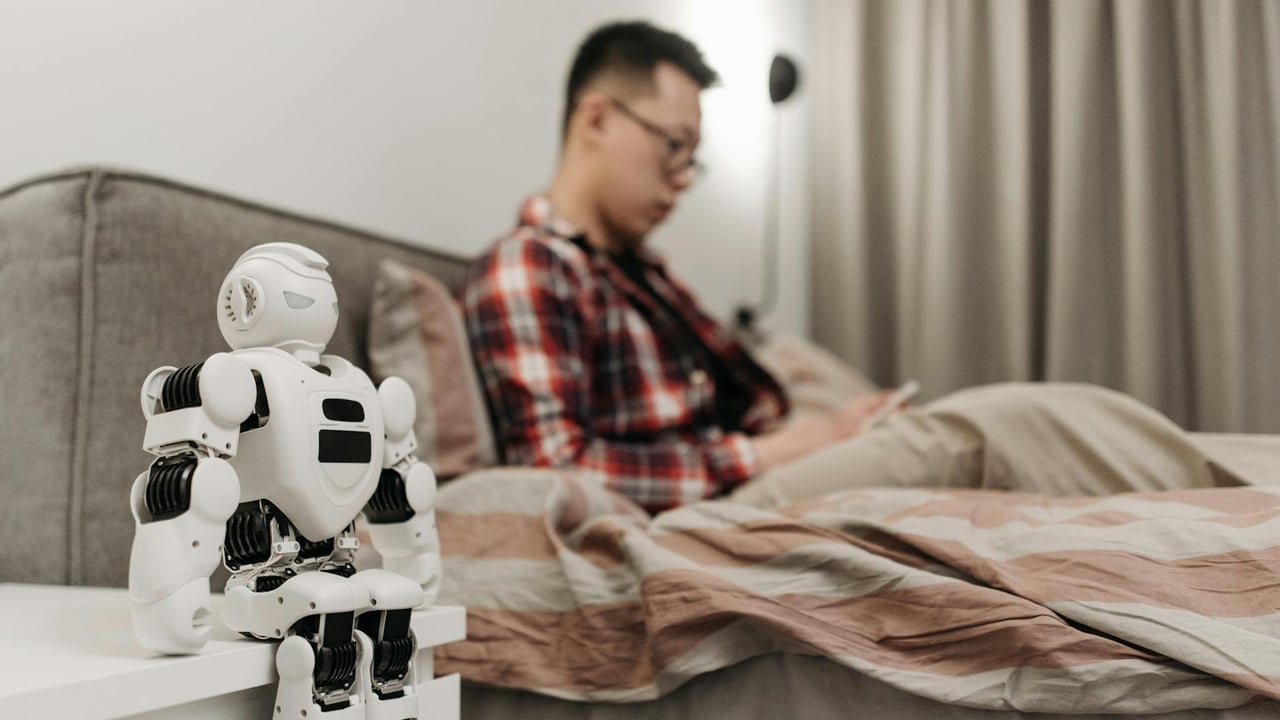
Midea is also betting on embodied intelligence. The company has developed multiple robot platforms — humanoid, full-body and super-human forms — and has deployed a new humanoid model, MeLuo U, in a Wuxi factory. Executives describe robots as a potential new entry point to the home, moving intelligence from screens and voice assistants into physically capable devices. Industry observers note that fine manipulation, reliability and safety remain the most difficult engineering challenges in bringing service robots into everyday domestic life.
For global observers the announcement signals two linked trends. First, China’s appliance manufacturers are transforming into platform companies that combine hardware manufacturing scale with AI software investments. Second, the race to embed proactive intelligence into everyday objects is moving from lab prototypes to commercial rollouts, forcing questions about standards, data governance and the competitive dynamics between traditional white‑goods makers and the big tech players that control mobile and cloud platforms.
In practical terms consumers should expect deeper integration between cars, phones and household devices and smarter automation of multi-device scenarios. But wider adoption of proactive AI in the home will depend on interoperable standards, robust privacy and security safeguards, and meaningful advances in scene understanding and low‑latency inference. Until then many “smart” features will remain incremental rather than transformational.