

President Trump’s suggestion that the US campaign against Iran could end “soon” — though not within the week — is being read abroad as an early sign that Washington is running into limits. Since US and Israeli strikes on Iran on February 28, the conflict’s fallout has rippled across markets, domestic politics and alliances, turning a distant military action into an immediate political and economic problem at home.
The most visible channel of blowback has been energy. International crude futures topped $100 a barrel for the first time in more than three years and US retail gasoline averages have jumped roughly 17% since late February, squeezing households and firms already sensitive to price shocks. With the strategic petroleum reserve at historically low levels after large releases in 2021, the administration has little scope to blunt oil-market pain by tapping stocks, and officials have signalled reluctance to use that instrument.
Rising fuel costs are not an abstract metric for voters: they feed into headline inflation, push up transportation and mortgage-related costs, and erode consumer purchasing power. Analysts at the Centre for Strategic and International Studies and private-sector economists warn that sustained higher energy prices could slow US growth and become a decisive factor for voters ahead of the midterm elections in November.
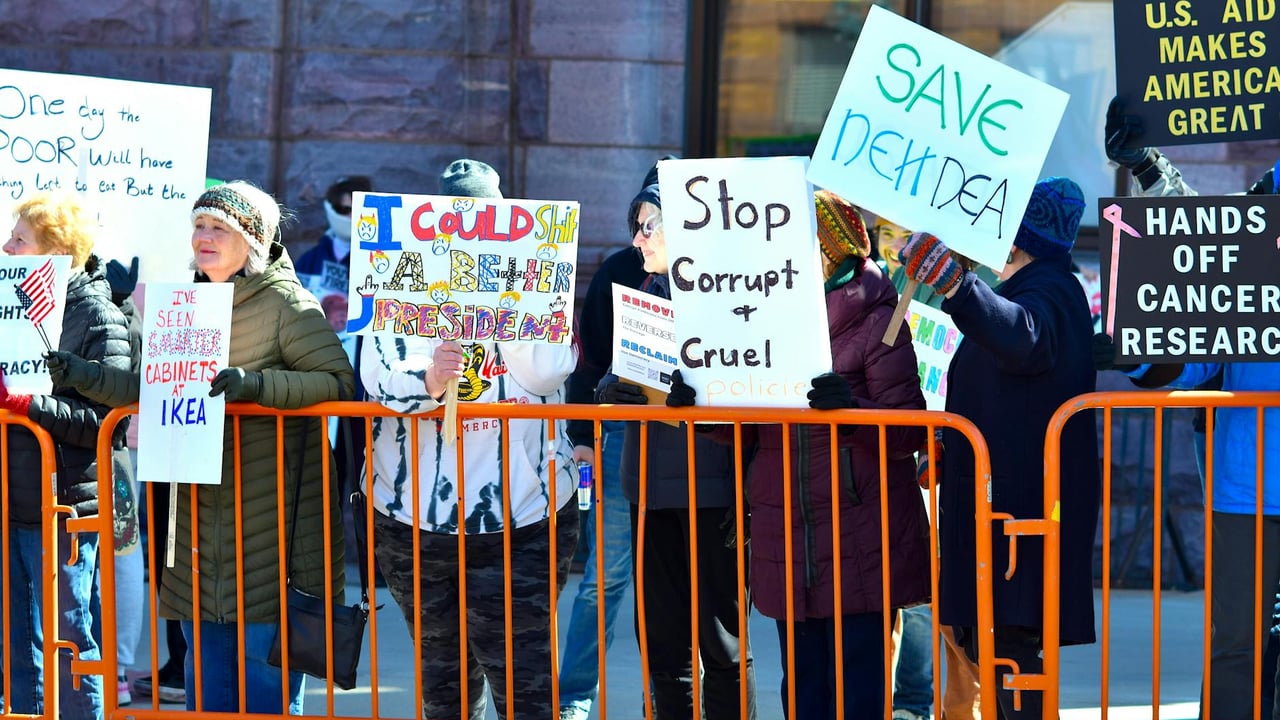
Political backlash inside the United States has also hardened. Recent polling shows nearly six in ten Americans oppose or strongly oppose military action against Iran, and demonstrations in more than fifty cities reflect growing anti-war sentiment. Bipartisan tensions over the president’s authority to wage war have widened, with Democratic lawmakers pushing to constrain executive war powers and fissures emerging within Republicans as parts of the MAGA base, and conservative commentators, voice opposition to deeper entanglement overseas.
Domestic security concerns are rising too. The Department of Homeland Security has warned of an elevated risk of lone‑actor attacks inspired by the Middle East conflict, prompting stepped-up policing in major US cities. The combination of public protests, a more febrile domestic security environment and fractious politics complicates any long-running military campaign the administration might contemplate.
Across the Atlantic and in the Gulf, allied reactions have been uneven and, at times, openly critical. Many European capitals sought to distance themselves from US and Israeli strikes, with Spain’s prime minister calling the action a “serious mistake” and some partners declining to permit US use of bases. Gulf governments report feeling blindsided and frustrated, complaining that Washington has prioritized its own and Israel’s security interests over theirs.
That erosion of trust matters: prolonged coercive campaigns depend on coalition management, intelligence-sharing, and host-nation basing. Experts at Brookings and the Atlantic Council warn that perceived unilateralism and a lack of allied consultation could weaken long-term US credibility and constrain future coalition-building, even as Washington contends with immediate tactical objectives.
Taken together, the economic squeeze, political dissension and alliance strain create a narrowing corridor for Washington. The administration faces unpalatable choices: press on and risk inflaming domestic and allied fractures, or scale back military options and accept diminished leverage in the region. Either outcome carries strategic costs — for US influence, for regional stability, and for domestic politics.