
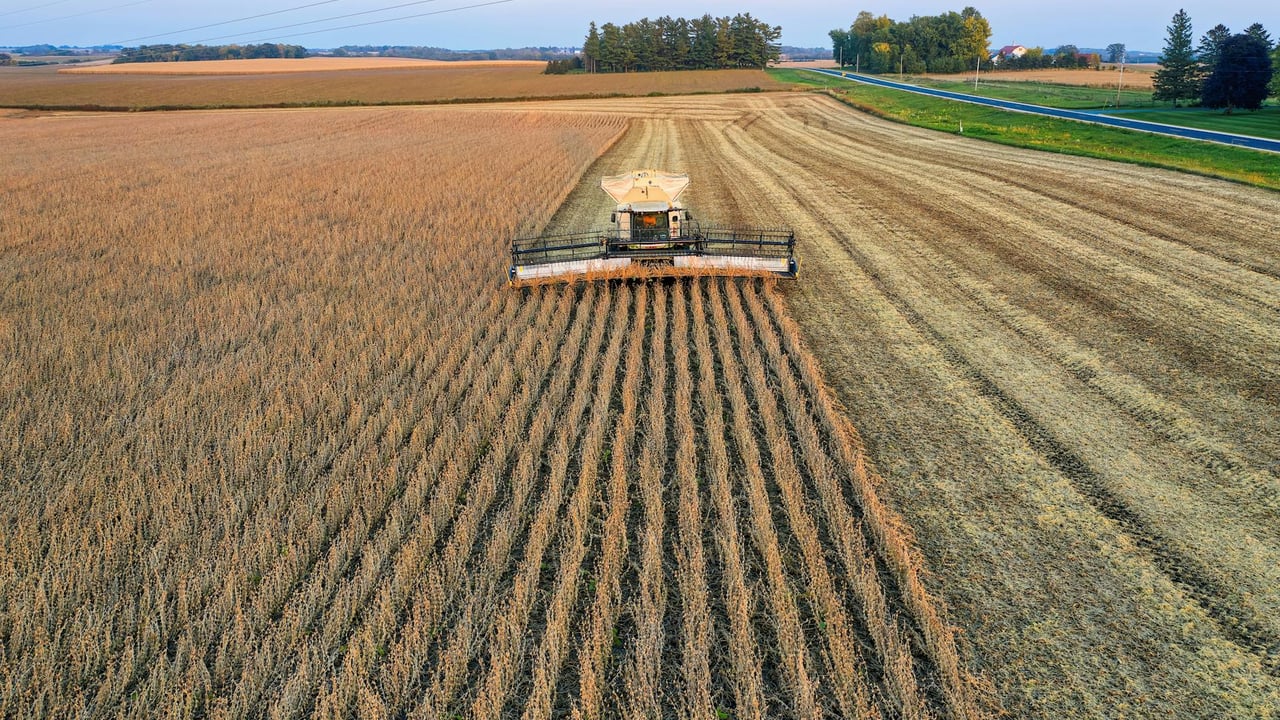

Bloomberg reports that soybeans are likely to be a central topic when U.S. and Chinese trade officials meet ahead of President Trump’s planned visit to China at the end of March. Market attention has focused on whether Beijing will resume sizable purchases of U.S. soybeans as a goodwill gesture, but more than ten days into March there has been no sign of such buying.
U.S. officials — including Treasury Secretary Becerra and Trade Representative Grier — are due to meet Chinese counterparts in Paris as preparatory talks for the presidential visit. Traders and analysts expect any high-level face-to-face to put pressure on Beijing to clarify the timing and scale of future purchases, which would be watched as a barometer of broader trade détente.
Soybeans have become a linchpin in posturing between the world’s two largest economies. After a tariff dispute following Mr. Trump’s return to the White House in 2025, Washington said Beijing had agreed in an October truce to buy 12 million tonnes of U.S. soybeans by January 2026 and to average at least 25 million tonnes a year over the next three years. China met the initial 12 million-tonne target by February, but Bloomberg says purchases have since stalled and private traders expect buyers might wait until the new U.S. season in September when prices are typically lower.
Commercial realities are complicating any swift resumption. South America’s harvest is peaking, flooding global markets with competitively priced Brazilian soybeans; U.S. supplies have tightened and remain subject to a roughly 13% tariff, deterring China’s private crushers. Bloomberg previously reported Chinese importers booked at least 25 Brazilian cargoes to load in March–April, underlining how market economics can override diplomatic signaling.
Political and geopolitical headwinds add further uncertainty. An uptick in Middle East tensions and the prospect of a U.S.-led escalation over Iran have distracted negotiators and injected risk into global commodity flows. Domestically in Washington, a recent U.S. Supreme Court decision curbed unilateral tariff powers, prompting the administration to launch new Section 301 trade investigations across a broad set of partners — a move intended to rebuild a credible threat of tariffs but one that could further complicate talks with China.
The combination of absent ‘‘goodwill’’ purchases, strong Brazilian competition, lingering U.S. tariffs and widening geopolitical frictions means markets are lowering expectations of a decisive trade breakthrough tied to the visit. For U.S. farmers, the delay in sustained Chinese buying prolongs price pressure and uncertainty; for exporters and global buyers, the situation points to an ongoing reconfiguration of supply chains that may favor South America in the near term.
With time short before the scheduled presidential trip, soybeans will serve not only as a commodity but as a diplomatic signal. Whether Beijing chooses targeted, modest purchases to grease the wheels of diplomacy, or waits for cheaper U.S. crop arrivals or clearer tariff relief, will tell investors more about the depth and durability of any U.S.-China détente than public statements alone.