
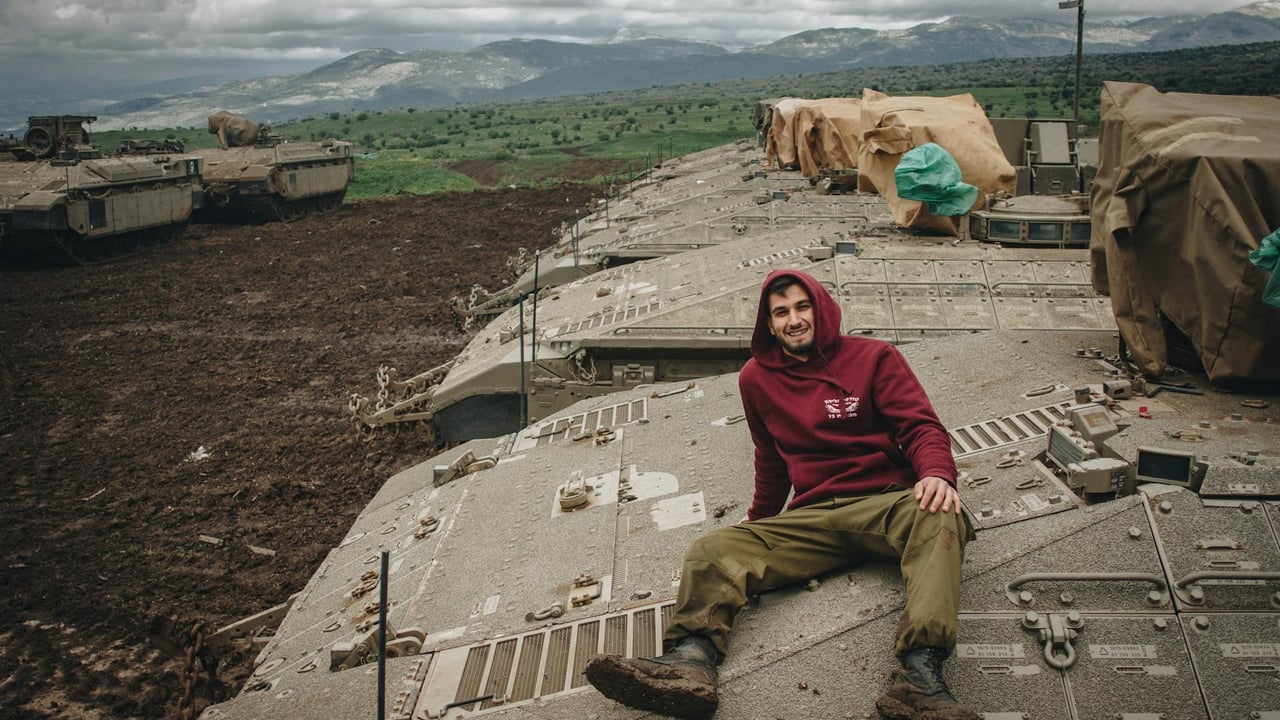

The Israeli military announced on March 13 that it has carried out more than 1,100 airstrikes on Lebanon since cross-border violence resumed, and that it has sent large numbers of additional troops to northern districts along the Lebanese frontier. The statement was accompanied by photographs taken at the border showing assembled units, tanks operating close to or inside Lebanese territory, and at least one Israeli assembly point hit by incoming fire.
The images, distributed by Chinese state media photographers who were on the scene, depict an intensifying military posture: armored vehicles maneuvering near the border, concentrated troop deployments in forward positions and evidence of artillery or rocket strikes. Israeli officials did not spell out a clear end-state for the operation, but the combination of sustained air attacks and fresh ground reinforcements signals an escalation beyond episodic exchanges.
The announcement comes amid a broader regional flare-up following recent strikes on Iranian targets that some states and analysts have tied to Israel and its partners. Those events have sharpened the fault lines between Israel and Tehran’s allies in Lebanon, raising the risk that tactical encounters along the Blue Line could widen into a wider confrontation involving Hezbollah and — indirectly — Iran.
If the Israeli figure of more than 1,100 airstrikes is accurate, the scale of the bombardment will have profound humanitarian and political consequences for Lebanon. Repeated strikes of that intensity typically damage infrastructure, disrupt civilian life, and displace populations already vulnerable in a country still recovering from economic collapse and the scars of past wars.
Militarily, reinforced Israeli forces on the northern border have two plausible objectives: to degrade the military capabilities of Hezbollah and allied groups inside Lebanon, and to deter further cross-border strikes that threaten northern Israeli towns. For Hezbollah, the pressure presents a dilemma: escalate in kind and risk deeper Israeli operations inside Lebanon, or absorb damage and preserve its status as Lebanon’s dominant armed actor.
The international implications are acute. A sustained Israeli campaign could prompt diplomatic intervention from the United States, the European Union and regional players, and would place additional strain on UNIFIL peacekeeping efforts. There is also a danger that supply lines, maritime routes and energy markets could be affected if the conflict broadens and other regional actors are drawn in.
Watch for three immediate indicators in the coming days: whether Israel converts its air campaign and troop deployments into a ground offensive, how Hezbollah calibrates its response, and whether external powers move decisively to mediate. The trajectory of this escalation will determine whether the fighting remains concentrated along the Israel–Lebanon border or becomes a wider regional crisis.