
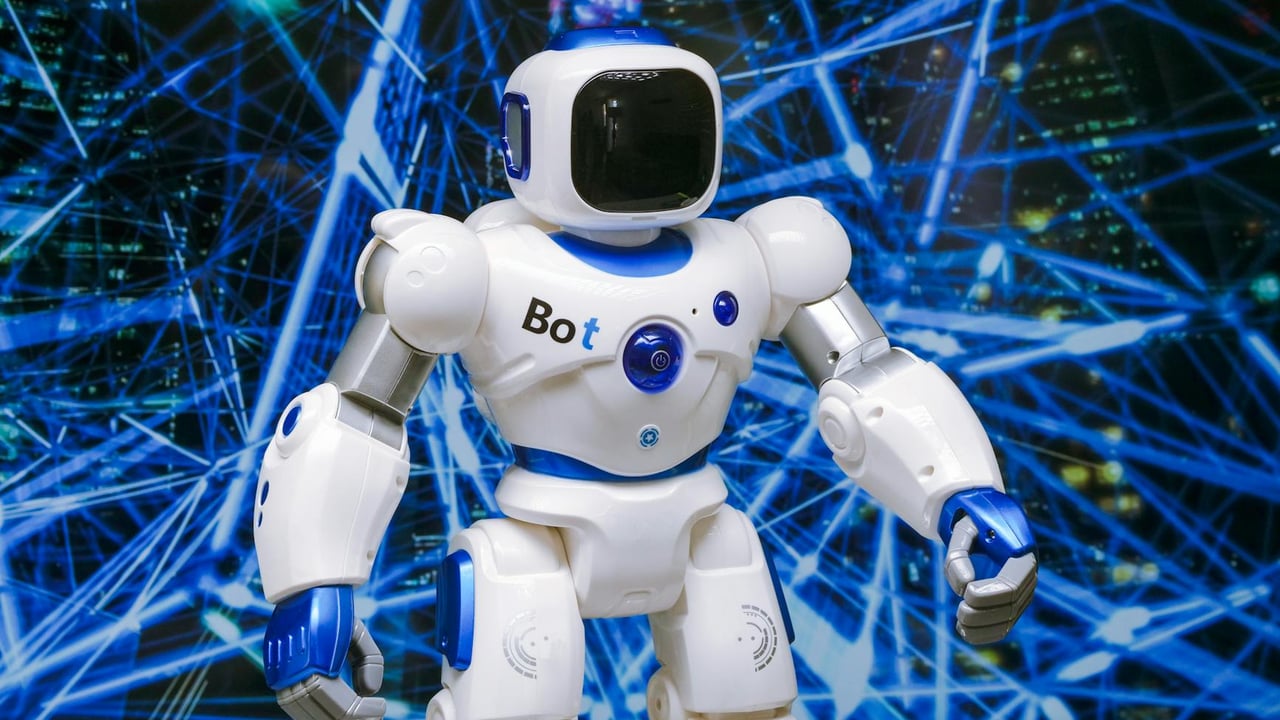

Walking the aisles of this year’s Appliance & Electronics World Expo (AWE) felt less like visiting a trade fair and more like stepping into a near‑future showroom: humanoid machines fielding questions from visitors, performing choreographed household tasks and, increasingly, answering queries with the fluency of a screen‑based assistant.
What has changed since the last round of robot demos is not only smoother speech and more humanlike posture, but the software architecture behind the exchanges. Vendors are pairing embodied platforms with “open‑book” agent layers — retrieval systems and tool‑use interfaces that let a robot consult documents, product databases or the internet in real time, rather than relying solely on a closed, pre‑trained model.
The effect is immediately persuasive. In public demonstrations a robot can now justify a recommendation (“I looked up the user manual and found…”), show product pages on a tablet, or fetch step‑by‑step instructions to complete a task. Those capabilities address one of the long‑standing weaknesses of conversational robotics: factual drifts and hallucinations that make interactions unreliable for real‑world tasks.
Yet the demo floor does not tell the whole story. Beneath the conversational polish remain persistent constraints: limited battery life, fragile perception in cluttered environments, narrow task generality and a heavy dependence on cloud connectivity for the large models and retrieval services that power the “open‑book” behaviour. Many interactions still rely on orchestrated conditions — known objects, clean floors, predictable lighting — and operator supervision behind the curtain.
The broader significance is industrial as much as technological. Appliance manufacturers and smart‑home companies are treating embodied agents as a strategic extension of their product lines — a living interface that can upsell services, guide maintenance and anchor the smart home. For startups, the prospect of combining robotics hardware with agent software opens business models that are software‑driven rather than purely mechanical, but it also raises capital intensity and supply‑chain exposure.
Regulatory and social questions are fast following the demos. When machines can consult proprietary manuals, access personal calendars or control appliances, issues of data governance, safety certification and liability become central. For governments and standards bodies the challenge will be to translate toy‑like exhibitions into robust rules that protect users without snuffing out innovation.
In short, AWE made clear that conversational humanoids powered by retrieval‑augmented agents are no longer pure hype; they are a visible, working layer of today’s robotics stack. But turning a polished demo into affordable, resilient, safe consumer products remains a multi‑year engineering and policy task — one that will determine whether these machines become occasional curiosities or everyday helpers.