
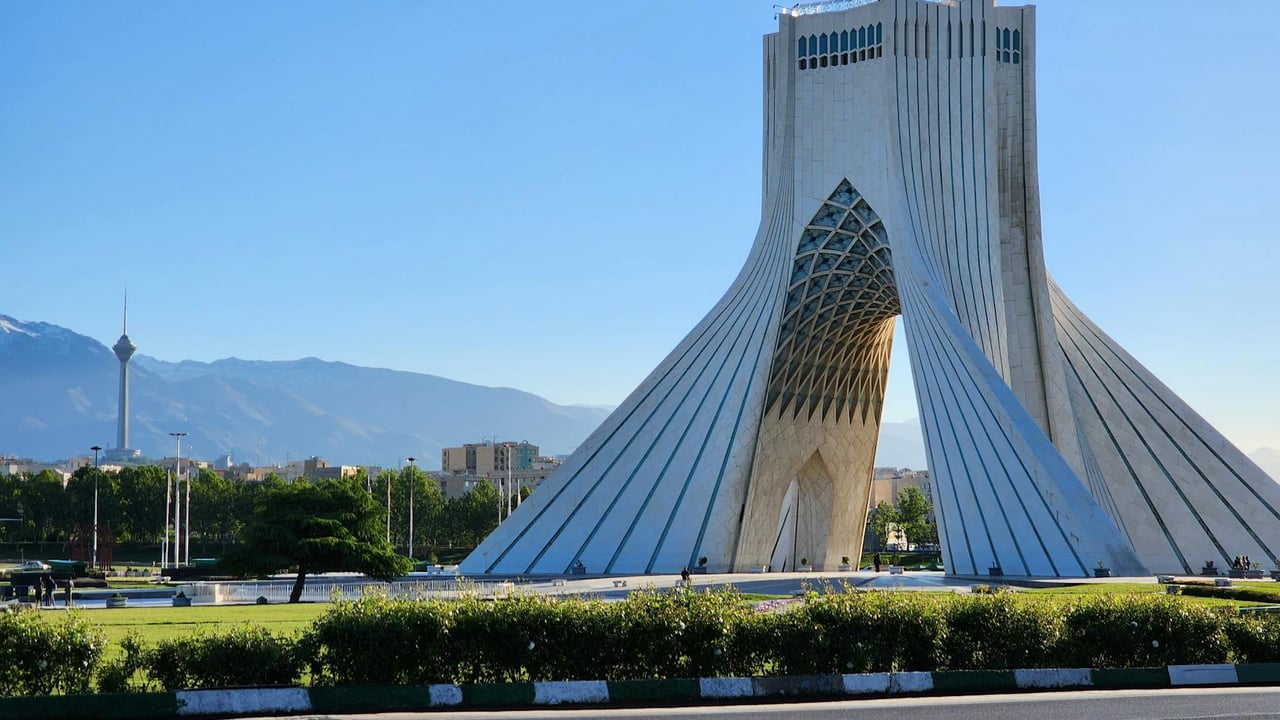

Distant flashes, rising smoke and deep detonations cut through a pro-Palestine demonstration in Tehran on 13 March as participants marched toward Revolution Square. A Xinhua correspondent at the scene described an airstrike in the vicinity of the procession; local outlets later reported two people killed in the attack. Organizers had warned journalists of possible dangers ahead, but the strike did not disperse the crowd.
Participants pushed on despite the risk, packing roads and raising Iranian flags while chanting against the United States and Israel. Reporters noted that marchers carried photographs identified in state outlets as the late supreme leader Ali Khamenei alongside images of a purported new supreme leader, Mujtaba Khamenei, a visual signal that — whether symbolic or substantive — complicates the political subtext of the demonstration.
Speakers and ordinary Tehran residents framed the strikes as evidence that foreign powers seek to intimidate the public but will only stiffen domestic resistance. "Bombing cannot stop us from appearing on the battlefield," one marcher told Xinhua, while another said turnout felt higher this year and that every Iranian felt obliged to take part. Tehran’s mayor Alireza Zakani, who joined the crowd, invoked 1979-revolutionary rhetoric to condemn what he called overreaching demands by President Trump and Prime Minister Netanyahu and to cast the rally as part of a wider regional rejection of global hegemony.
The march took place against a backdrop of intense accusations between Tehran and Western-backed forces. Iranian accounts assert that a joint US–Israeli operation on 28 February struck a primary school in the southern city of Minab, killing at least 165 people, mostly girls around ten years old. Such allegations, if widely accepted domestically, serve to amplify public outrage and harden calls for retaliation or reciprocal military responses.
For international audiences the scene in Tehran matters for three linked reasons. First, rallies that continue under fire are a demonstration of regime resilience and social mobilization; they are designed to signal internal unity and deter opponents. Second, the imagery and rhetoric — including apparent references to a leadership succession — suggest Tehran is managing messaging across a volatile domestic political moment, which could affect decision-making at the highest levels. Third, allegations of large civilian casualties from cross-border strikes, and the prospect of further reprisals, elevate the risk of broader regional escalation with implications for security, energy markets and humanitarian access.
As night fell, reporters heard further explosions from central Tehran while dispatches were filed, underlining the fluidity and danger of the situation. For states and international institutions the immediate task will be to judge whether these events are episodic and containable or indicative of a trajectory toward greater confrontation across the Middle East.