
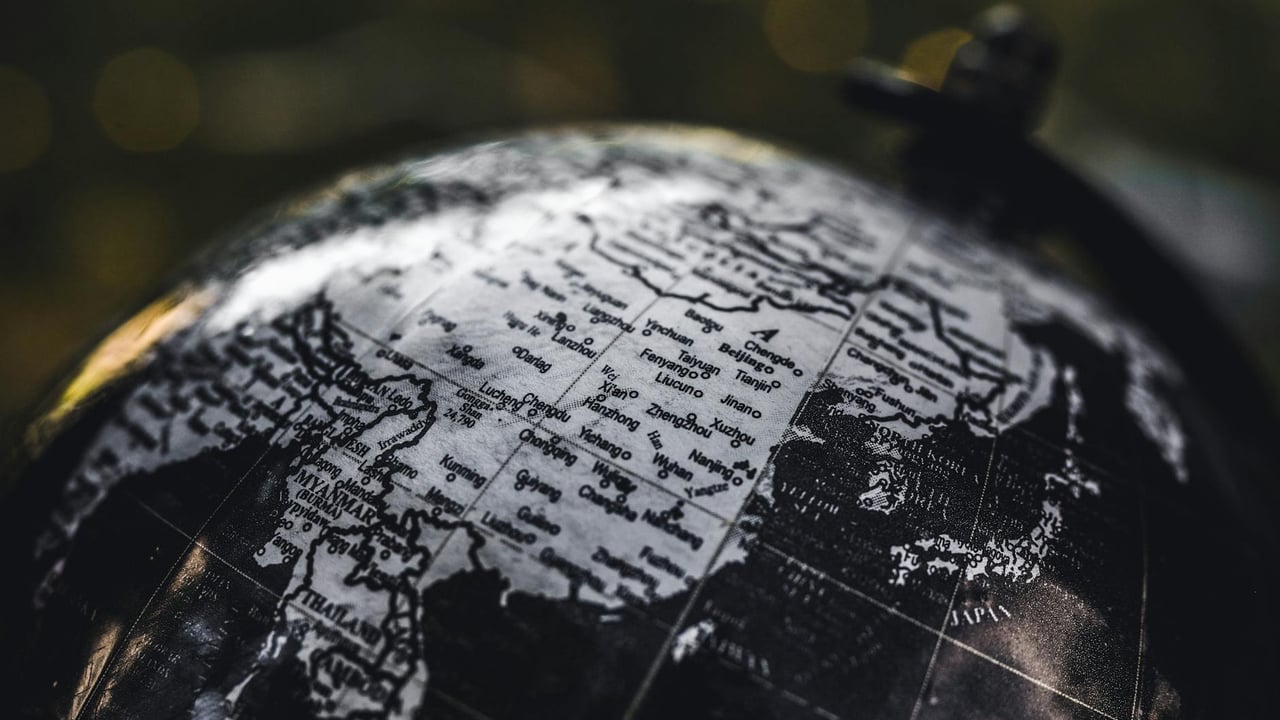

Japan has moved into a high-stakes phase in its effort to wean itself off Chinese rare-earth dependence, committing money and political capital to new mines, foreign partnerships and a push for substitution and recycling. The shift reflects more than industrial policy: Tokyo treats rare earths as a strategic vulnerability exposed by diplomatic rows since 2010 and by the broader global push to reconfigure critical‑mineral supply chains.
Tokyo’s approach has unfolded in three stages. Before 2010 the country felt pressure but took few coordinated steps; between 2010 and 2025 Japan diversified suppliers, funded substitution research, and developed “urban mining” recycling schemes; from 2026 it has declared a new, cost-insensitive drive to open new sources — including deep-sea sediments around Minamitorishima — and to knit a Western-aligned supply chain that excludes China.
Concrete investments illustrate the strategy. In 2011 trading house Sojitz and the government-backed JOGMEC financed Australian producer Lynas to secure 9,000 tonnes of light rare earths annually, with a small top-up in 2022 to stabilise heavy‑rare flows. In 2025 JOGMEC and gas supplier Iwatani invested €110m in France’s Caremag and signed a deal guaranteeing half of that company’s heavy‑rare exports to Japan.
Tokyo has not relied solely on new mines and foreign partners. Since the late 2000s it has financed two national programmes aimed at element substitution and application development, producing incremental advances in magnets, piezoelectrics and motors that reduce or eliminate some rare‑earth inputs. Japanese firms such as Daito Special Steel, Astemo and Murata have announced prototype or pilot products that use less or no heavy rare‑earths, and research bodies and funds have accelerated recycling projects under the “urban mine” concept.
Yet the technical and industrial obstacles are substantial. Tokyo’s most publicised win — a February 2026 cruise by the scientific vessel Chikyu that retrieved rare‑earth‑bearing seabed mud from roughly 5,700 metres — is a proof of concept, not an industrial solution. High‑depth extraction techniques remain experimental, separation and purification of rare earths from muddy polymetallic matrices have no established industrial precedent, and there are no clear lead companies or host sites for large‑scale processing, which would also carry significant environmental costs.
Japan’s predicament underscores a wider lesson: possession of resource deposits is insufficient to translate into diplomatic leverage. China’s clout in rare earths stems from decades of investment in extractive chemistry, industrial scale and willingness to shoulder the environmental and regulatory burdens of refining. Landmark scientific advances by Chinese researchers and a policy mix that combined strict regulation with investment and ecological compensation created a global refining lead that mere deposits elsewhere cannot quickly displace.
The strategic stakes go beyond rare earths themselves. Elements such as gallium and germanium illustrate how industrial structure and energy‑intensive co‑production give China leverage in other critical metals: gallium emerges as an aluminium by‑product and germanium is tied to zinc and coal byproducts. For Japan and its Western partners, diversifying miners is only one leg of a much larger task: building downstream refining capacity, environmental management frameworks and long-term industrial ecosystems.
In short, Japan’s new, unabashed willingness to spend — and to coordinate with the United States and European partners on supply‑chain alternatives — will likely reduce some vulnerabilities over time. But the most difficult gap is industrial: mastering large‑scale, low‑cost extraction and high‑purity separation outside China is a multi‑year, capital‑intensive challenge that will keep Beijing’s leverage intact for the foreseeable future.