
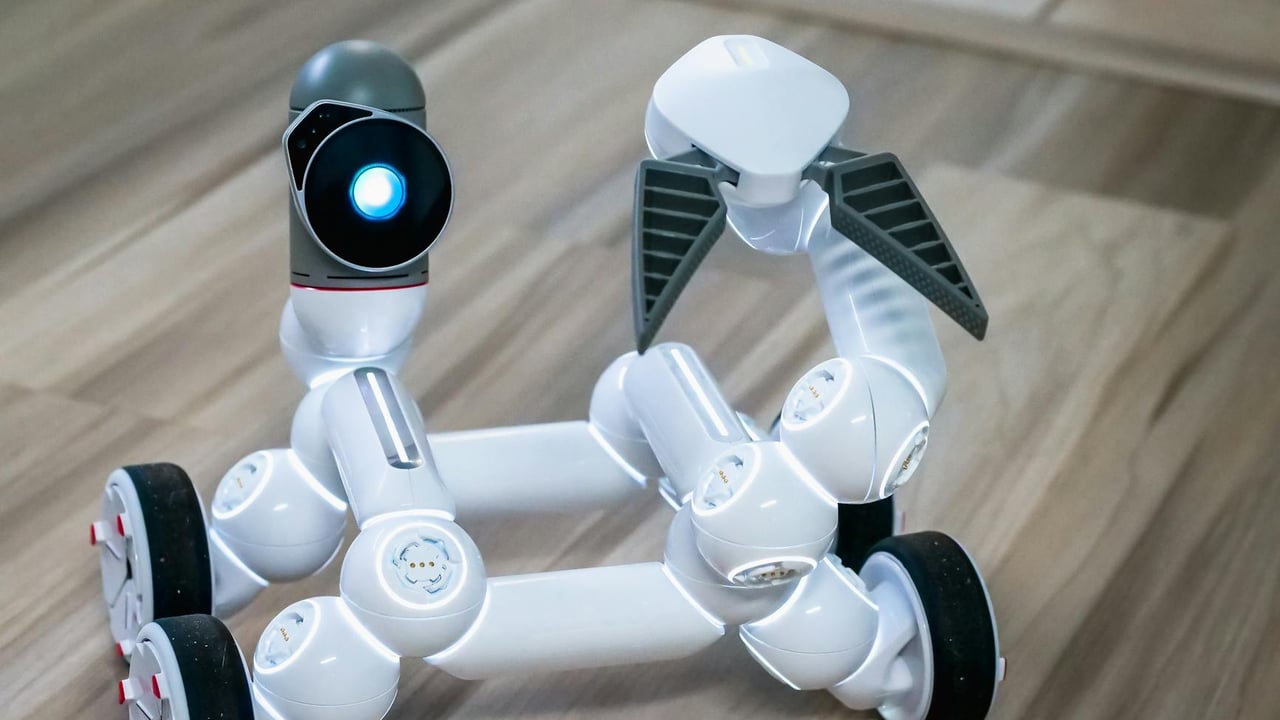

On a busy hall at AWE 2026 in Shanghai, washing machines and ovens were no longer the main attractions. Instead, crowds circled a new generation of home robots: floor-cleaners that pick up toys and reposition slippers before sweeping, humanoid arms that stir and flip in a demonstration kitchen, and companion devices designed to learn family routines.
The exhibitors were familiar names in the white‑goods business. Haier showed a trio of household robots that coordinate with existing appliances to move groceries, sort food into storage and tidy dining ware. Ecovacs unveiled “Bajie,” a prototype housekeeper with a wheeled base and a gripping arm for toy collection and object handover, and a small AI pet priced at 3,999 yuan. TCL demonstrated AiMe, a split‑body companion that links multimodal interaction with smart‑home control. Stone Technology displayed G‑Rover, a wheel‑leg vacuum designed to climb stairs, while FOTILE debuted a robotic kitchen combining an industrial arm and a humanoid manipulator to perform frying, plating and cleanup.
The technological push has a parallel institutional move. The China Household Appliance Association launched a Home Service Robot Special Committee at AWE, with 50 initial members spanning appliance makers, chip firms and robotics module suppliers. Haier’s vice‑president was named committee director, and major manufacturers such as Hisense, TCL, Midea and FOTILE sit in leadership roles, signaling a coordinated industry effort to shape standards, data practices and interoperability.
For traditional appliance firms the pivot into “embodied intelligence” — machine learning married with physical manipulation in domestic spaces — is strategic rather than novelty. Manufacturers bring deep supply‑chain know‑how, existing distribution channels and installed bases of connected devices; they hope to turn robots into the next platform for consumer engagement and aftermarket services. China already dominates robot production: it is the world’s largest manufacturing base and produced roughly 18.6 million service‑robot units in 2025, reinforcing the scale advantage for domestic players.
Still, vendors and observers are circumspect about timing. Executives at Ecovacs said the Bajie prototype could reach homes within three years if technology and price points align; industry analysts forecast a three‑to‑five‑year runway before robots penetrate households at scale. The caution is practical. Domestic environments are messy and varied, so robots must move from “can work” to “works well” before consumers will invite them into daily life. Price ranges today — from about ¥10,000 to several hundred thousand yuan — also test the value proposition for ordinary buyers.
Beyond usability and cost, safety and privacy are front‑row concerns. Frequent physical interaction inside tight family spaces raises the stakes for failures, hacking and data misuse. Academics cite the persistent technical challenge known as Moravec’s paradox: tasks trivial for humans, like pouring water or tying shoelaces, remain hard for robots because they require fine motor control, force feedback and rich visual reasoning. Industry leaders at AWE emphasized the need for unified standards and rigorous testing regimes if the sector is to avoid reputation‑destroying incidents.
The upshot is a pragmatic innovation arc: suppliers will iterate on niche, high‑value functions — caregiving, specialised kitchen work, heavy cleaning — while costs fall and software improves. If appliance firms can leverage their manufacturing scale, domestic ecosystems and growing AI toolkits, they may accelerate adoption and reshape the next decade of consumer technology. But widespread household deployment will depend as much on regulation, safety assurance and clear customer benefits as on engineering breakthroughs.