
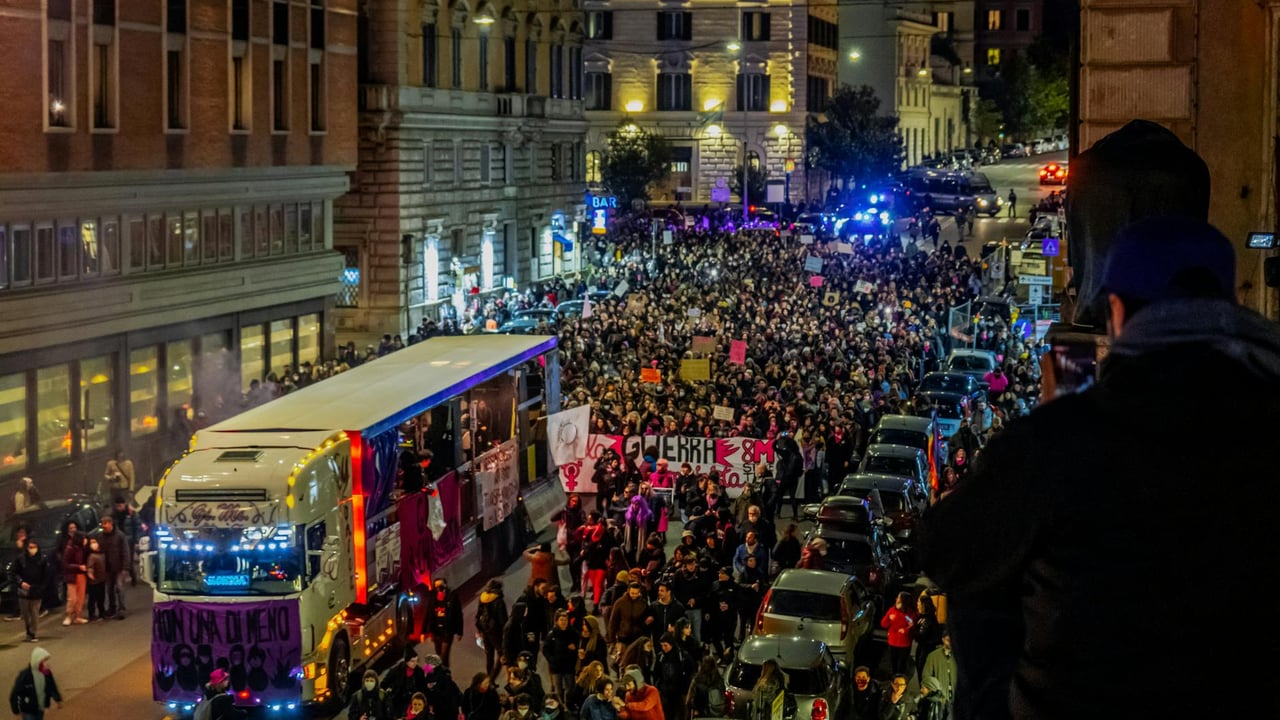

Thousands of Italians took to the streets of Rome on 14 March in a large demonstration organised by trade unions and social movements to protest recent US and Israeli military actions against Iran. Marchers—many carrying banners calling for diplomacy and an end to bombardment—said they feared a widening conflict in the Middle East and warned that ordinary people would bear its costs.
A state-broadcaster correspondent following the march said turnout appeared to exceed a thousand and that a light rain did nothing to dampen participation. Organisers described the event as the largest recent protest in Rome opposing strikes on Iran and urged European governments not to be drawn into a new military confrontation, but to pursue dialogue to de‑escalate the region.
Speakers framed the demonstration within a broader catalogue of international crises. Giuliano Granato, spokesman for the Power to the People party, invoked what he called ongoing atrocities in Palestine, aggression against Venezuela and now attacks on Iran, and demanded that peoples’ right to peace be upheld through peaceful diplomacy. Guido Luttrario, head of a grassroots federation of Italian unions, warned that workers, pensioners and other fixed‑income groups would ultimately pay the economic price of any wider war and called on the government to adopt measures to shield vulnerable households.
The protest is important beyond Italian domestic politics because it signals widening public unease in Europe over the risk of an expanded Middle East war and the economic fallout that would follow. European capitals are navigating a difficult path: balancing political support for allies and condemnation of actors they deem responsible while avoiding actions that could amplify military escalation. In Italy, where labour unions retain mobilising power, visible street opposition can translate quickly into political pressure on the government to pursue restraint.
The demonstrators’ demands underscore two interlinked concerns for policymakers. First, there is the strategic hazard: a broader conflict could trigger refugee flows, disrupt energy markets and fracture transatlantic consensus if publics across Europe push their governments to distance themselves from military options. Second, there is the domestic fiscal angle: rising defence spending, higher energy prices and potential sanctions can squeeze social budgets, providing unions with leverage to demand protective measures for workers and pensioners.
For international observers, Rome’s protest is a reminder that conflict dynamics in the Middle East have immediate political reverberations in Nato and EU capitals. Leaders who underestimate public resistance to escalation risk finding themselves constrained by domestic politics at precisely the moment when strategic choices carry the gravest international consequences.